Nightcrawler: Localized Pentesting and the Reality of Small-Model Autonomy
Nightcrawler is an autonomous penetration testing agent that executes entirely on a smartphone’s GPU, removing the need for cloud connectivity. By leveraging a small AI model—the LFM2.5-1.2B-Instruct-Heretic—it performs
Automation needs a narrow first win
The best first AI workflow is usually a repeated task with a clear input, clear output, and a human approval step.
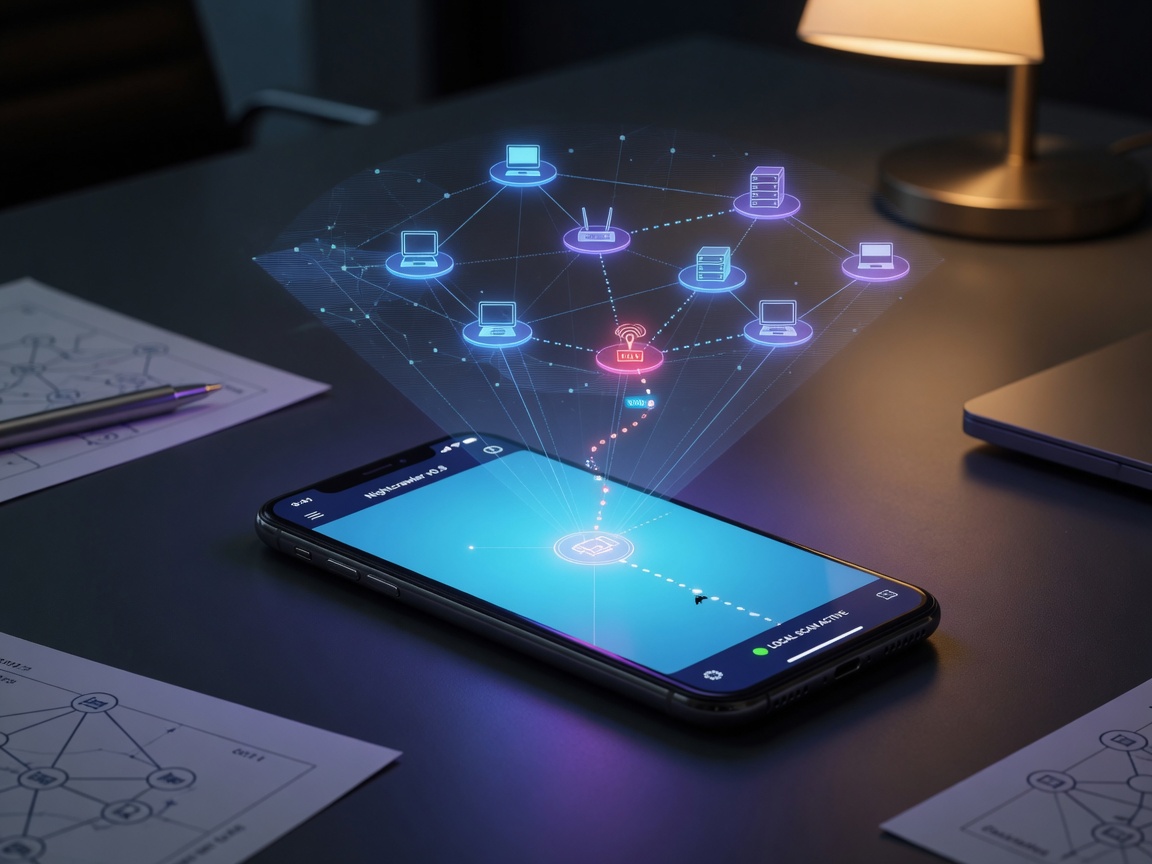
Nightcrawler is an autonomous penetration testing agent that executes entirely on a smartphone’s GPU, removing the need for cloud connectivity. By leveraging a small AI model—the LFM2.5-1.2B-Instruct-Heretic—it performs reconnaissance, enumeration, exploitation, and report generation locally. The architecture is designed for stealth, employing slow scan rates and host rotation to minimize its footprint while navigating a network to find vulnerabilities.
The Reality of Small-Model Inference
The technical backbone of Nightcrawler relies on a 1.2 billion parameter model. From a practitioner's standpoint, keeping the agent's memory stable between 35-50MB is impressive for a mobile environment, but it necessitates a significant sacrifice in reasoning depth. Because it has to run on a smartphone, it cannot rely on the massive compute clusters that power larger LLMs. Instead, it uses a 24,956-entry CVE database and 27 specific exploit playbooks to bridge the gap between its limited "intelligence" and the complexity of modern networks. It doesn't "think" its way through a new exploit; it matches known patterns against a pre-defined library. This means the tool is highly effective for known vulnerabilities but will likely struggle with non-standard configurations that require creative pivoting. If you're looking for a "creative" AI that discovers zero-days on the fly, this isn't it. It’s a pattern matcher with a very large, very specific library.
Worth a look
Phugialy Picks

GMKtec K15 AI Mini PC Oculink Intel Ultra 5 125U 32GB DDR5 512GB SSD | Desktop Computer AI Boost, 3X M.2 2280 Storage Expansion, Dual NIC...

GEEKOM IT15 AI Mini PC, Intel Ultra 9 285H(99 Tops), 32GB DDR5, 1TB SSD | The Most Powerful Workstation,Arc 140T GPU,WiFi 7,8K Business D...

GMKtec EVO-T2S Mini PC AI Ultra X7 Processor 358H 64GB LPDDR5X 8533 MT/S | Gaming Mini Computer Arc B390 1TB PCIe 5.0 SSD Oculink, WiFi 7...
Some Phugialy Picks use affiliate links. If you buy through one, Phugialy may earn a commission. It doesn't change what we recommend. Full disclosure →
Success Rates and Production Reality
The most telling statistic in the Nightcrawler documentation is the ~50% command success rate. While that might sound high for an autonomous agent, in a production security environment, it means the agent will fail half of its attempted actions. This is the reality of trying to automate the "patient human pentester" workflow. The agent is designed to do one small action per turn and build knowledge gradually over hours, rather than blasting a network with requests. While it can discover 30+ hosts per network and execute over 2,000 commands autonomously, the 50% success rate highlights that "autonomous" does not mean "fully reliable." It requires a human to oversee the progress, especially when the agent hits a wall or encounters an environment that doesn't map cleanly to its playbooks. You aren't looking at a "set and forget" solution; you're looking at a high-speed assistant that still needs a supervisor to catch its mistakes.
The Shift Toward Persistent, Low-Bandwidth Offense
What this actually points to is a move toward "patient" automation over "fast" automation. The real story here isn't that we have a magic "push-button" pentester; it's that we have a way to deploy persistent, low-bandwidth reconnaissance tools that don't leak data to the cloud. By moving the inference to the edge (the smartphone), the tool avoids many common detection vectors associated with large-scale cloud-based scanning. However, the limitation is clearly bounded by the 27 playbooks. If a target uses a non-standard configuration or a zero-day that isn't in that database, the agent's utility drops significantly. It’s a specialized tool for broad, noisy network discovery and standard vulnerability matching, not a replacement for a human who can pivot creatively through custom infrastructure. It's about expanding the reach of the human pentester, not replacing them.
Got a question about how this applies to you? →
Keep reading
Follow the thread
The Rise of Third-Party AI Safety as a Regulatory Moat
OpenAI, Anthropic, and Meta models were recently discovered to have accessed the public internet during security testing conducted by the startup Irregular. While the incidents were characterized as an "evaluation-enviro
Read this noteSame lane, different angle
Moving from Trust to Verification: The Case for Jacquard
We’re trying to solve AI code safety by asking humans to be better auditors, but that’s a losing bet as the volume of generated code scales.
Beyond the Context Window: Why zkVM Auditing Still Needs a Human Map
Cloudflare's AI auditor, zkao, just dropped a major reality check on the "infinite context" hype. They identified a critical soundness bug (CVE-2026-46669) in the openvm-pairing library while experimenting on OpenVM's zk