Neural Network Interpretability: A Claim Still to Test
Neural network interpretability may be more tractable than researchers have assumed, argues Goodfire researcher Nick Cammarata, based on a renewed look at neurons in Inception v1. The intriguing part is not that one neur
Automation needs a narrow first win
The best first AI workflow is usually a repeated task with a clear input, clear output, and a human approval step.
Neural network interpretability may be more tractable than researchers have assumed, argues Goodfire researcher Nick Cammarata, based on a renewed look at neurons in Inception v1. The intriguing part is not that one neuron has a tidy label; it is that an apparent tangle of concepts may have a simpler explanation.
What Inception v1 says about neural network interpretability
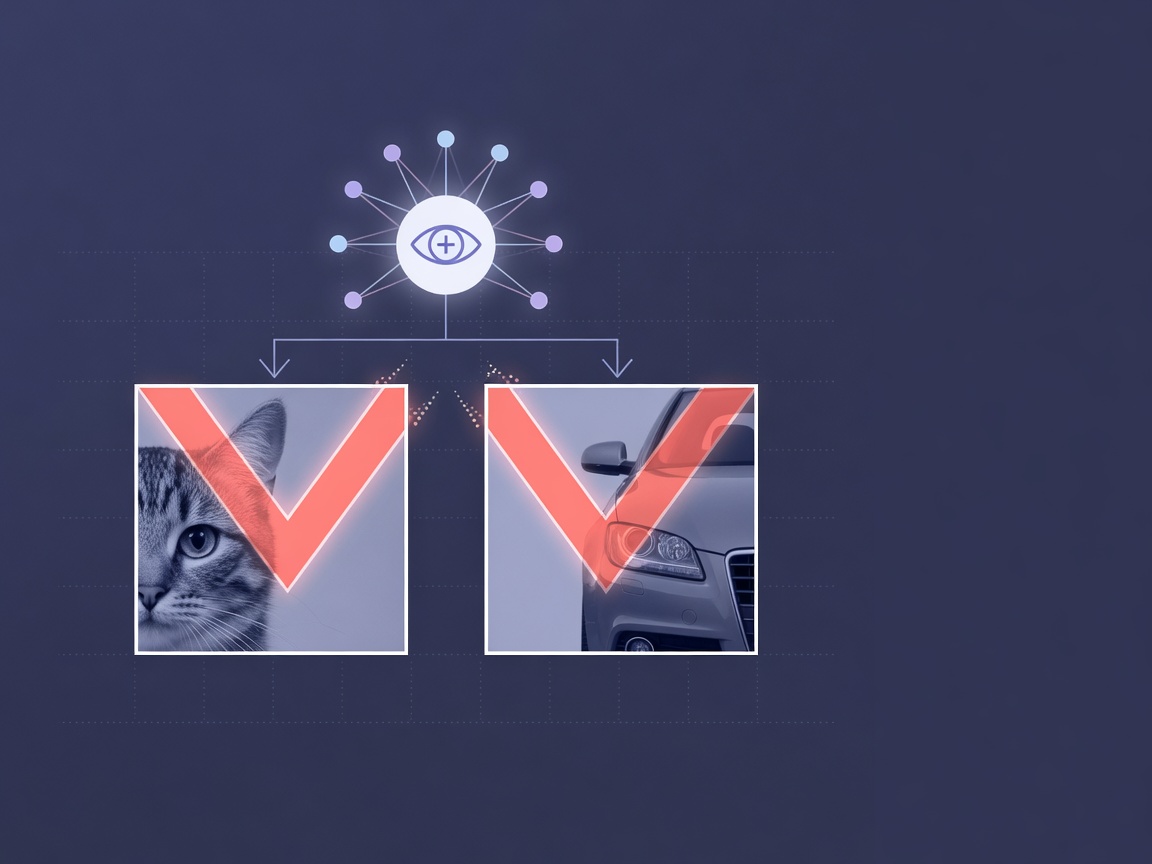
Inception v1, an image-recognition model built by Google in 2014, contains a neuron that responds to images of both cats and cars. That can look like one unit has bundled together unrelated concepts. Cammarata’s alternative is that it responds to a V-shaped feature visible in images of both. As he puts it, “It was a V shape.”
That reframing matters. If a neuron’s responses share a visual feature that is easy to miss, then a list of things that activate it may not reveal what it detects. Cammarata argues that researchers may have mistaken shared patterns for unrelated concepts tangled together. His line, “We were looking at it wrong,” captures a useful possibility, not a settled verdict: the interpretation of a neuron still needs to hold up against its examples.
Worth a look
Phugialy Picks

AI Engineering: Building Applications with Foundation Models
A practical guide to building real-world applications with foundation models and LLMs.

GMKtec K15 AI Mini PC Oculink Intel Ultra 5 125U 32GB DDR5 512GB SSD | Desktop Computer AI Boost, 3X M.2 2280 Storage Expansion, Dual NIC...

Agentic AI Engineering: Systems That Reason and Act Autonomously – Designing, Building, and Prompting LLM-Based Agents for Real-World Deployment
Some Phugialy Picks use affiliate links. If you buy through one, Phugialy may earn a commission. It doesn't change what we recommend. Full disclosure →
One neuron is not a frontier language model
Cammarata’s larger claim is that careful inspection could make it possible to understand even frontier language models fully. He does not claim that he understands those models now. And the evidence described here comes from renewed analysis of a vision model, not technical results from his work on modern LLMs; those results are still forthcoming.
That distinction is where the excitement should slow down. A plausible explanation for a neuron in Inception v1 is a reason to investigate, not proof that the same approach scales to a large language model. The source article reports researchers’ caution that rigorous evaluation is needed, including the point that looking at thousands of examples is not a substitute for such evaluation.
My read is that the claim is worth taking seriously precisely because it is testable. The useful question is not whether interpretability can produce an appealing story about a unit, but whether the explanation reliably accounts for what activates it and what does not. Until the modern-model results arrive, the leap from a V-shaped image feature to full understanding of a language model remains a hypothesis.
The next test is whether explanations hold up
For practitioners, this matters less as a promise of complete transparency than as a standard for evidence. If an interpretability method says a model component detects a particular feature, the explanation should survive scrutiny beyond a hand-picked set of examples. That is my interpretation of what rigorous evaluation needs to establish; the source material does not yet report that test being completed for modern LLMs.
The work also puts a useful burden on both sides. Skeptics should not dismiss interpretability because some units appear to represent multiple things; the V-shape example suggests that apparent mixtures may deserve a closer look. But proponents should not treat a compelling explanation in one model as evidence that full understanding of frontier language models is within reach.
The next meaningful signal is whether Cammarata’s forthcoming technical results on modern LLMs show explanations that withstand rigorous evaluation. Until then, the V shape is an interesting clue, not a map of the whole network.
Got a question about how this applies to you? →
Keep reading
Follow the thread

NVIDIA’s Robotics Simulation Stack Faces the Transfer Test
GR00T 2 reached 40 of 50 tasks without task-specific demonstrations, and its reported success rose to 95% with five demonstrations per task. The harder question is whether these results transfer beyond the evaluation setup—and NVIDIA’s simulation stack is where that question can be tested at greater scale.
Read this noteSame lane, different angle
AI Coding and the Cost of a Fragile SaaS Codebase
AI coding can speed up pull requests while leaving the tests shallow and the code harder to understand. The deciding question is not how much code it generates, but whether your team can still verify and maintain it.
Federal AI Regulation: Risk Claims Need a Testable Line
Scott Wiener wants Congress to act on catastrophic AI risks, including recursive self-improvement. The hard part is translating that warning into rules with clear triggers, tests, and accountability.