Multi-Agent AI Systems Are Taking Over Supply Chain Execution
Multi-agent AI systems just replaced human approval stages at Lenovo across 180 markets - but the interesting part isn't the speed gains. It's what every deployment that actually shipped did before turning the agents loose.
Automation needs a narrow first win
The best first AI workflow is usually a repeated task with a clear input, clear output, and a human approval step.
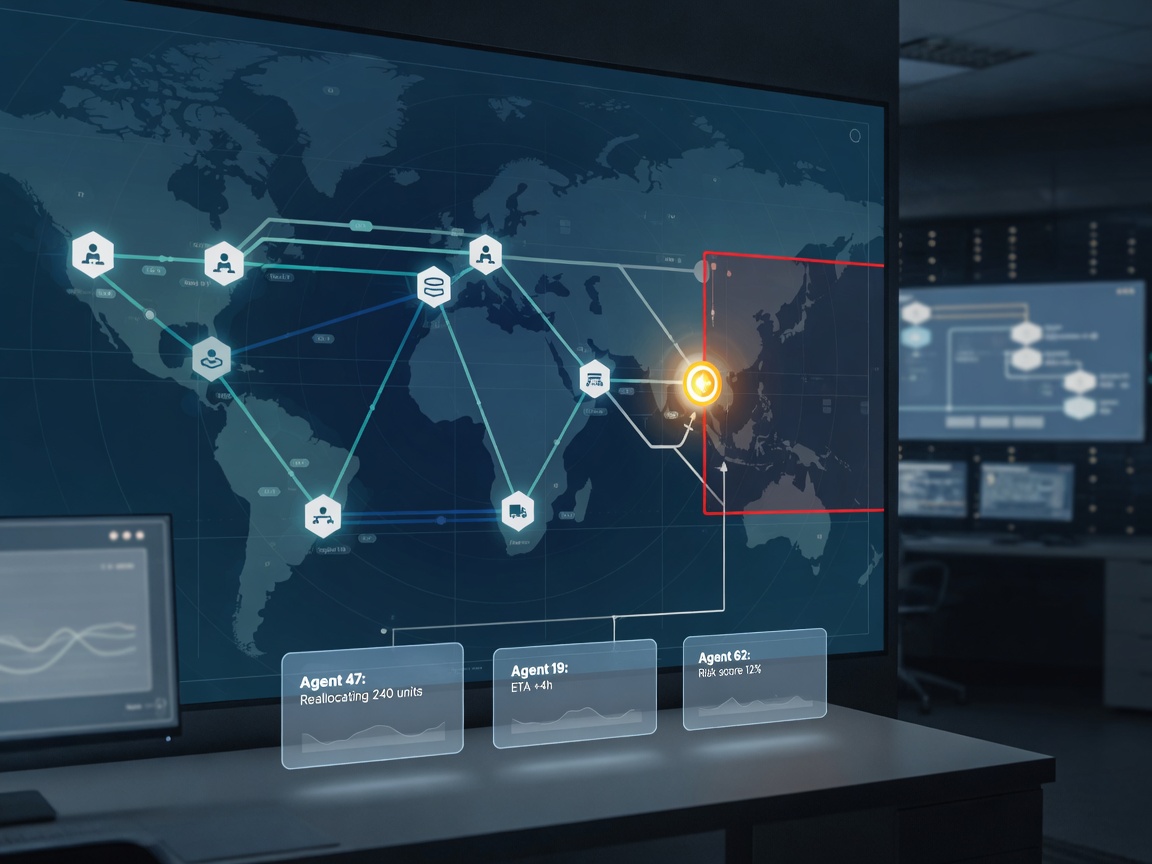
Multi-agent AI systems are now replacing human approval stages in supply chain execution - not in demos, but at Lenovo across 180 markets, at Rohto Pharmaceutical on a live physical chain, and at Kohler and Belden on Databricks foundations. That last part is the news. Agents making freight re-routing, inventory rebalancing, and dock allocation decisions without a human sign-off is a genuine operational shift, and the deployments above are real names with real scope attached.
What The Numbers Actually Show
The reported performance gains are substantial: fulfilment decisions ran three times faster, disruption response four times faster, delivery accuracy increased 30 percent, and on-time delivery moved from 82 percent to 94 percent. A disruption agent reportedly detected supply threats 48 hours ahead of manual monitoring teams, transport costs dropped up to 30 percent in some cases, and multi-robot path coordination delivered a 25 percent throughput increase.
These numbers deserve two qualifiers before you quote them in a planning meeting. First, risk assessment operated at 85 percent accuracy - which is useful for prioritization but means one in seven risk calls is wrong, and you need to know which kind of wrong before an agent acts on it autonomously. Second, the source article itself notes that automated warehouse execution remains largely confined to simulation models. The throughput and path-coordination gains are simulation results; the fulfilment-speed gains come from live transaction-platform integrations. Those are different evidence classes, and they shouldn't be averaged together into one headline number.
Worth a look
Phugialy Picks

AI Engineering: Building Applications with Foundation Models
A practical guide to building real-world applications with foundation models and LLMs.

GMKtec K15 AI Mini PC Oculink Intel Ultra 5 125U 32GB DDR5 512GB SSD | Desktop Computer AI Boost, 3X M.2 2280 Storage Expansion, Dual NIC...

AI: Understand the Revolution: From Basics and Buzzwords to Tech Giants, Governments, and Your Future
Some Phugialy Picks use affiliate links. If you buy through one, Phugialy may earn a commission. It doesn't change what we recommend. Full disclosure →
The Guardrails Are The Actual Design
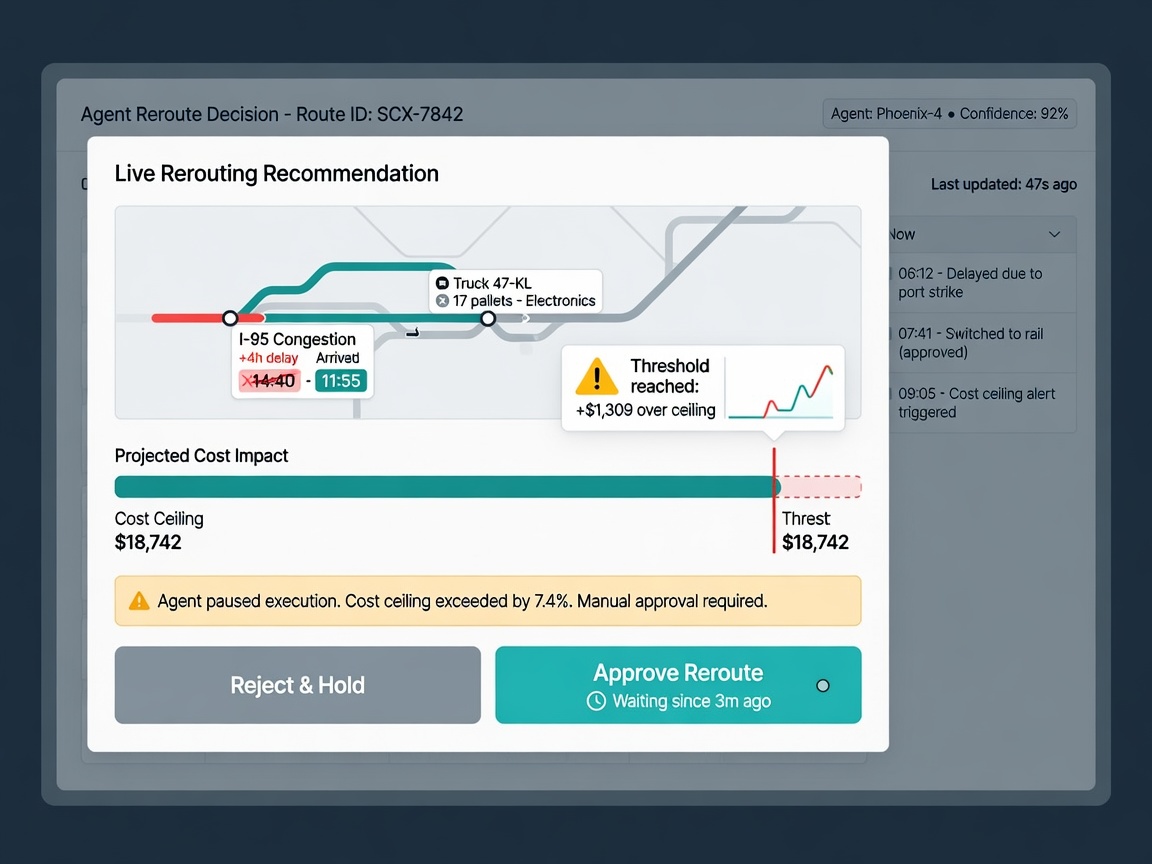
The most instructive detail isn't any benchmark - it's what the guardrails look like in the deployments that shipped: cost ceilings for rerouting decisions, manual authorisation required for large inventory adjustments, and draft-only modes for supplier communication agents that haven't been vetted. That's supervised autonomy done concretely - each agent gets autonomy only inside an operational boundary where being wrong is recoverable.
A mid-size automotive parts manufacturer running five specialised agents across 15 countries and 200 suppliers is the quiet proof point here: this isn't just hyperscaler-scale infrastructure. And Fujitsu and Rohto have scheduled an expanded trial on Rohto's live physical chain between January 2026 and March 2027 - a timeline long enough to suggest they expect failure modes worth studying.
Where I'd Push Back On The Hype
The real story here isn't "AI replaces supply chain managers." It's that multi-agent AI works when someone has already drawn the map of which decisions are safe to automate - and that map-drawing is the expensive part nobody puts in the case study. Every deployment above replaced a specific human approval stage at a specific boundary with a specific guardrail. If your organization hasn't done that decision-by-decision work, bolting agents onto your ERP will produce confident wrong actions at machine speed.
What this actually points to: the competitive gap won't be who has agents, but who has done the unglamorous work of defining operational boundaries and failure-recovery paths first. NVIDIA releasing its Multi-Agent Intelligent Warehouse reference architecture suggests vendors see this coming - but a reference architecture is not an operational boundary map for your business.
Got a question about how this applies to you? →
Keep reading
Follow the thread
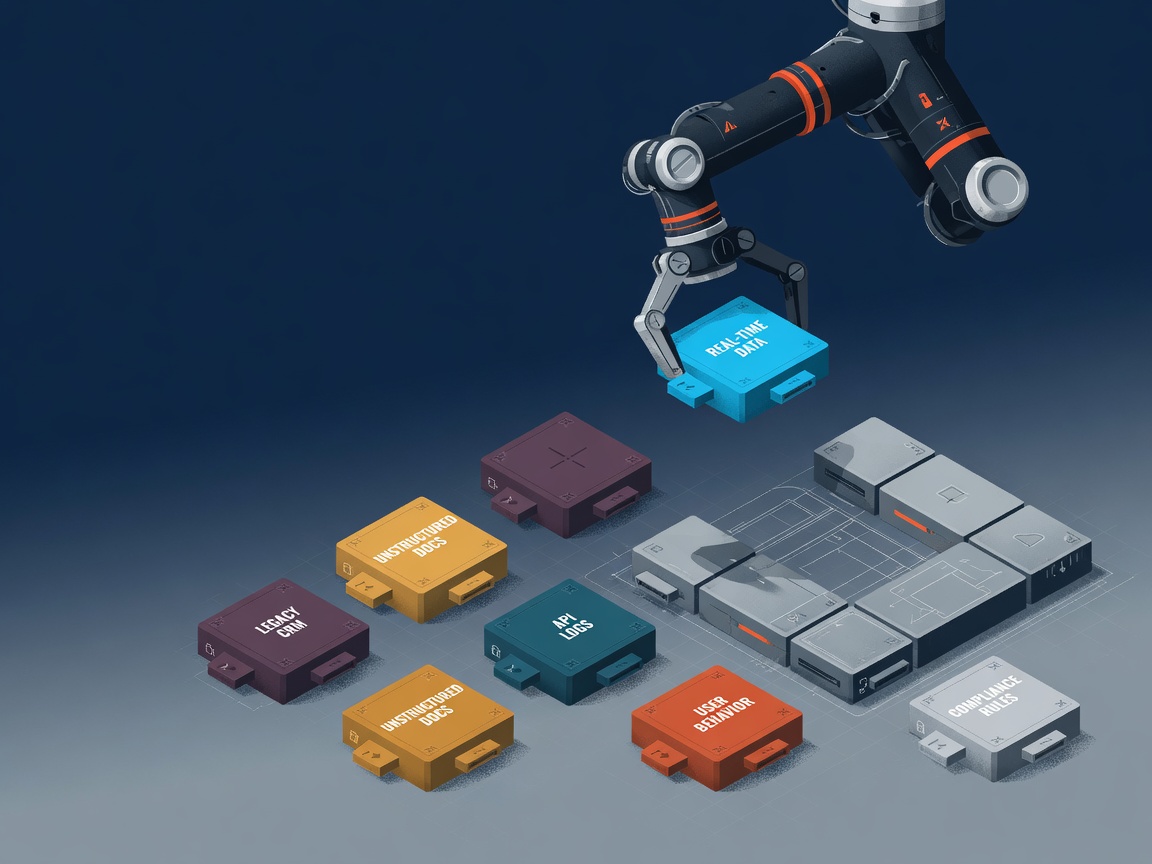
Why Most Enterprise AI Agents Never Reach Production
Two out of three enterprise AI agents never reach production — and the reason isn't model quality. It's that the agent doesn't know what your data means.
Read this noteSame lane, different angle
Automated PoC Generation Fixes AI Bug Reports
AnyPoC turns LLM bug reports into executable proof-of-concept tests — rejecting 9.7x more false positives than naive validation. The architecture behind why one agent grading its own homework fails.
ERC-8004 in Practice: Most AI Agent Trust Data Fails Audit
Only 3% of ERC-8004 identity registrations on Ethereum expose valid registration files - and after removing Sybil-flagged feedback, most rated AI agents have no valid feedback left at all.