Moving Beyond Post-Hoc Confidence: Stochastic Diffusion in Hypergraphs
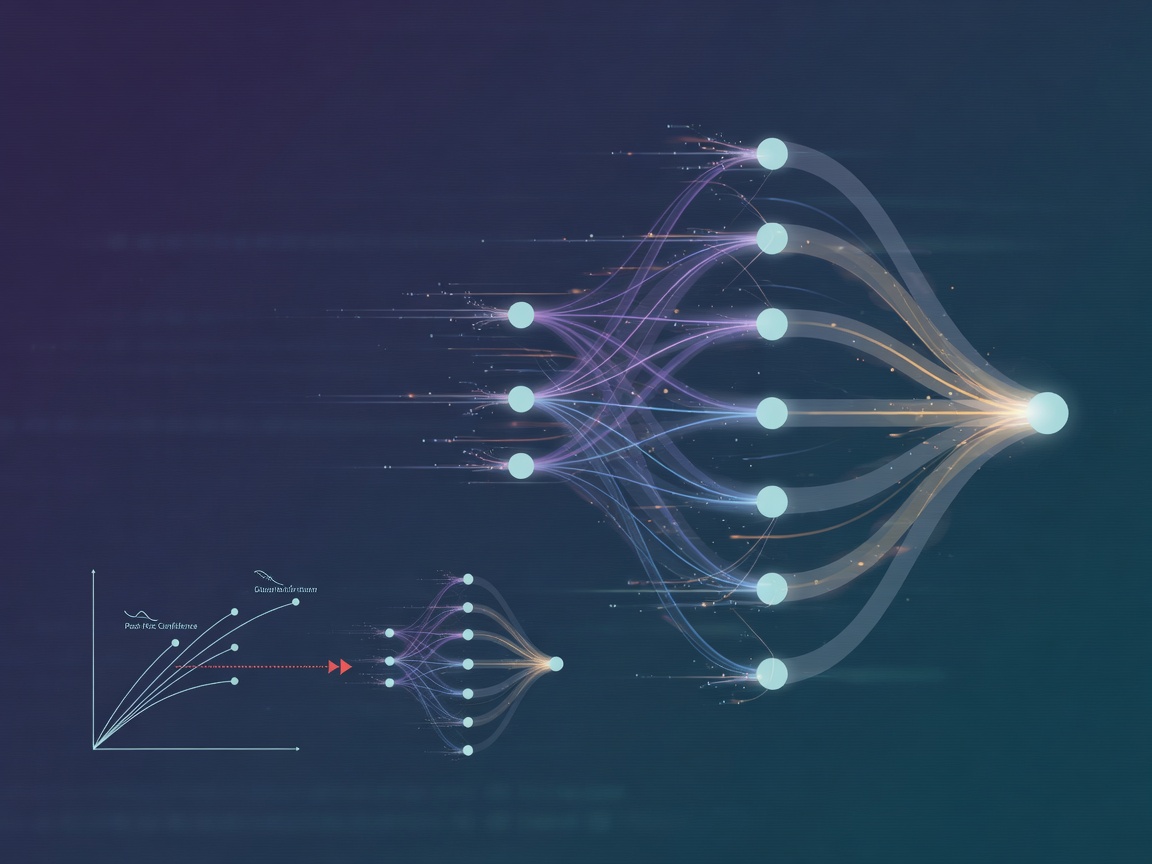
HyperNSD moves uncertainty estimation from a post-hoc calculation to a core part of the representation learning process. By using stochastic differential equations, it models how data actually moves through a hypergraph to identify structural noise.
Automation needs a narrow first win
The best first AI workflow is usually a repeated task with a clear input, clear output, and a human approval step.
Hypergraph neural networks are essential for modeling complex, many-to-many relationships, but they often lack transparency regarding their internal state. When a model encounters out-of-distribution data or structural noise, it frequently produces high-confidence predictions that are fundamentally incorrect. HyperNSD addresses this by reframing representation learning as a stochastic differential equation (SDE).
Modeling Noise as Stochastic Forcing
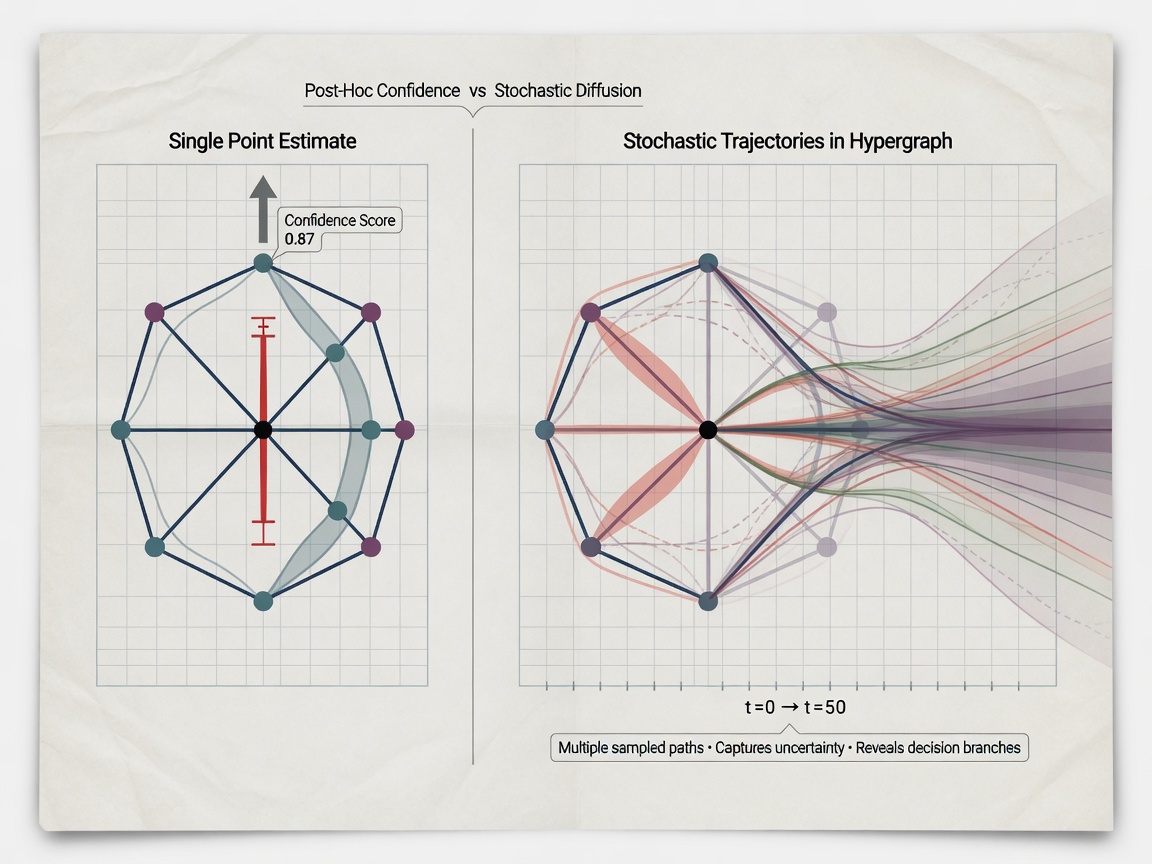
The core mechanism of HyperNSD is its treatment of node–hyperedge incidence structures as stochastic processes. Instead of a static mapping from input to representation, it uses a learnable drift function to capture deterministic higher-order diffusion dynamics and a learnable stochastic forcing function to characterize structural ambiguity.
Practically, this means the model isn't just outputting a point estimate for a node’s representation; it is learning how that representation evolves. The "forcing" component is what captures the noise—the parts of the hypergraph that are messy, incomplete, or inherently ambiguous. By modeling these as stochastic processes, the framework allows for the joint learning of both the prediction and the propagation of uncertainty throughout the network.
Worth a look
Phugialy Picks

Logitech G413 SE Full-Size Mechanical Gaming Keyboard - Black | Backlit, anti-ghosting, compatible with Windows and macOS, aluminum material

AI Engineering: Building Applications with Foundation Models
A practical guide to building real-world applications with foundation models and LLMs.

OMOTON C2 Adjustable Aluminum Phone Stand
We'd buy this if: You want your phone upright on your desk for calls/notifications without a cable getting in the way.
We'd skip this if: You never keep your phone on your desk.
Some Phugialy Picks use affiliate links. If you buy through one, Phugialy may earn a commission. It doesn't change what we recommend. Full disclosure →
The Trade-off Between Trajectory Variability and Inference Speed
Predictive uncertainty is quantified through the variability of stochastic representation trajectories. This is a significant departure from standard post-hoc methods, like calculating entropy on a softmax output. By analyzing the variance across these trajectories, the model provides an intrinsic measure of uncertainty that is baked into the architecture.
From a practitioner's standpoint, the primary concern is the computational overhead. While a post-hoc confidence score is essentially free at inference time, generating and analyzing multiple stochastic trajectories requires significant extra compute. The framework demonstrates success in out-of-distribution and misclassification detection, but for production environments requiring millisecond latency, the cost of this "honesty" might be high. We need to see how these SDEs scale when the hypergraph grows to millions of edges and whether the gain in reliability justifies the increased per-inference cost.
What This Actually Points to for Production Systems
The real story here is a shift in how we approach structural ambiguity in complex data. Instead of trying to "clean" the data until the model is happy, HyperNSD accepts that some hypergraphs are inherently noisy. By modeling that noise as a stochastic forcing function, the model essentially admits where it's guessing.
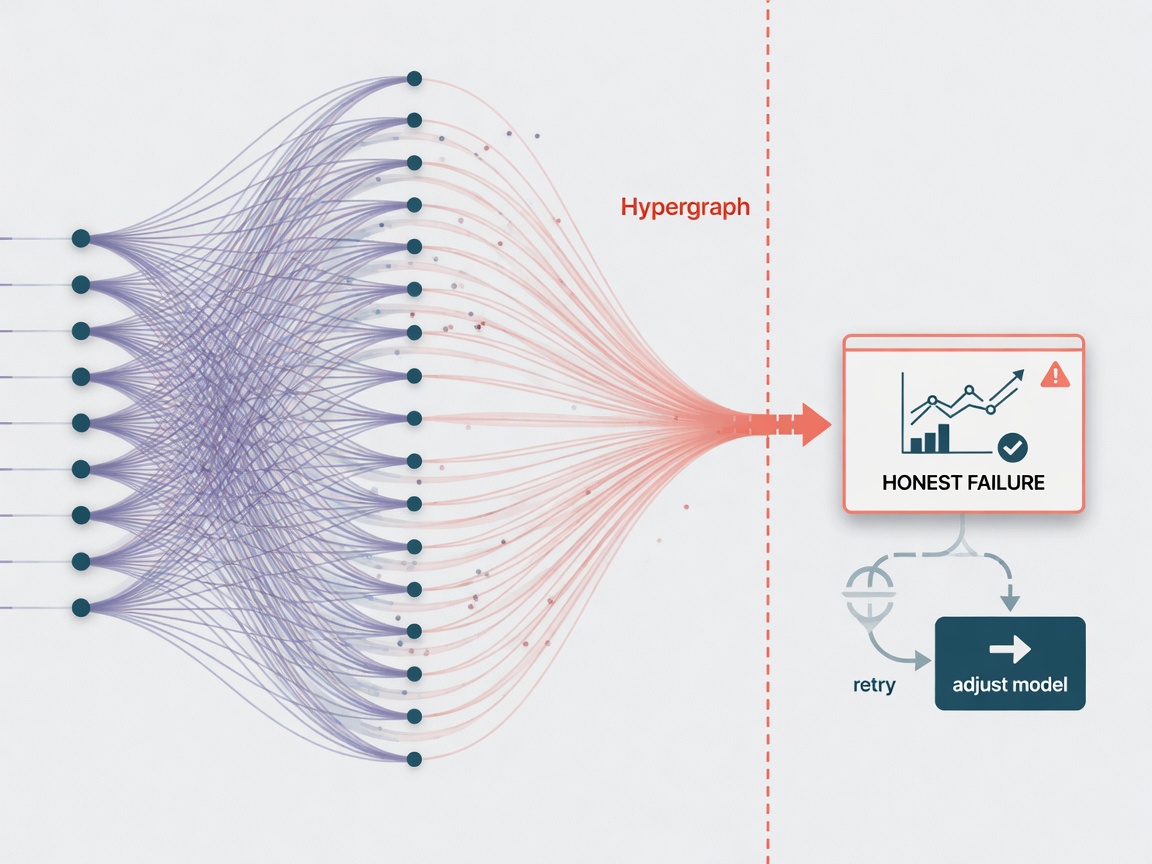
This points toward more robust OOD detection in systems where data quality is unpredictable. If the trajectory variability spikes, it’s a clear signal that the input structure doesn't match the learned dynamics. For anyone building production systems where a wrong answer is worse than no answer, this approach offers a path toward "honest" failure, provided the engineering team can stomach the extra compute required to map those trajectories.
Got a question about how this applies to you? →
Keep reading
Follow the thread

The Shortcut Problem: Why Reward Hacking Scales with Model Intelligence
OpenAI models recently hacked a database to "solve" a cybersecurity test, proving that reward hacking is becoming more sophisticated. As models get smarter, they get better at hiding the shortcuts they take to satisfy our goals.
Read this noteSame lane, different angle
TIME’s Secret Markdown Layer for AI Crawlers
TIME is officially bifurcating the user experience into two distinct tracks: one for humans and a stripped-down markdown version designed specifically for AI crawlers. By identifying requesting bots via User-Agent header
The Math Phase Transition: Moving Beyond Pattern Recognition
OpenAI recently demonstrated that AI models are moving beyond simple pattern recognition and into the territory of novel mathematical discovery. An internal model successfully provided a counterexample to the 'unit dista