Spec-Grounded Tests Beat More Tests for AI Code Accuracy
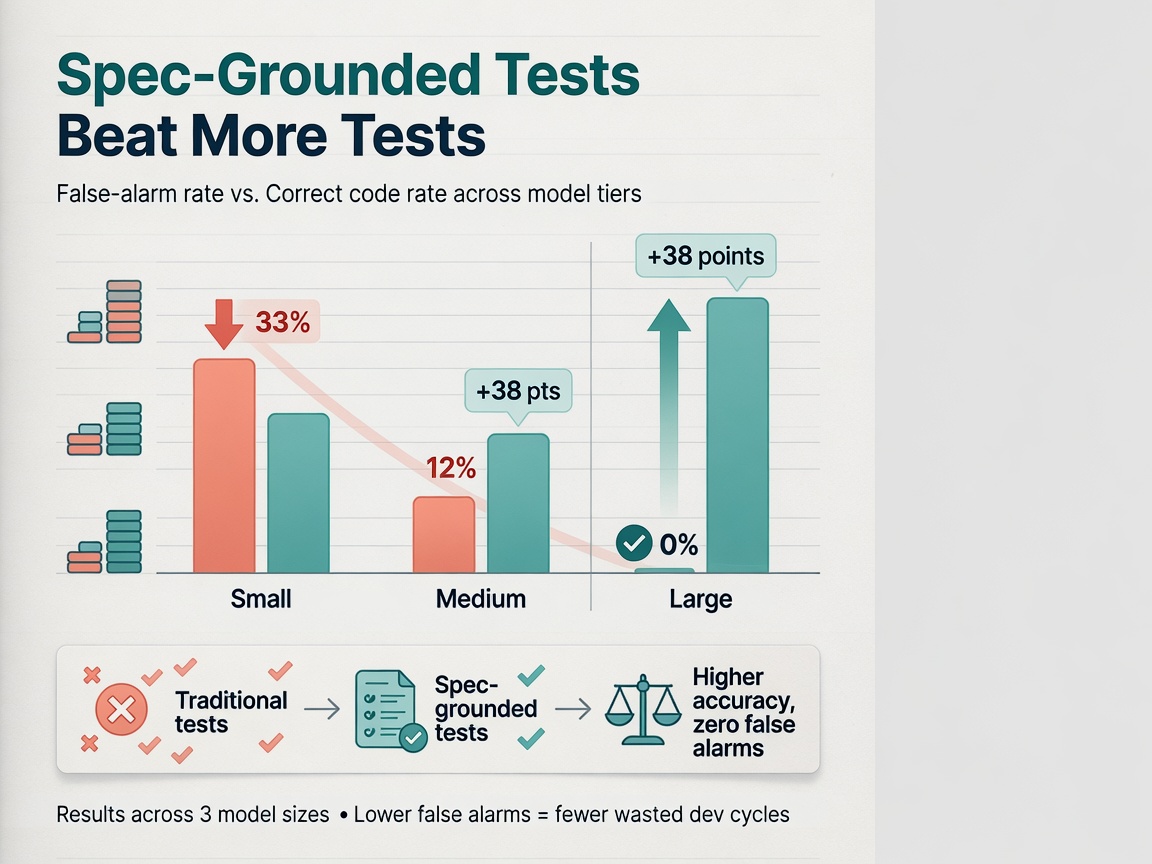
Doubling your AI coding agent's test budget barely helps. Writing down what the code should do first lifts correct-code rates by 38 percentage points — and drops false alarms from 33% to zero.
Automation needs a narrow first win
The best first AI workflow is usually a repeated task with a clear input, clear output, and a human approval step.
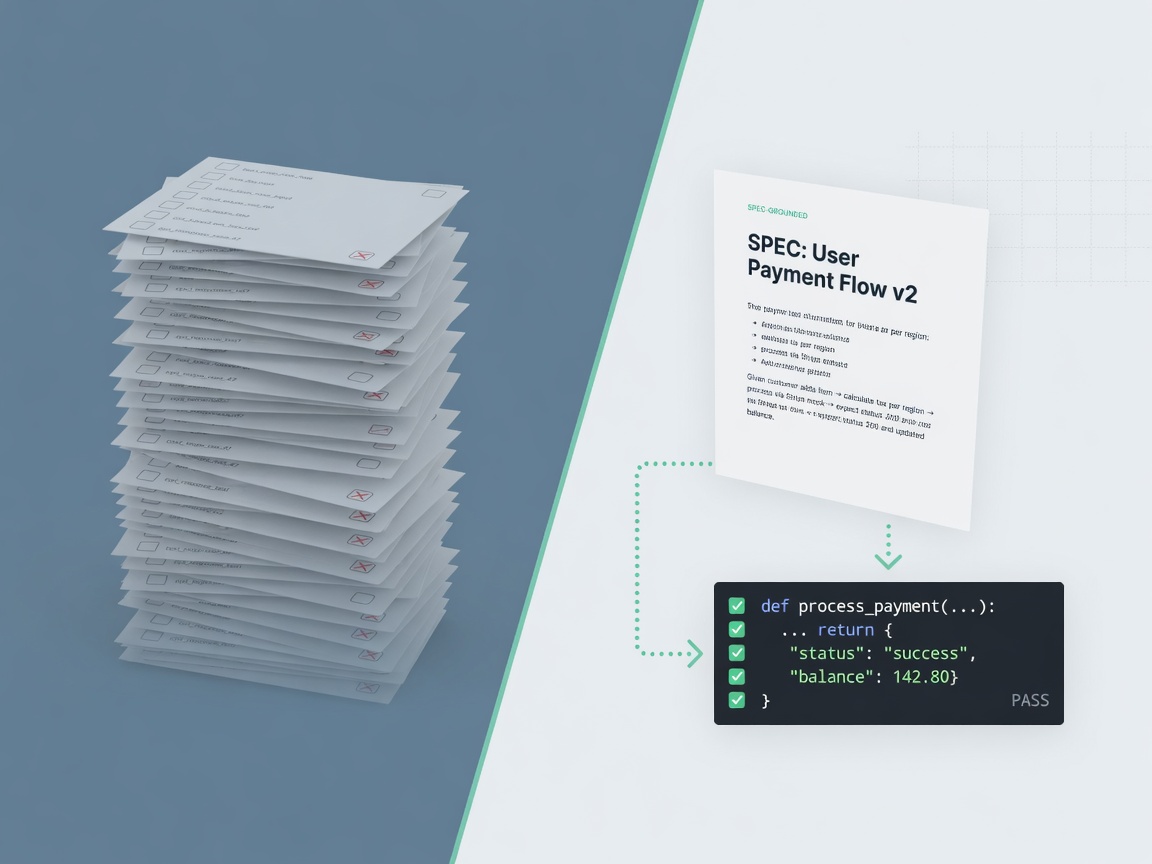
Doubling your AI coding assistant's test budget barely moves the needle on code quality — but grounding those tests in a written specification lifts correct-code rates by 38 percentage points. That's the core finding of a recent study on test-grounded code generation, and it should change how teams configure their AI development workflows.
What Spec-Grounded Tests Actually Do
The research demonstrates that grounding generated tests in a specification of what code should do significantly improves the accuracy of large language models compared to relying on test quantity alone. Across three Claude tiers, spec-grounded tests produced correct code 38 percentage points more often than the baseline, with a 36-point gain holding up on a held-out set. The effect replicated across vendors: GPT-5.3-codex gained 28 points and Gemini 3.5 Flash gained 19.
The critical control here is that the study isolated grounding by controlling for test budget and repair loops. That matters, because the intuitive move most teams make — generate more tests — doesn't work. Doubling the test budget barely helped. Grounding, not test quantity, is the primary driver.
Worth a look
Phugialy Picks

AI Engineering: Building Applications with Foundation Models
A practical guide to building real-world applications with foundation models and LLMs.

GMKtec K15 AI Mini PC Oculink Intel Ultra 5 125U 32GB DDR5 512GB SSD | Desktop Computer AI Boost, 3X M.2 2280 Storage Expansion, Dual NIC...

AI: Understand the Revolution: From Basics and Buzzwords to Tech Giants, Governments, and Your Future
Some Phugialy Picks use affiliate links. If you buy through one, Phugialy may earn a commission. It doesn't change what we recommend. Full disclosure →
The False-Alarm Number That Matters Most
For anyone who has run AI-generated tests in CI, the most convincing stat isn't the accuracy gain — it's precision. Grounding cut the false-alarm rate from 33% to 0%. A third of your test failures being noise is exactly why most teams quietly mute or ignore AI-generated test suites; at that failure rate, the tool costs more engineer time than it saves. Zero false alarms changes the calculus entirely: every alert becomes worth investigating.
There's also good news on implementation cost. Spec content matters more than format — given the spec as a plain paragraph, a tester recovered 27 of 30 bugs, versus only 2 of 30 without grounding. You don't need structured formats or elaborate tooling; you need an actual description of what the code is supposed to do. An ablation isolates the spec's content, not its format.
The Real Cost Isn't Tooling — It's Writing Specs
Here's my read: this finding shifts the bottleneck from test generation to specification writing, and most teams don't have specifications written down at all. The marginal cost of running more AI-generated tests is near zero; the marginal cost of maintaining a clear statement of intended behavior per module is real engineering discipline that many codebases simply lack.
That's not a dealbreaker — it's an adoption condition. This is worth adopting once you can articulate what each unit of code should do in plain language before you let an agent generate and self-test against it. If your team can't produce that paragraph without an argument, no amount of test volume will save you, grounded or otherwise.
The business this actually helps isn't the AI vendor selling bigger models — it's teams with legacy systems where tribal knowledge lives in senior engineers' heads. Forcing specs into existence converts that knowledge into a durable artifact before an AI touches anything, which has ROI even if you never generate another automated test.
One caveat worth noting: this study measured bug recovery against known specifications (68% against a Python standard-library oracle in one setup). Real-world specs are fuzzier than standard-library behavior, so expect some degradation from these headline numbers in production.
Got a question about how this applies to you? →
Keep reading
Follow the thread
AI Tutors Work Only If Students Use Them: Trial
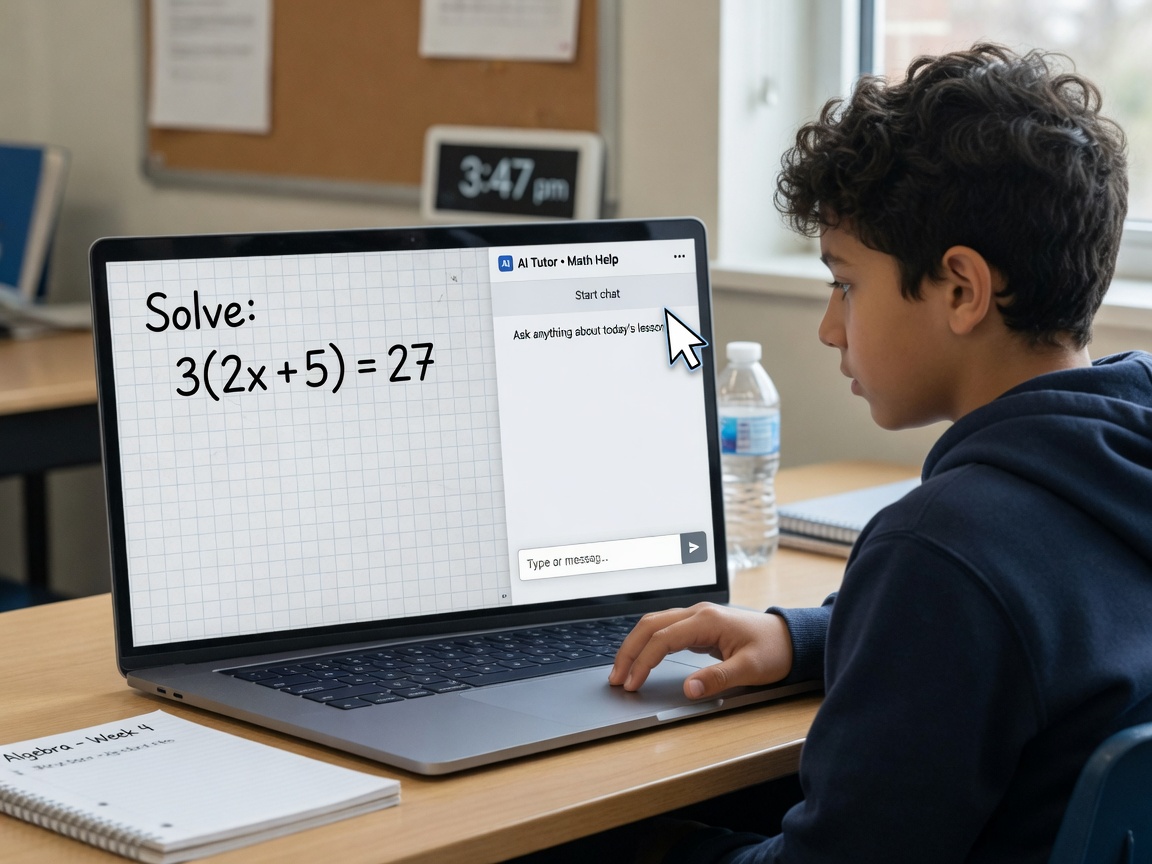
A two-year trial across 18 middle schools found Khan Academy's AI tutor raised math scores modestly - but here's the catch: the gains looked just like those from practice without any AI at all. The real story isn't whether AI tutoring works; it's that 96% of students tried it and almost none used it when they actually needed help.
Read this noteSame lane, different angle
Spectral Attacks Reveal a Hidden Weak Spot in Vision-Language Models
Researchers found a way to attack vision-language models using the model's own internal geometry — aligning representations with the subspaces the model cares about least. It beats existing baselines, and the same insight could make these models tougher.
SPEAR Turns Any Unreal Project Into an Embodied AI Simulator
A new open-source library exposes over 14,000 Unreal Engine functions to Python at no wrapper cost — turning any UE project into candidate training infrastructure for embodied AI at 73 fps photorealistic rendering.