Google's HEIR: Running AI Inference on Encrypted Data
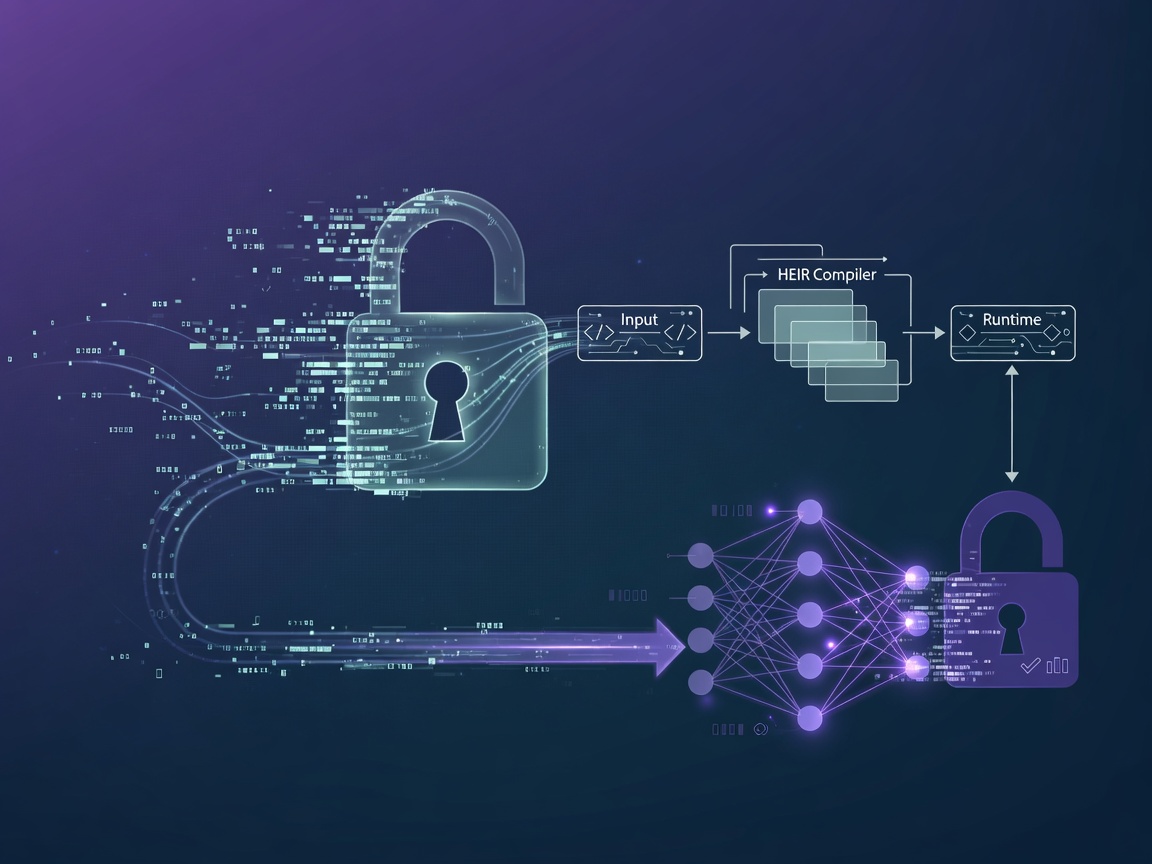
Google shipped HEIR, an open-source compiler toolchain that converts pre-trained AI models to run on homomorphically encrypted data — a model can produce inference results without ever seeing the plaintext inputs. The de
Automation needs a narrow first win
The best first AI workflow is usually a repeated task with a clear input, clear output, and a human approval step.
Google shipped HEIR, an open-source compiler toolchain that converts pre-trained AI models to run on homomorphically encrypted data — a model can produce inference results without ever seeing the plaintext inputs. The demo conditions are specific: four working applications (recommendation, fraud detection, threat intrusion, and hotword detection), four peer-reviewed publications behind the design, and hardware accelerator partnerships with Belfort, Niobium, Cornami, and Optalysys to attack the performance problem.
What HEIR Actually Does
HEIR — Homomorphic Encryption Intermediate Representation — is a compiler, not a library. That distinction matters when you're the one integrating it. A library gives you calls you make from your code; a compiler takes a model that already works on unencrypted data and translates it into something that works on encrypted inputs. Google's stated vision is to make HEIR "a one-click solution to enable non-experts to incorporate encrypted inference into production applications."
One-click is the right target and the hardest possible promise in this space. Homomorphic encryption has always carried a steep expertise tax — schemes, parameter tuning, noise budgets. If HEIR absorbs that into the toolchain, the audience for private inference stops being cryptography researchers and becomes application developers. That's the shift worth watching, and the four demo applications are chosen like a developer would choose them: fraud detection and threat intrusion are exactly the workloads where you can't ship raw sensitive data to a model host, and where the accuracy hit of encryption is tolerable because the alternative is a compliance problem, not a benchmark problem.
Phugialy Picks

AI Engineering: Building Applications with Foundation Models
A practical guide to building real-world applications with foundation models and LLMs.

GMKtec K15 AI Mini PC Oculink Intel Ultra 5 125U 32GB DDR5 512GB SSD | Desktop Computer AI Boost, 3X M.2 2280 Storage Expansion, Dual NIC...

AI: Understand the Revolution: From Basics and Buzzwords to Tech Giants, Governments, and Your Future
Some Phugialy Picks use affiliate links. If you buy through one, Phugialy may earn a commission. It doesn't change what we recommend. Full disclosure →
The Hardware Bet Nobody Should Skip
The partner list — Belfort, Niobium, Cornami, Optalysys — tells you where the real bottleneck lives. Homomorphic encryption on commodity CPUs is brutally slow; the gap between a clean demo and production latency is measured in orders of magnitude, not percentages. Google didn't build HEIR as a purely software story. They wired the compiler to hardware accelerator vendors so the compiled output can target silicon designed for the workload.
The catch, and it's the one I'd watch: a compiler plus a hardware ecosystem only pays off if the whole path is actually integrated. If HEIR compiles cleanly but the accelerator path requires custom engagement with a vendor, the "one-click for non-experts" vision stalls at the last mile. The source doesn't claim that integration is done, and I wouldn't assume it is.
Where This Fits in a Real Stack
HEIR is also positioned as a research platform, with collaborations across universities and cryptographers. That's not a footnote — it's a maturity signal. A tool that's simultaneously a production pitch and a research substrate is early, and early means rough edges: parameter choices that don't transfer, model architectures that don't compile cleanly, performance cliffs beyond the demonstrated workloads.
What this actually points to, in my read, is a privacy-infrastructure play rather than a model play. The four applications are the honest part of the announcement — narrow, real workloads where encrypted inference makes business sense today. The broader vision of encrypting everything is further out, and the accelerator partnerships are the tell for how long that road is. If you handle regulated data in healthcare or finance, prototype against this now; if you don't, file it and check back once the hardware path is something you can rent instead of build.
Got a question about how this applies to you? →
Keep reading
Follow the thread
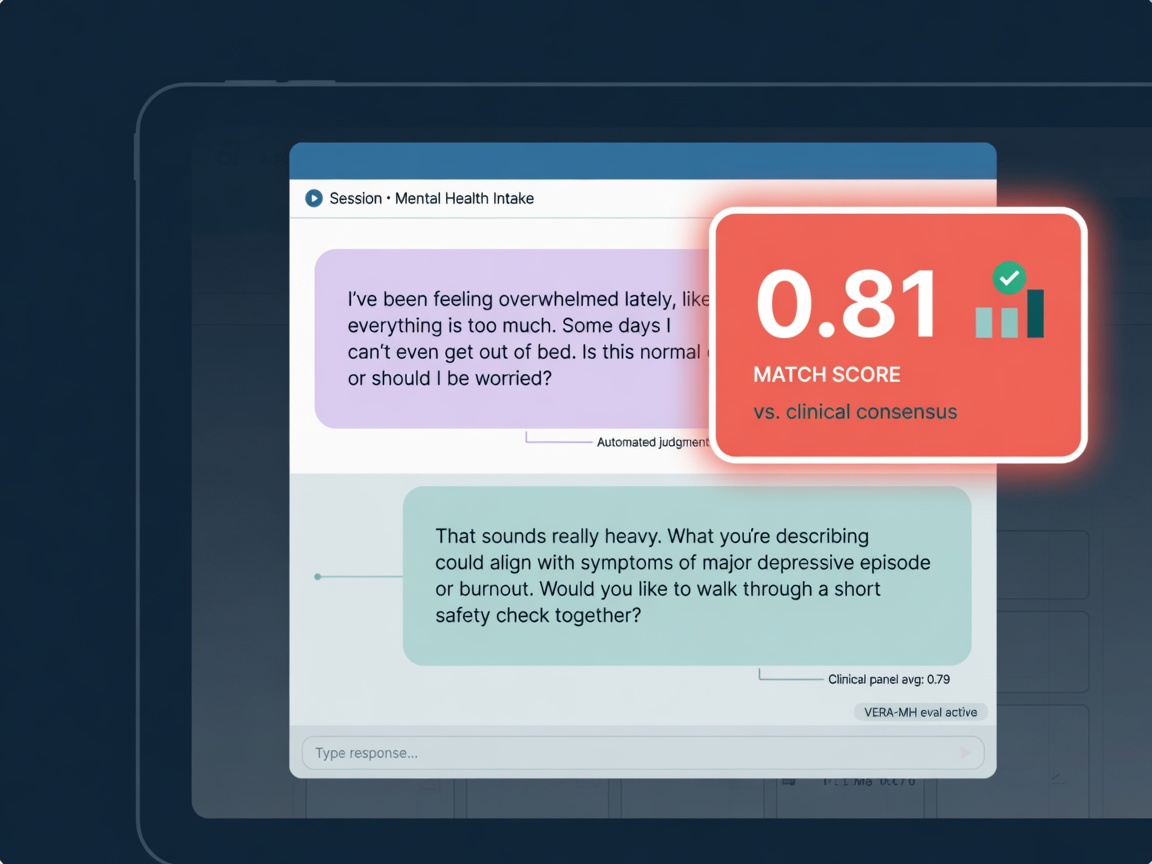
VERA-MH Benchmark: Validating AI Chatbot Safety Testing
An LLM judge matched clinician consensus at 0.81 on mental health chatbot safety ratings — but only for one narrow domain. What VERA-MH validates is real; what people will assume it covers isn't.
Read this noteSame lane, different angle
37 An Hour To Train Your Replacement: Inside AI Training Jobs
A Ph.D. graduate was offered $37 an hour — eighteen times South Africa's minimum wage — to teach an AI system how he thinks. He walked away, but most won't.
AI Route Optimisation Is Already Paying For Itself
Your shipping platform can now tell you not just where your cargo is, but which route to take, which carrier to pick, and which option carries the least risk. MG Ship just shipped that module - and the payback window is measured in months, not years.