AI Coding Agents Are Becoming Team Infrastructure
AI coding agents are moving from individual prompts into managed team infrastructure; the useful work is defining scope, review gates, and production promotion paths.
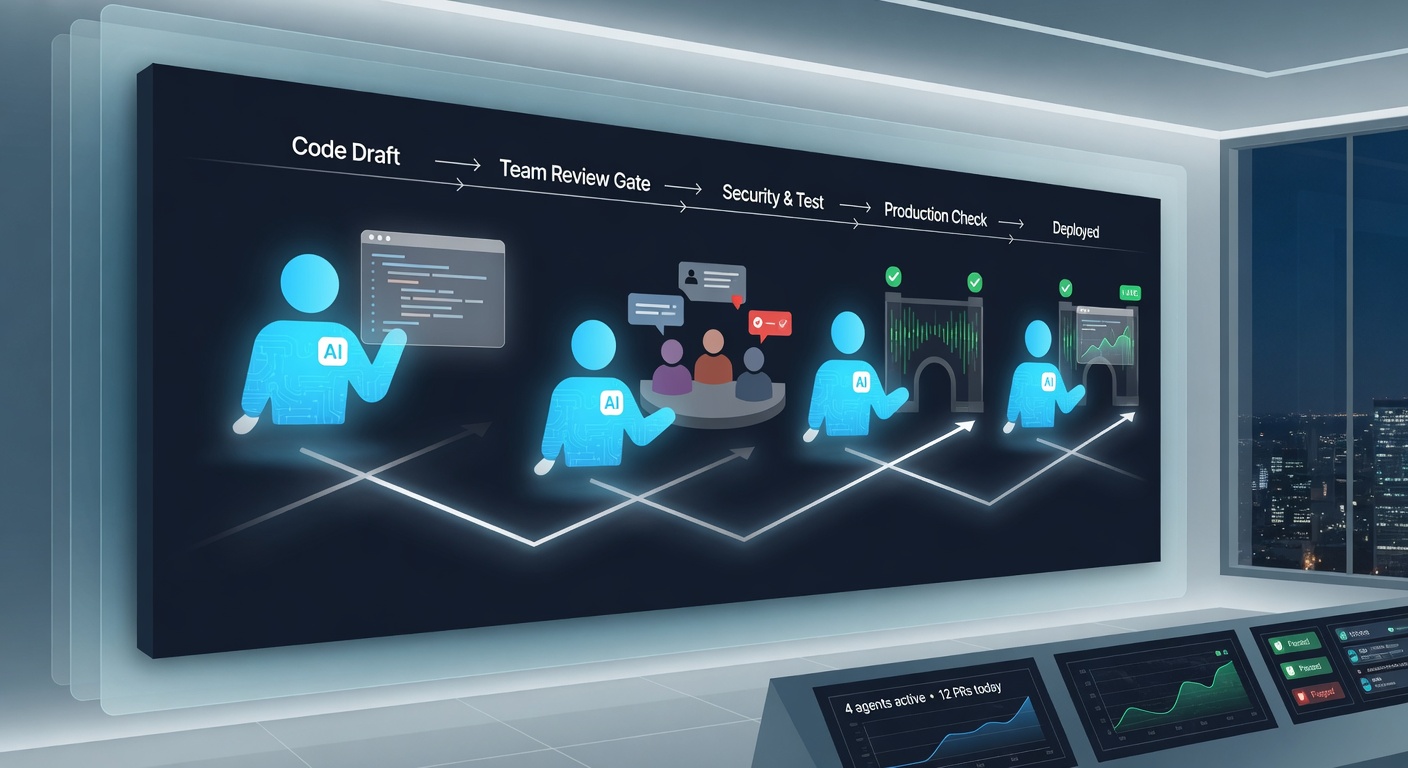
Agents need team boundaries
The useful shift is not more generated code. It is putting agent output through scope, review, tests, and release checks.
AI Coding Agents Are Becoming Team Infrastructure
The problem
AI coding agents are moving quickly, but the interesting shift is not just that they can write more code. The bigger shift is that they are becoming infrastructure for how teams plan, review, test, and ship software.
That changes the question. Instead of asking whether an agent can complete one task, I would ask whether the team can control the workflow around the agent.
Worth a look
Phugialy Picks

LG 34WR55QK-B 34-inch UltraWide WQHD (3440 x 1440) Curved Computer Monitor, 100Hz, 5ms, HDR10, Reader Mode, HDMI, DisplayPort, USB Type-C...

LG 38WN75C-B Monitor 38" 21:9 Curved UltraWide QHD+ (3840 x 1600) IPS Display, HDR 10, sRGB 99% Color Gamut, Tilt/Height Adjustable Stand...

The Agentic AI Bible: The Complete and Up-to-Date Guide to Design, Develop, and Scale Goal-Driven, LLM-Powered Agents that Think, Execute...
Some Phugialy Picks use affiliate links. If you buy through one, Phugialy may earn a commission. It doesn't change what we recommend. Full disclosure →
What changed
Google used I/O 2026 to frame development around agentic workflows, including Antigravity 2.0, managed agents in the Gemini API, persistent isolated environments, and production-oriented paths from idea to application.
OpenAI also announced a Dell partnership focused on bringing Codex closer to hybrid and on-premises enterprise environments. The important part is context: codebases, documentation, business systems, operational knowledge, and team workflows all become part of what makes an agent useful.
This is not just tool competition. It is a sign that agentic coding is becoming a team systems problem.
My take
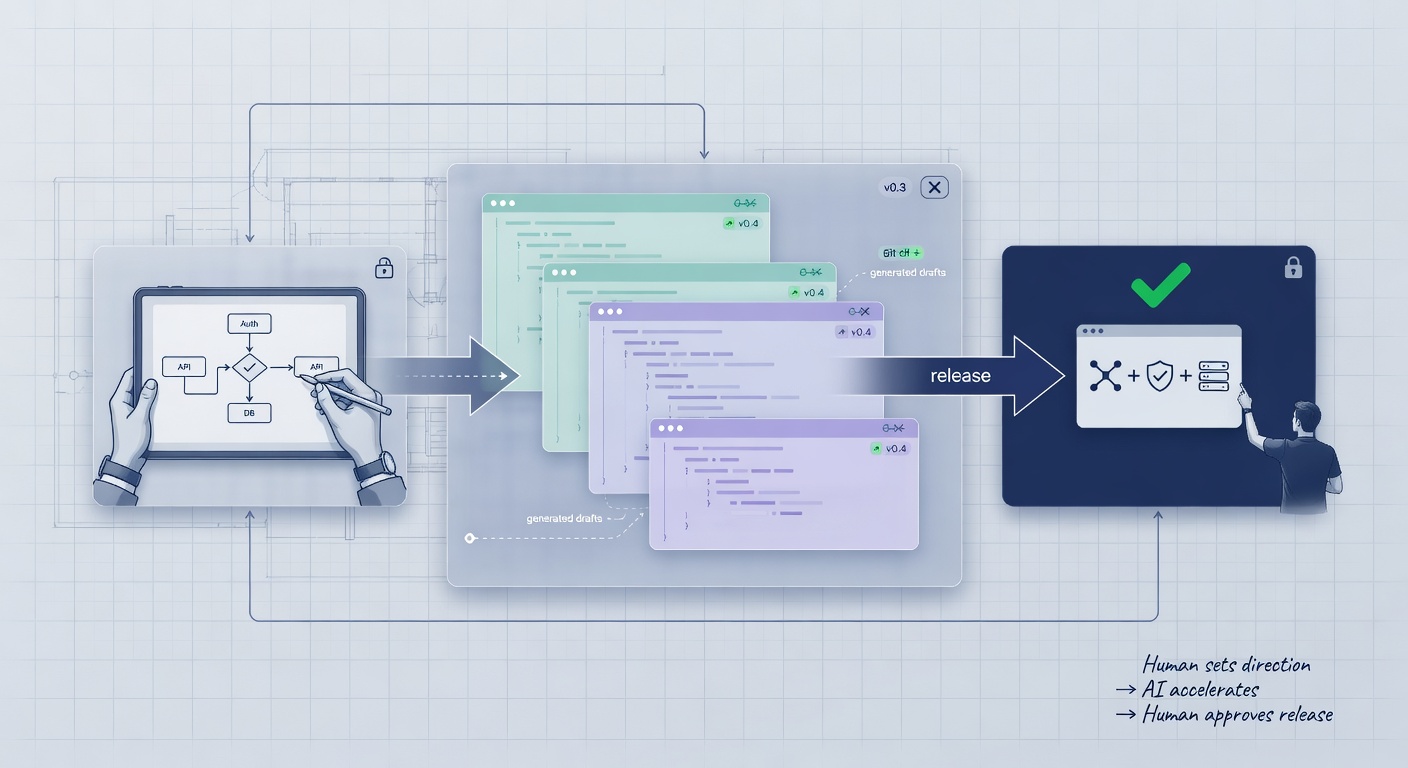
I do not think the best teams will win by giving every developer more unbounded automation. They will win by deciding where agents belong in the software delivery process.
A useful agent workflow needs three things:
- Clear scope.
- Reviewable output.
- A promotion path from draft to production.
Without those, teams get speed without control. With them, agents can become a practical layer in the engineering system.
Where AI fits
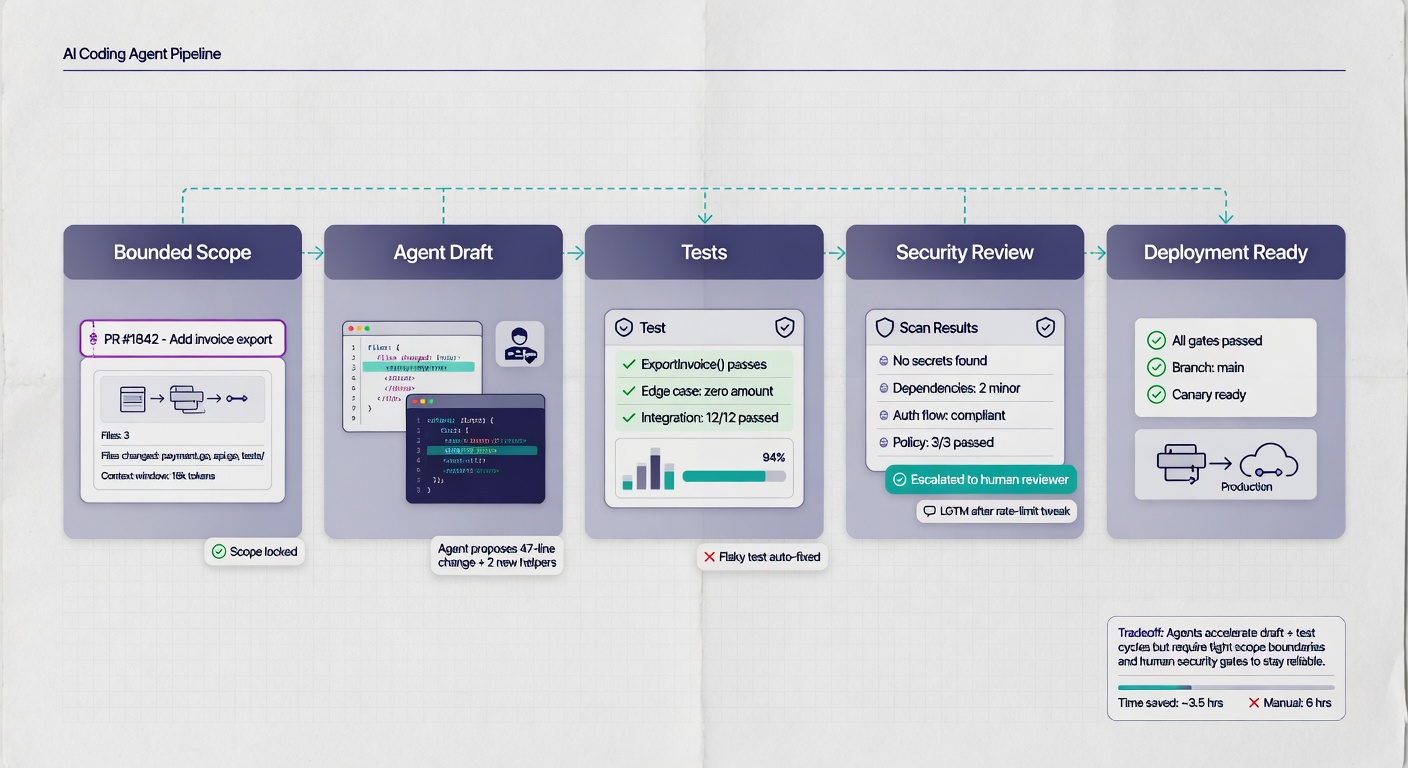
The strongest fit is repeatable engineering work that already has review gates: test generation, documentation updates, small refactors, bug reproduction, issue triage, release notes, and first-pass implementation drafts.
Those tasks are valuable because they are bounded. A team can inspect the diff, run the tests, and decide whether the agent helped or created more cleanup.
That is different from letting an agent roam across a whole product with no checkpoints.
Practical example
For a portfolio or small business software project, I would start with one route or one workflow.
The agent receives the task, reads the relevant files, proposes a patch, and produces a short review note. The human checks architecture, security, data handling, and user impact. Only then does the work move toward deployment.
If the agent keeps making the same mistake, that becomes process feedback. The fix may be better instructions, narrower scope, stronger tests, or a more explicit definition of done.
What I would avoid
I would avoid treating managed agents like magic background workers. A persistent environment is useful, but persistence also means stale assumptions can accumulate. A team still needs reset points, logs, audit trails, and clear ownership.
I would also avoid approving agent work from convenience alone. Mobile approval, remote sessions, and background tasks are powerful, but they should not turn review into a rushed tap on a small screen.
How I would use this
For my own workflow, I would use agents as production assistants, not production owners.
They can draft, organize, compare, test, and explain. I still want a human-owned checkpoint before anything changes a live system, a customer-facing page, or a portfolio artifact with my name on it.
Try this next
Pick one software workflow and write down the agent boundary:
- What can the agent change?
- What must the human review?
- What test or signal proves the work is ready?
That is where agentic coding becomes useful: not when it feels autonomous, but when it fits inside a workflow a team can trust.
References:
Got a question about how this applies to you? →
Keep reading
Follow the thread
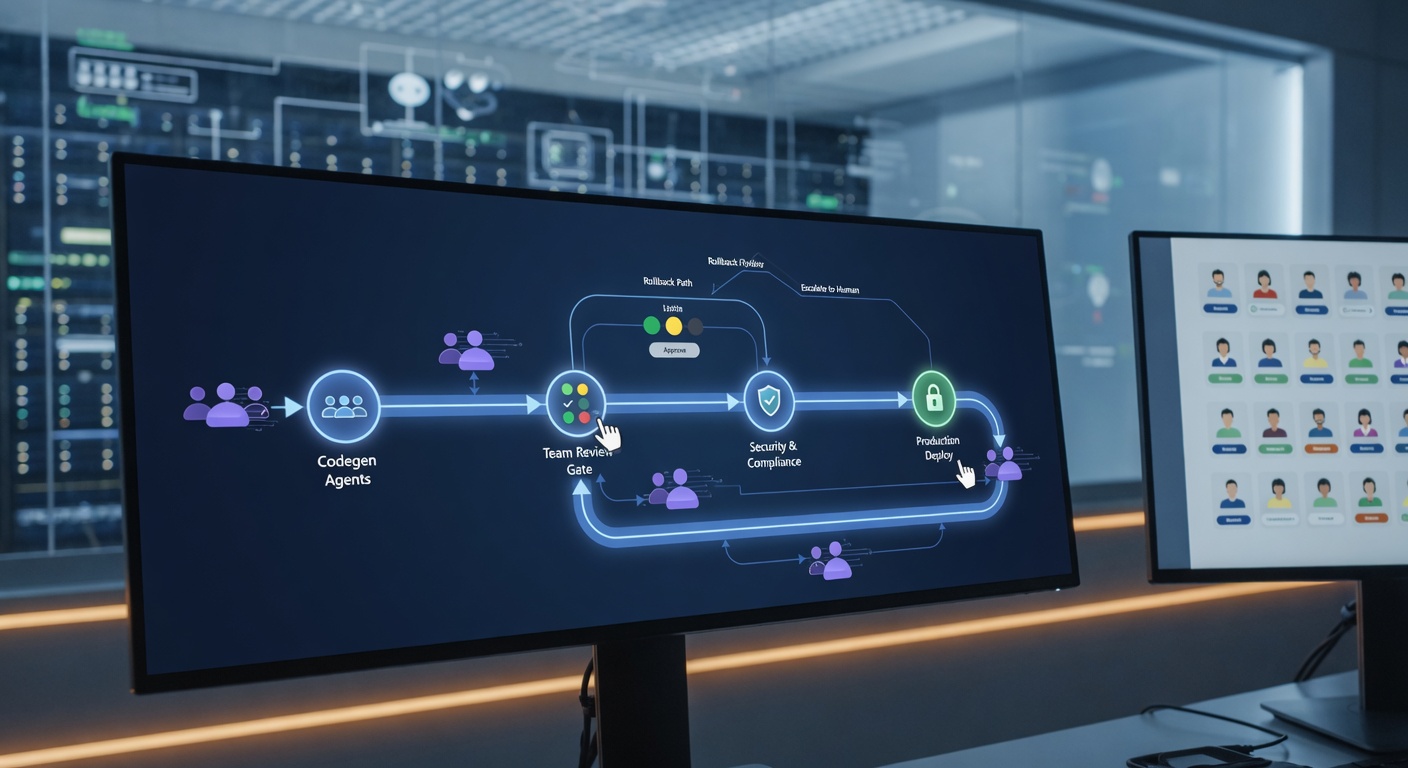
Codex Moving Into Enterprise Infrastructure Is Really About Workflow Control
A practical look at why enterprise Codex adoption is less about AI hype and more about context, review gates, cost control, and production workflow discipline.
Read this noteSame lane, different angle
Why Most Enterprise AI Agents Never Reach Production
Two out of three enterprise AI agents never reach production — and the reason isn't model quality. It's that the agent doesn't know what your data means.
AgentsDock: One Workspace for Agentic AI Research
AgentsDock 1.0 puts Claude Code, Codex, and Cursor in one workspace reachable from your phone - with training plots showing up inline in chat instead of behind an SSH login.