DAYJOB: Tax Benchmark Puts AI Agents’ Judgment to Test
The top model on Surge AI’s DAYJOB: Tax benchmark passes only 10.8% of assignments. The tougher test is whether an agent notices the important tax question its client never thought to ask.
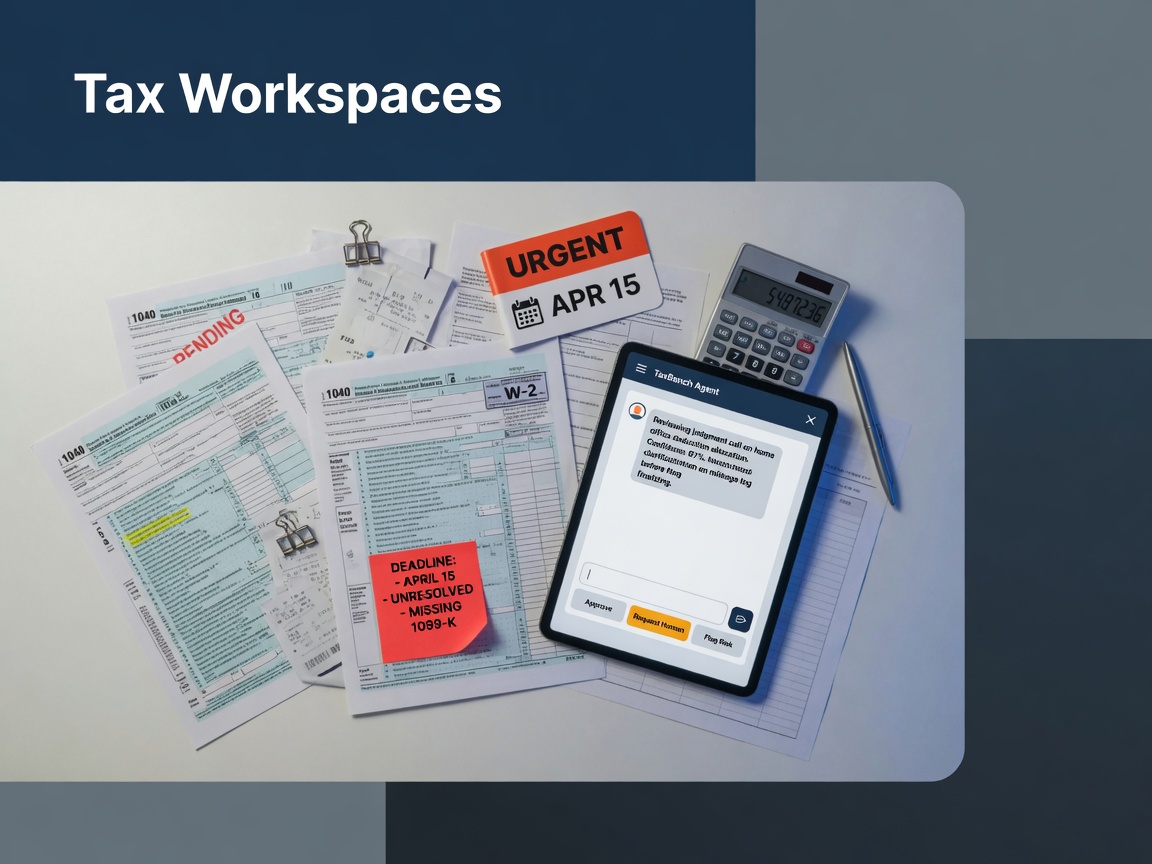
Automation needs a narrow first win
The best first AI workflow is usually a repeated task with a clear input, clear output, and a human approval step.
Surge AI’s DAYJOB: Tax benchmark gives AI agents complex tax assignments and scores whether they can do the work—and notice consequential issues clients may not know to ask about. Claude Sonnet 5.5 leads at a 10.8% pass rate, a result that says more about how far agents have to go than about readiness to handle client tax work.
What the DAYJOB: Tax benchmark measures
The benchmark covers 50 environments across eight areas of tax practice. Each workspace contains financial and tax records, and assignments test tax knowledge, calculations, evidence retrieval, instruction following, and professional judgment. Across the workspaces are 1,789 files: a median of 30 per assignment and as many as 123, including 1,487 PDFs, 117 Excel workbooks, and 38 Word documents.
That mix matters because tax work is not just a calculation problem. An agent may need to find evidence across documents, reconcile conflicting records, and decide which questions to raise before advising a client. DAYJOB: Tax explicitly tests whether agents investigate issues the client has overlooked—not only whether they answer the question they were given.
Worth a look
Phugialy Picks

AI Engineering: Building Applications with Foundation Models
A practical guide to building real-world applications with foundation models and LLMs.

GMKtec K15 AI Mini PC Oculink Intel Ultra 5 125U 32GB DDR5 512GB SSD | Desktop Computer AI Boost, 3X M.2 2280 Storage Expansion, Dual NIC...

2084 and the AI Revolution, Updated and Expanded Edition: How Artificial Intelligence Informs Our Future
Some Phugialy Picks use affiliate links. If you buy through one, Phugialy may earn a commission. It doesn't change what we recommend. Full disclosure →
A 10.8% pass rate is a demanding signal
The leaderboard’s leading model, Claude Sonnet 5.5, has a 10.8% pass@1 rate. Claude Fable 5.1 scores 9.6%, and Claude Opus 5.5 scores 9.2%. An attempt counts as a pass only when it meets a 95% rubric threshold.
Those numbers are sobering, but they need the rubric alongside them: this is not a general measure of tax knowledge, but a strict test of complete performance on these assignments. My read is that the narrow gap between the listed models is less important than the low absolute pass rates. Even the leader rarely clears the benchmark’s bar on a single attempt. That is useful evidence against treating a plausible answer—or a strong result on a narrower task—as proof of dependable end-to-end tax work.
The overlooked question is part of the job
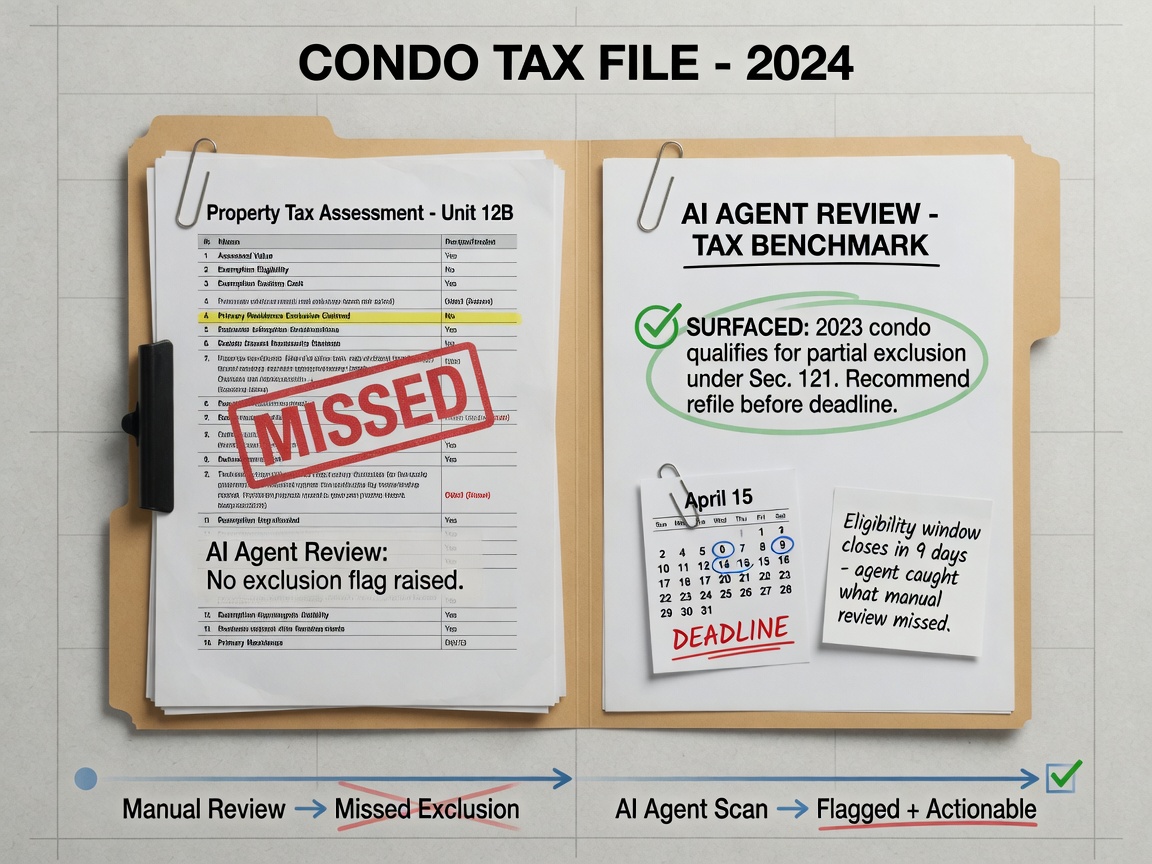
The condo example makes the benchmark’s standard concrete. Astra failed to identify a deadline that could affect eligibility for a tax exclusion; Opus identified it in all five attempts. The point is not simply that one model caught something another missed. The assignment asks whether an agent will investigate a consequential issue the client may not know to raise.
That is a harder and more practical bar than answering a well-formed prompt. In production, a tax agent’s mistake could be an omission hidden inside otherwise competent work. But the figures here do not establish how often these systems would succeed outside DAYJOB’s environments, or what review would be needed before a client relied on them. My takeaway: the benchmark tests a capability worth measuring, while its low pass rates argue for keeping human review firmly in the loop. The next useful signal is whether agents can improve on these complex assignments without losing the habit of checking evidence and surfacing the question nobody asked.
Got a question about how this applies to you? →
For another look at what benchmark scores do and do not reveal, read “EEBench: What AI Circuit Design Scores Actually Reveal.”
Keep reading
Follow the thread
AI Training Data Needs Better Agent Evaluations
Handshake’s AI training business reportedly reached $1 billion in gross annualized revenue about a year after launch. Its benchmark demonstrations make the less comfortable point: a polished final answer can hide mistakes in how an agent handled the task.
Read this noteSame lane, different angle
Generative AI for Information Is Growing, Not Agents
Generative AI is already a common route to information, but that does not mean people are ready to hand over tasks to agents or let AI write the news. The gap between those uses is the part product teams should pay attention to.
Autonomous Security Operations: What Greenlight Shows
Greenlight says its AI system resolves more than 90 percent of security and risk cases. The architecture behind that figure includes escalation, memory, and a feedback pipeline—but the rate alone does not show whether the hardest mistakes are being caught.