Predictive Analytics Is Turning Into Autonomous Decision Making
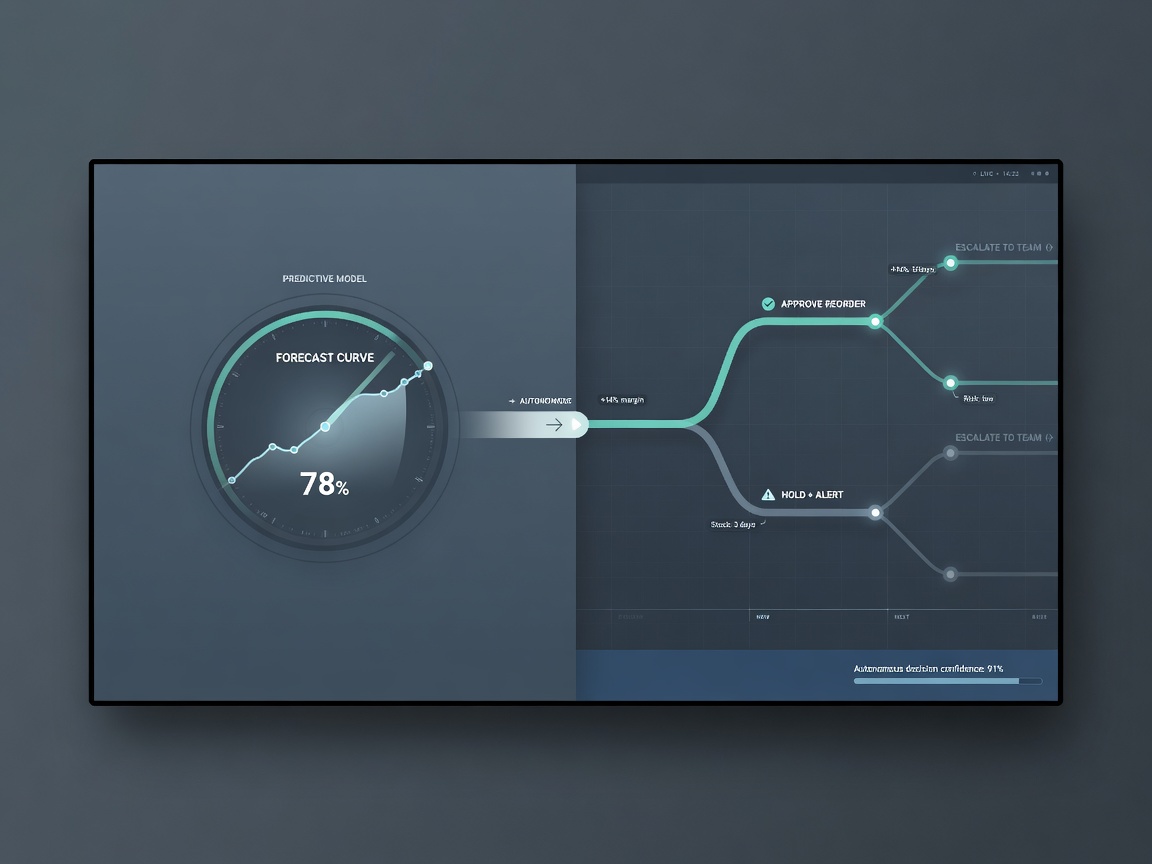
Enterprise AI's question has changed: not whether models predict better than statistics, but whether you can let them act on their own without drifting from business intent. That second question has no benchmark yet.
Automation needs a narrow first win
The best first AI workflow is usually a repeated task with a clear input, clear output, and a human approval step.
Enterprise AI's frontier has shifted from predicting outcomes to making decisions on their own - and the hard question is no longer model accuracy, but whether autonomous systems stay aligned with business intent. That's the picture emerging from reporting on where enterprise analytics is headed by 2026, and it deserves less hype and more scrutiny than it usually gets.
The Shift From Hindsight To Foresight
The core change, per Everest Group partner Vishal Gupta, is that enterprises are done with backward-looking views. "Enterprises are done with a backward-looking point of view; they want to be more forward-thinking," he says. Predictive analytics was always sold as foresight, but in practice most deployments told you what happened last quarter with slightly better charts. The new claim is that intelligent analytics powered by deep learning and generative AI can act in real time, not just report.
Two technical shifts back that up. First, real-time training means models can evolve continuously instead of waiting for quarterly refreshes. Second, predictive engines now consume unstructured, interaction-rich data alongside the numerical records they were built on. Both are real capabilities, and both change what's possible.
Worth a look
Phugialy Picks

AI Engineering: Building Applications with Foundation Models
A practical guide to building real-world applications with foundation models and LLMs.

GMKtec K15 AI Mini PC Oculink Intel Ultra 5 125U 32GB DDR5 512GB SSD | Desktop Computer AI Boost, 3X M.2 2280 Storage Expansion, Dual NIC...

Agentic AI Engineering: Systems That Reason and Act Autonomously – Designing, Building, and Prompting LLM-Based Agents for Real-World Deployment
Some Phugialy Picks use affiliate links. If you buy through one, Phugialy may earn a commission. It doesn't change what we recommend. Full disclosure →
What Actually Holds Up - And What Doesn't
Here's the part worth being skeptical of: continuous learning and autonomous action are exactly the combination that makes drift hard to detect. If a system retrains in real time and then acts on its own conclusions, the gap between "what the business intended" and "what the model is now optimizing for" can open quietly. The source article frames this correctly - the question is how to let systems act autonomously without drifting from business intent - but that framing is the problem statement, not a solved one. Nobody in this material claims it's solved.
The other quiet shift: Gupta notes that "in many ways I think the word 'analytics' is giving way to AI. Everything is becoming AI." My read is that this is partly a real technical convergence and partly a vocabulary reset that makes procurement harder. When everything is AI, it gets much easier to rebrand last decade's dashboards as agentic systems. Buyers should ask for the decision boundary: what can the system do without a human, and what triggers a stop?
The Practical Tradeoff Nobody Puts In The Deck
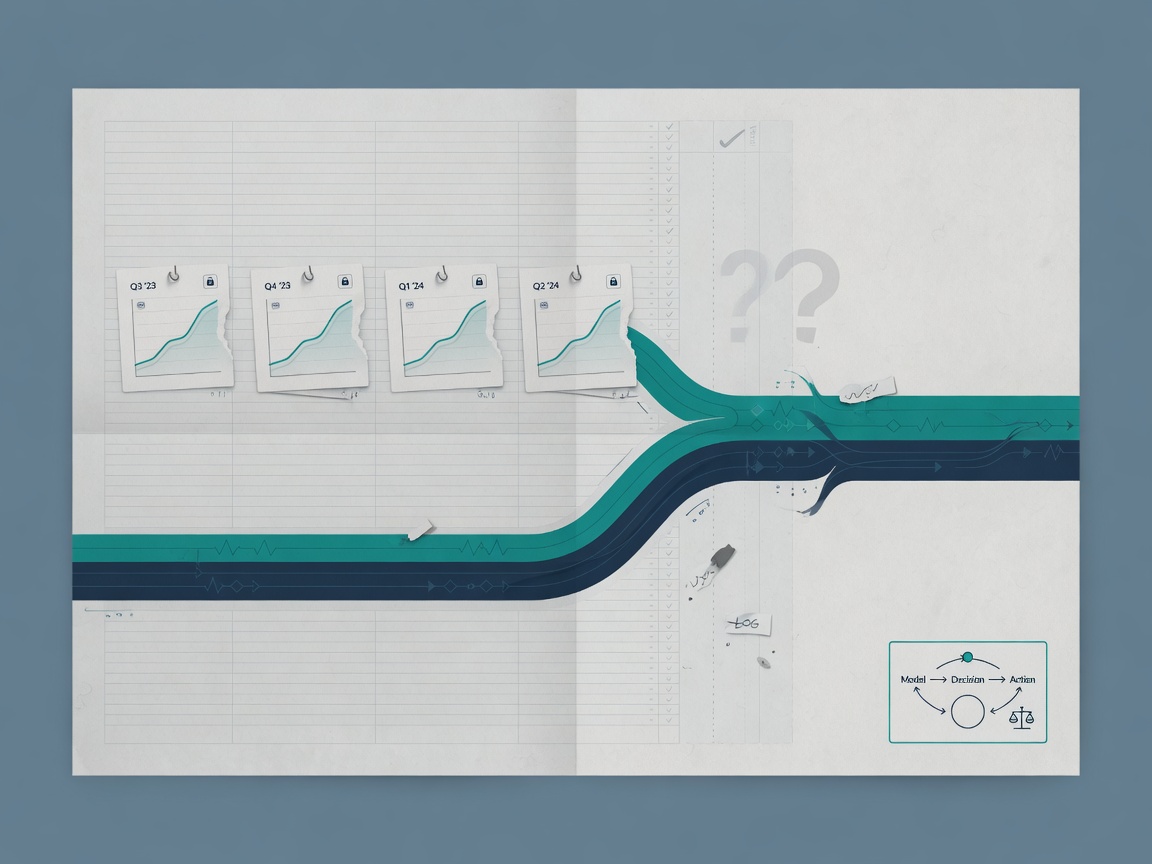
In practice this means trading auditability for speed. Quarterly refreshes were slow, but they gave you clean checkpoints - you knew which model produced which decision. Real-time training plus autonomous action collapses that traceability. If your compliance, finance, or risk teams can't reconstruct why the system did something last Tuesday, the forward-looking capability Gupta describes comes with a cost the press release won't mention.
None of this makes the trend wrong. Unstructured data and continuous learning genuinely expand what predictive systems can see, and enterprises wanting foresight over hindsight is a legitimate demand. But the honest version of this story is that the industry has moved the hard problem from prediction to governance, and most organizations are further behind on the second one than they think.
The teams that get this right won't be the ones with the most autonomous agents. They'll be the ones who can answer, concretely, how they'd notice drift before their customers do.
If you're thinking about how opaque these systems already are, the piece on decoding the AI black box - "The Geometry of Thought: Decoding the AI Black Box" - pairs well with this one.
Got a question about how this applies to you? →
Keep reading
Follow the thread
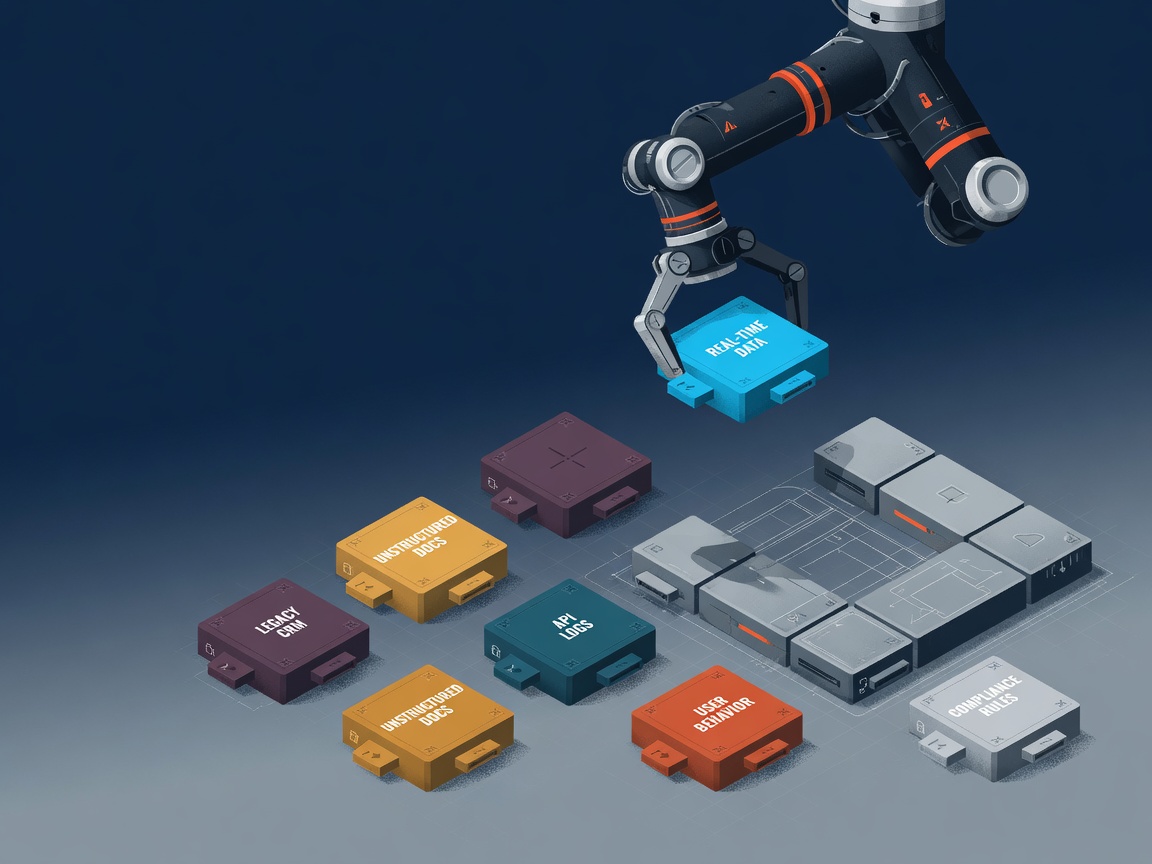
Why Most Enterprise AI Agents Never Reach Production
Two out of three enterprise AI agents never reach production — and the reason isn't model quality. It's that the agent doesn't know what your data means.
Read this noteSame lane, different angle
AgentsDock: One Workspace for Agentic AI Research
AgentsDock 1.0 puts Claude Code, Codex, and Cursor in one workspace reachable from your phone - with training plots showing up inline in chat instead of behind an SSH login.
Multi-Agent AI Systems Are Taking Over Supply Chain Execution
Multi-agent AI systems just replaced human approval stages at Lenovo across 180 markets - but the interesting part isn't the speed gains. It's what every deployment that actually shipped did before turning the agents loose.