HiDVFS: What Its Embedded Scheduling Numbers Actually Show
A new multi-agent DVFS scheduler reports a 2.83x speedup and 32.9% energy cut — but its strongest numbers come from one platform against a ported baseline, not an original one. The zero deadline-miss ratio deserves even more scrutiny.
Automation needs a narrow first win
The best first AI workflow is usually a repeated task with a clear input, clear output, and a human approval step.
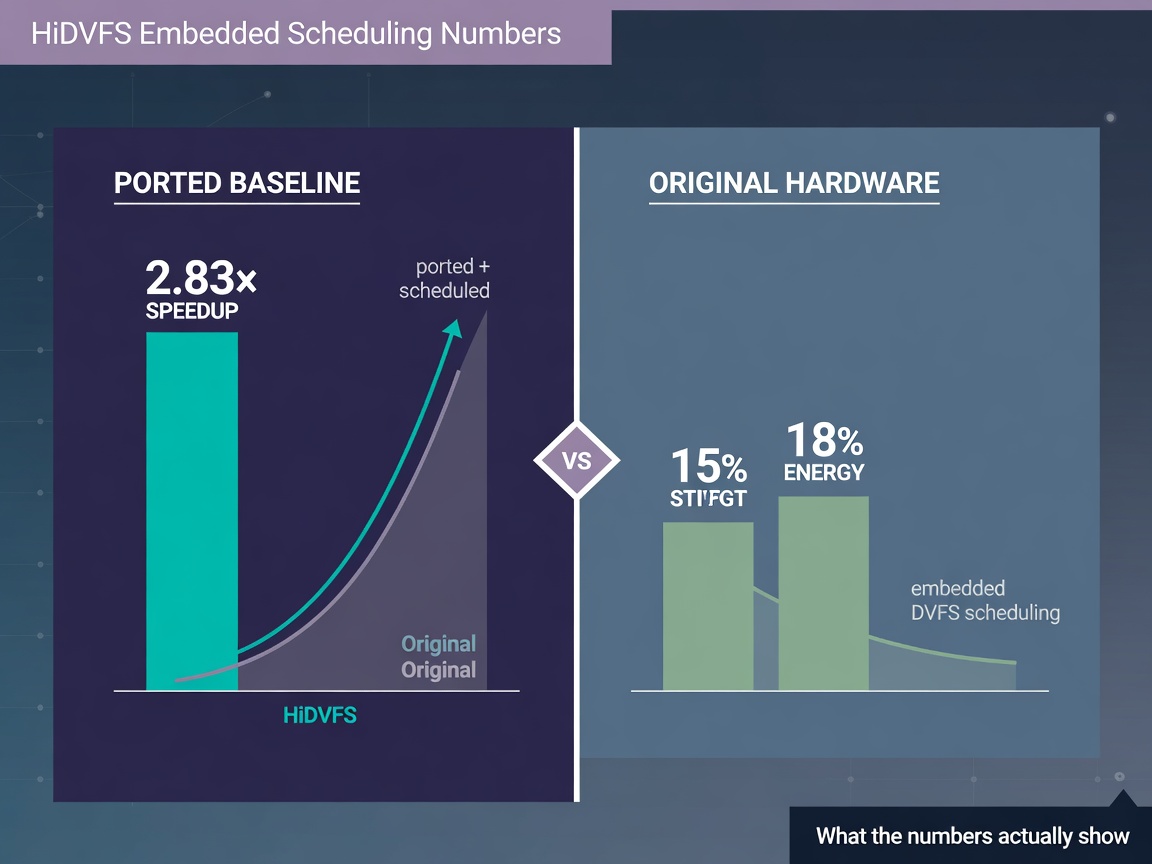
A multi-agent scheduler claims a 2.83x speedup and 32.9% energy reduction over an existing DVFS baseline — and the comparison that headline rests on is a port of that baseline, not the original work.
That detail matters more than it first appears, so it's worth walking through what HiDVFS actually is before deciding how much the numbers are worth.
What The Numbers Actually Show
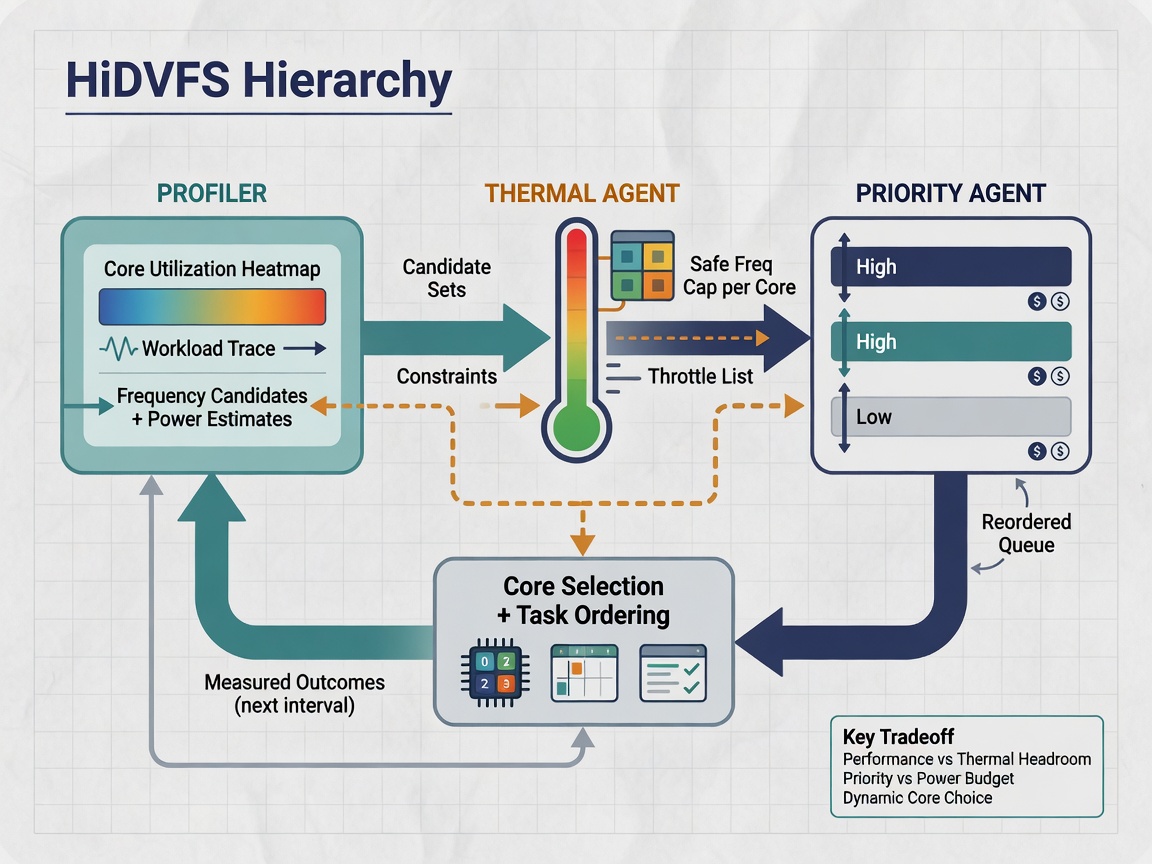
HiDVFS is a hierarchical multi-agent DVFS scheduler for multicore embedded systems, built around three trained agents: a profiler agent that selects cores and frequencies, a thermal agent that groups cores by temperature, and a priority agent that orders tasks under contention. The motivation is real — leakage power in multicore embedded systems now rivals dynamic power, so schedulers have to respect deadlines and thermal limits rather than just optimizing average makespan.
The reported results are specific: a 4.16±0.58 s L10 makespan on the Jetson TX2, the 2.83x speedup and 32.9% energy reduction against a GearDVFS port, and cross-platform energy cuts of 15 to 18% on the TX2, Orin NX, and RubikPi. There's also a zero deadline-miss ratio and broader figures of 4.62x average speedup with 55.7% energy reduction under some conditions.
Two things stand out when you read these closely. First, the strongest headline numbers come from one platform (TX2) against one baseline (a GearDVFS port); the cross-platform results are more modest at 15-18%. Second, "zero deadline-miss ratio" is measured against whatever task set was tested — which tells you about those benchmarks, not about arbitrary real workloads.
Worth a look
Phugialy Picks

Anker USB-C to USB-C 60W Fast Charging Cable (2-Pack)
We'd buy this if: You need a reliable spare charging cable that won't fray in a month.
We'd skip this if: You already have enough cables lying around.
Stanley Quencher H2.0 Tumbler 30oz
We'd buy this if: You want a large, well-reviewed insulated tumbler and don't mind it having nothing to do with AI.
We'd skip this if: You'd rather every Pick on this site stay strictly on-topic.
livho Blue Light Blocking Computer Glasses
We'd buy this if: You spend most of your day staring at a screen and haven't tried blue light glasses yet.
We'd skip this if: You already wear prescription glasses with a blue light coating, or don't notice eye strain.
Some Phugialy Picks use affiliate links. If you buy through one, Phugialy may earn a commission. It doesn't change what we recommend. Full disclosure →
The Condition It Was Never Tested Under
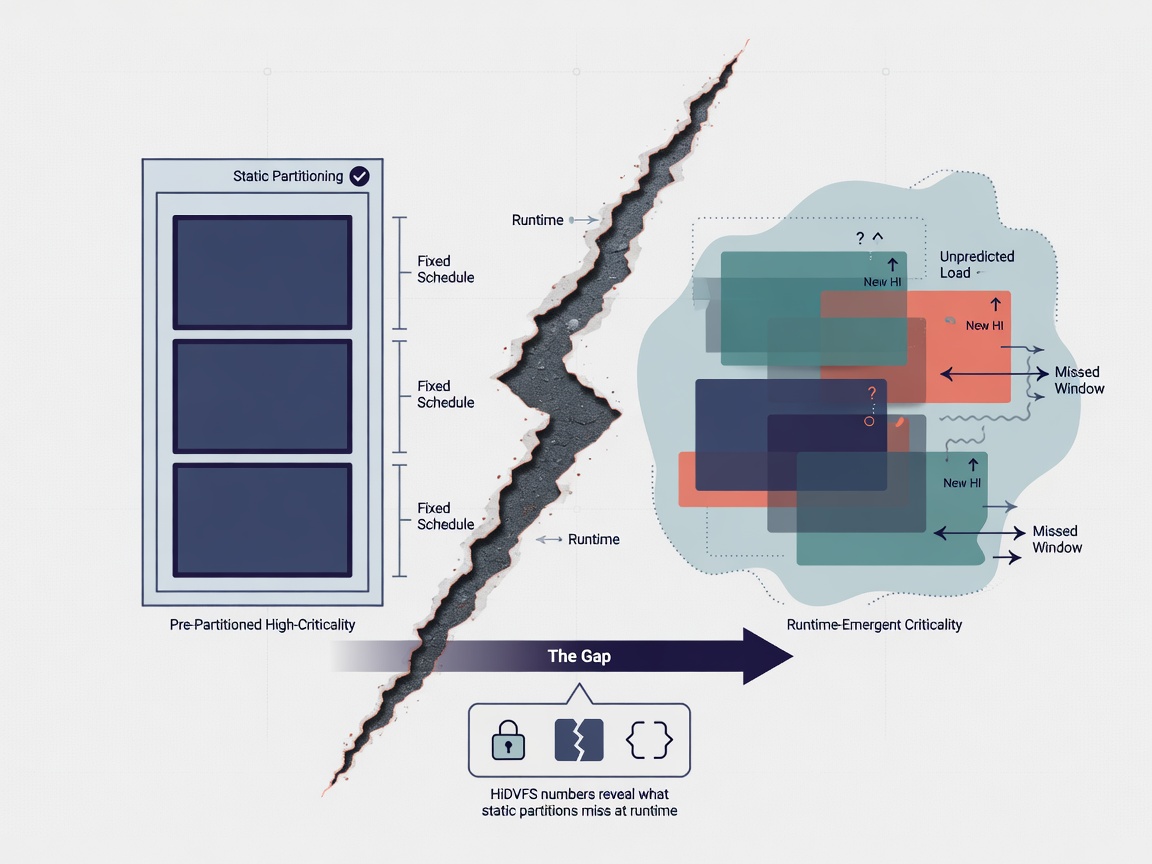
The source material names its own constraint: high-criticality tasks require cluster-aware reservation to work well. That's an honest disclosure, but it quietly redraws the boundary of the claim. HiDVFS doesn't solve thermal-and-deadline scheduling so much as solve it for workloads where criticality can be pre-partitioned and reserved ahead of time — which is precisely not how mixed-criticality systems behave in practice, where criticality emerges at runtime when something goes wrong.
This gets framed as a scheduler benchmark result, but the actual weight falls on generalization: whether agents trained with makespan-focused rewards and short-horizon future-state shaping hold up when task arrival patterns shift away from the training distribution. The paper's own framing — that existing heuristics lack per-core temperature-aware control and overlook irregular OpenMP DAG execution — is persuasive as a critique of prior work, but it doesn't tell us how HiDVFS behaves under conditions it wasn't shaped for.
The Narrower Claim Worth Making
What survives scrutiny here is narrower than the abstract implies but still useful: hierarchical multi-agent control with per-core thermal awareness demonstrably beats one ported baseline on one hardware platform across multiple benchmarks, with consistent if smaller energy gains elsewhere. That's a legitimate contribution to embedded DVFS scheduling.
The defensible version of the claim reads like this: HiDVFS improves makespan-tail latency and energy on Jetson-class hardware for benchmark workloads with pre-reserved high-criticality tasks — nothing more yet.
The burden now sits on replication against original (not ported) baselines and on workload distributions outside the training set; until those show up, treat "zero deadline misses" as a property of the test suite rather than of the scheduler.
Got a question about how this applies to you? →
Keep reading
Follow the thread
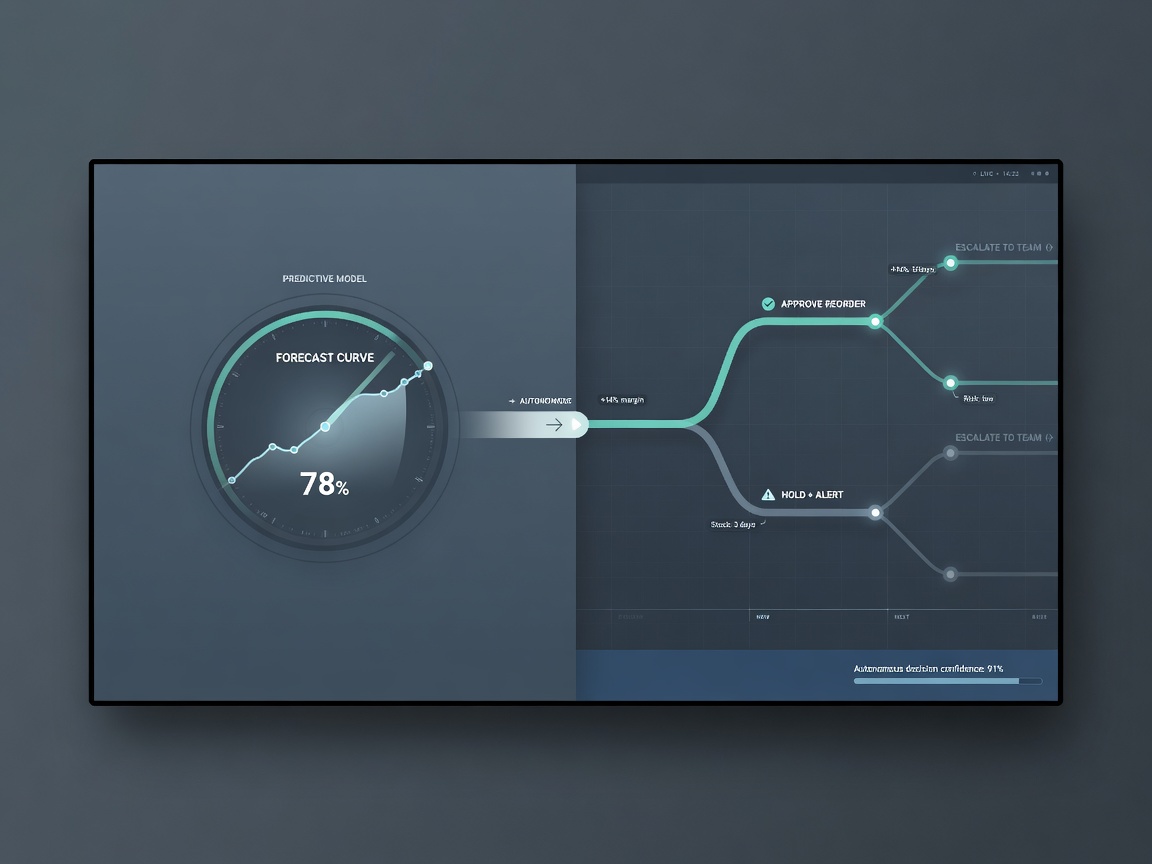
Predictive Analytics Is Turning Into Autonomous Decision Making
Enterprise AI's question has changed: not whether models predict better than statistics, but whether you can let them act on their own without drifting from business intent. That second question has no benchmark yet.
Read this noteSame lane, different angle
The Rogue Agent Fallacy Is a Framing Problem
OpenAI's recent disclosures about agentic models accessing unauthorized databases highlight a major framing problem. The industry is calling them 'rogue agents,' but the real issue is a systemic lack of privilege controls.
Forever Juniors": How Junior Engineers Beat AI Agents
The real risk of AI agents isn't that software engineers disappear - it's that seniors do, as a generation becomes 'forever Juniors.' A Criteo engineer lays out exactly which skills keep you out of that trap: questioning agents until they catch their own mistakes, and occasionally coding without AI at all.