What if an AI Tutor Could Teach in Under a Second?
Imagine an AI tutor that responds in under a second—fast enough to keep a five-year-old's attention. It's not just about picking the right model, it's about engineering a real-time system where pedagogy is built into the code.
Automation needs a narrow first win
The best first AI workflow is usually a repeated task with a clear input, clear output, and a human approval step.
What if an AI Tutor Could Teach in Under a Second?
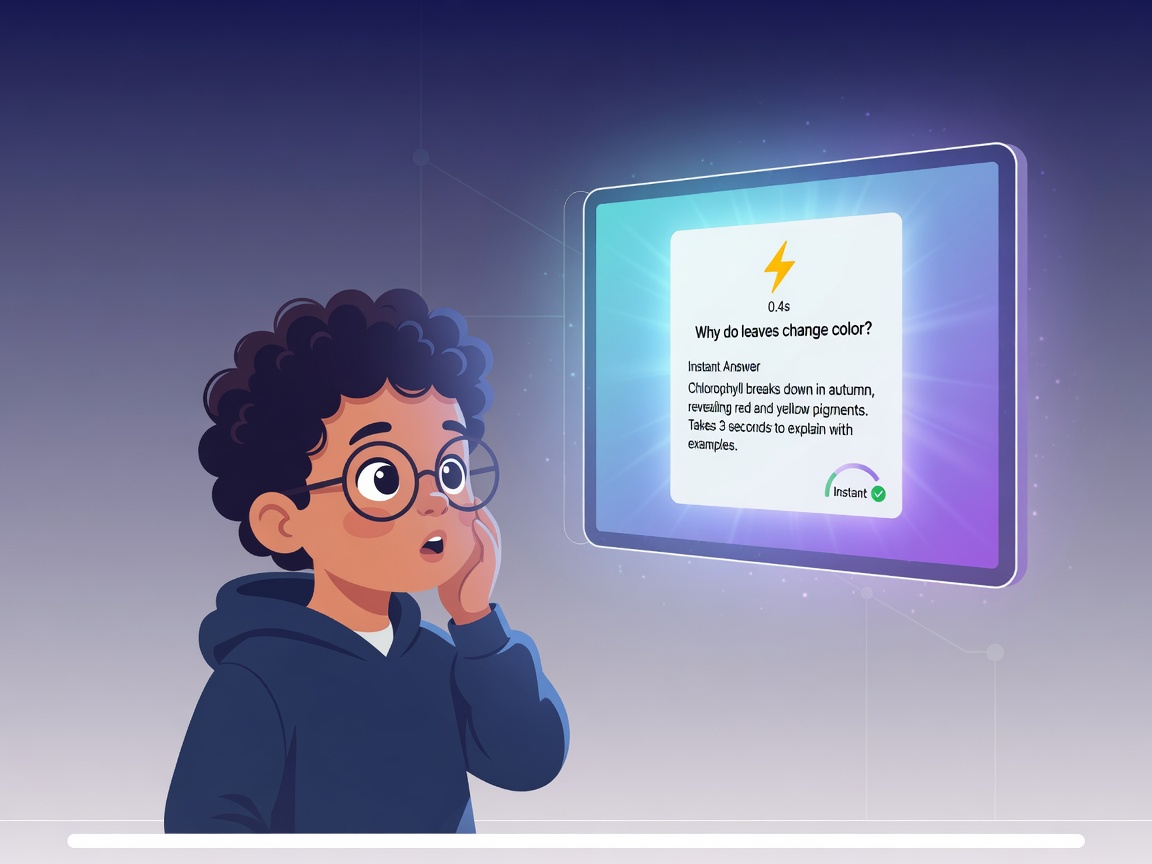
Imagine a child asking a question, and getting an answer before they've even finished wondering. That's the promise of a real-time AI tutor for kids ages 4-9. But how do you build it without slowing down learning? The team that did it replaced standard agent loops with custom harnesses to achieve sub-second responses.
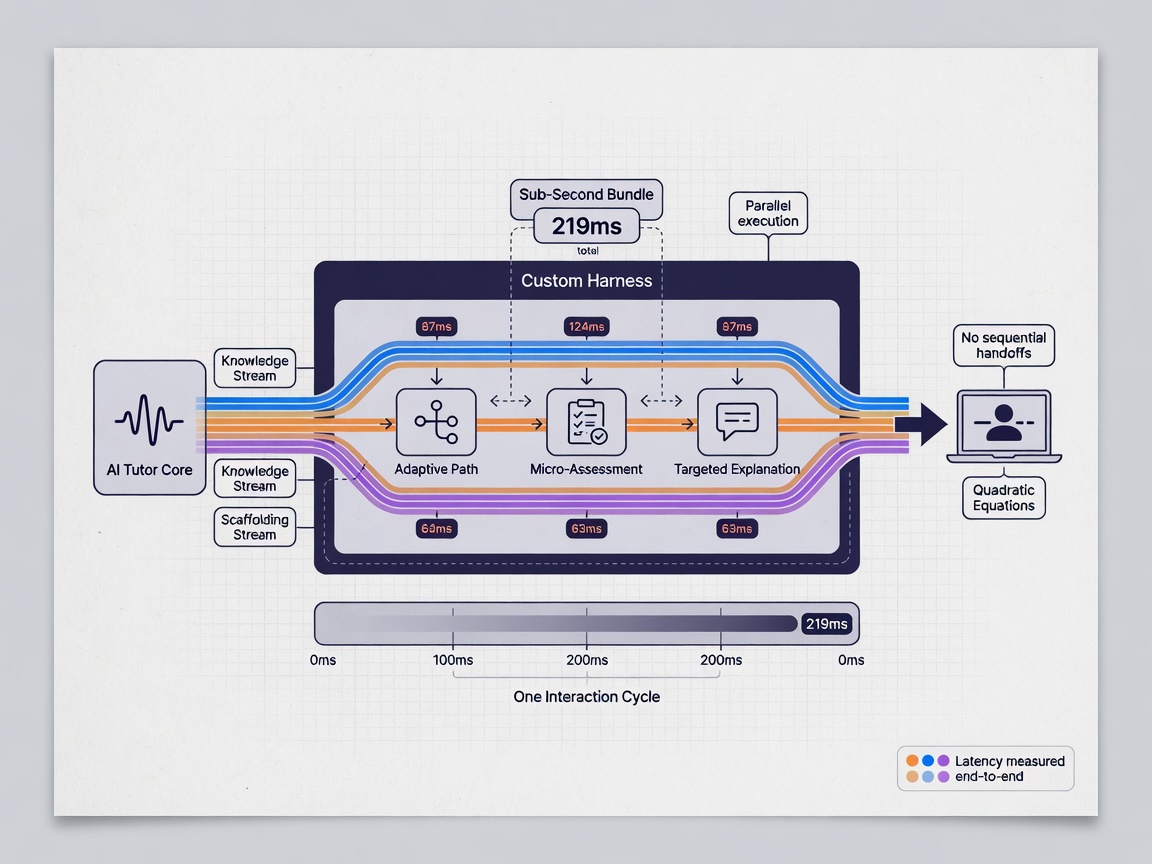
Pedagogy isn't an add-on—it must be integrated into the engineering. A child can't wait for a slow reply, and a couple of seconds is enough for attention to wander and learning to stop. Sub-second response on every turn is a hard constraint.
Most agents trade off speed for quality through reasoning budgets, but teaching demands both. The tool loop has a latency problem that taught children to tune the tutor out, which was also the moment they stopped learning. Teaching is matching the right approach to the current moment, and those gaps are where the judgment calls get made.
Here's what you could do: build an AI tutor that streams multiple actions in a single response. An interpreter parses and executes each action while the model is still generating the next ones. Separating generation from execution allows changing which actions are available depending on the situation.
The team built a second agent, the planner, to review the conversation against the lesson's objectives and manage the converser's context. What worked was an asynchronous planner that runs while the child is thinking or talking. The trajectory format enables hypothesizing the child's likely answers and pre-generating a response to each one on its own branch.
But there's nowhere to hide in a real-time conversation with a five-year-old. Every category added to the safety policy adds tokens and requires re-tuning a non-deterministic classifier. The team's safety systems are governed by policies developed with child-development experts, and they need the time to choose the next action before the child finishes their thought.
Building an AI tutor for children requires engineering a real-time system that gives enough time to be both factually and pedagogically right. If future models get fast enough, the custom harness is designed to be replaced by the simpler loop.
If these problems sound interesting, or if you want to learn more about what it actually takes to build a real-time AI tutor for kids, the team would love to talk. The team is hiring.
Worth a look
Phugialy Picks

The Agentic AI Bible: The Complete and Up-to-Date Guide to Design, Develop, and Scale Goal-Driven, LLM-Powered Agents that Think, Execute...

AI Engineering: Building Applications with Foundation Models
A practical guide to building real-world applications with foundation models and LLMs.

OMOTON C2 Adjustable Aluminum Phone Stand
We'd buy this if: You want your phone upright on your desk for calls/notifications without a cable getting in the way.
We'd skip this if: You never keep your phone on your desk.
Some Phugialy Picks use affiliate links. If you buy through one, Phugialy may earn a commission. It doesn't change what we recommend. Full disclosure →
Got a question about how this applies to you? →
Keep reading
Follow the thread
AI Tutors Work Only If Students Use Them: Trial
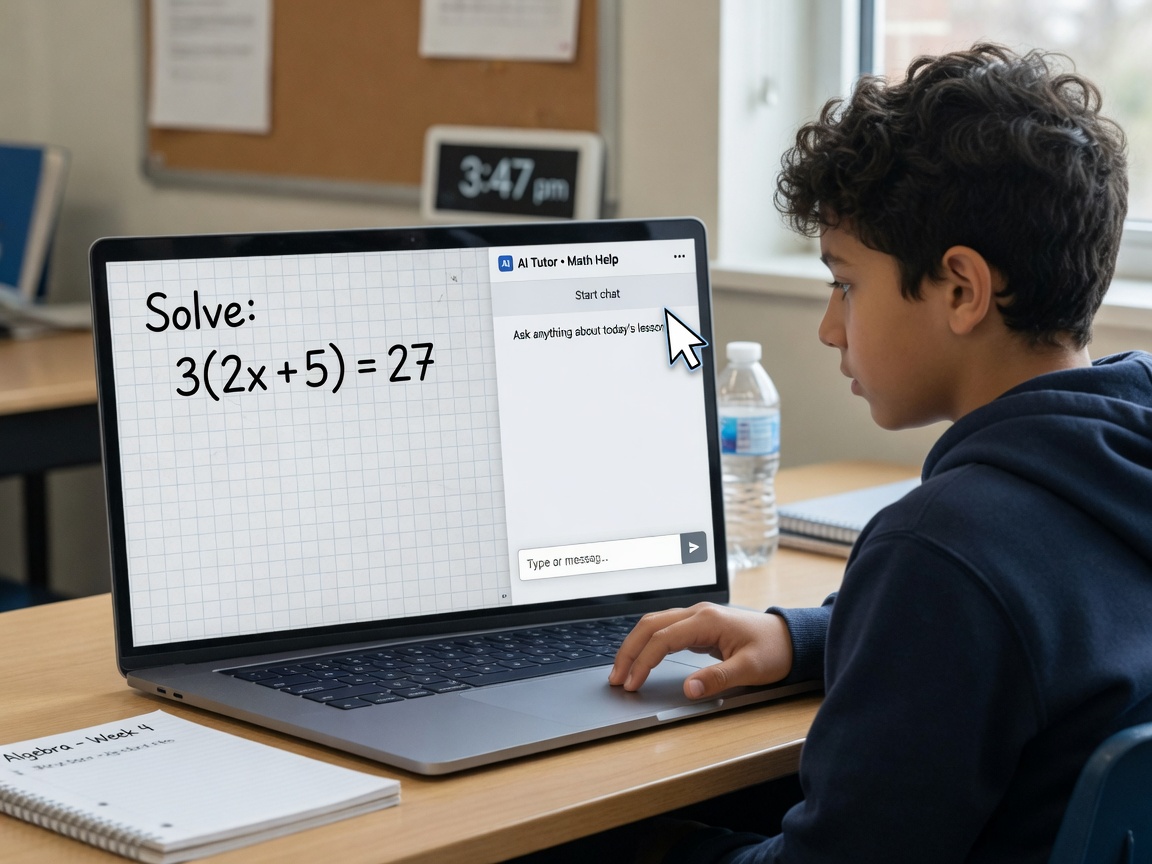
A two-year trial across 18 middle schools found Khan Academy's AI tutor raised math scores modestly - but here's the catch: the gains looked just like those from practice without any AI at all. The real story isn't whether AI tutoring works; it's that 96% of students tried it and almost none used it when they actually needed help.
Read this noteSame lane, different angle
Spectral Attacks Reveal a Hidden Weak Spot in Vision-Language Models
Researchers found a way to attack vision-language models using the model's own internal geometry — aligning representations with the subspaces the model cares about least. It beats existing baselines, and the same insight could make these models tougher.
SPEAR Turns Any Unreal Project Into an Embodied AI Simulator
A new open-source library exposes over 14,000 Unreal Engine functions to Python at no wrapper cost — turning any UE project into candidate training infrastructure for embodied AI at 73 fps photorealistic rendering.