Silicon Valley's AI Plan: $1B+ to Save Jobs as Tech Giants Back Public Ownership
# The Future of Work Just Got a Massive Boost What if the biggest players in tech weren't just riding the AI wave—but were actually building lifeboats for everyone left behind? It sounds like science fiction, yet accord

Automation needs a narrow first win
The best first AI workflow is usually a repeated task with a clear input, clear output, and a human approval step.
The Future of Work Just Got a Massive Boost
What if the biggest players in tech weren't just riding the AI wave—but were actually building lifeboats for everyone left behind? It sounds like science fiction, yet according to new analysis from The Atlantic, Silicon Valley's future of work strategy is far more ambitious than you'd expect.
Major AI firms aren't just talking about automation; they're committing real capital to prevent a jobs apocalypse. The numbers are staggering: $250 million in grants and partnerships, $350 million for research trials, and over $500 million raised from private companies and philanthropies to test policy interventions.
But this is more than just corporate charity—it's a fundamental shift in how we view AI ownership. Senator Bernie Sanders has proposed the AI Sovereign Wealth Fund Act, which would give the federal government a 50% stake in major AI companies. And guess what? The tech giants are on board.
OpenAI CEO Sam Altman supports public ownership of AI companies and endorsed creation of a public wealth fund. Even Anthropic's Dario Amodei has been vocal, warning that "AI isn't a substitute for specific human jobs but rather a general labor substitute for humans." That distinction matters immensely.
A New Nonprofit Is Testing Real Solutions
Enter Raise Us, a brand-new nonprofit launched with over $500 million in funding from founding partners including Anthropic, Amazon, Microsoft, and OpenAI Foundation. They're not just talking shop—they're rolling out concrete programs at the state level.
Their plan includes testing wage insurance, apprenticeship programs, and career-navigation tools. Think of them as the experimental lab for future-proofing your career before it's too late.
Worth a look
Phugialy Picks

Soundcore by Anker Q20i Hybrid Active Noise Cancelling Headphones, White | Over-Ear, Bluetooth, 40H ANC Playtime, Hi-Res Audio, Big Bass,...

Bose QuietComfort Headphones - Wireless Bluetooth Headphones, Active Over Ear Noise Cancelling and Mic, USB-C Charging, Deep Bass, Up to ...

JLab, JBuds Lux ANC, Over Ear Headphones, Active Noise Cancelling, Bluetooth, Spatial Audio, Sage
Some Phugialy Picks use affiliate links. If you buy through one, Phugialy may earn a commission. It doesn't change what we recommend. Full disclosure →
The Numbers Behind the Movement
The scale of commitment is unprecedented: roughly $1,000 to each American annually from Sanders's wealth fund. OpenAI owns roughly a quarter of major AI companies. Anthropic has committed 50% stake in major AI companies including Anthropic and OpenAI, while giving up a 5 percent stake.
As Sam Altman put it: "stop bad decisions that will reap massive job loss." And as economists note, "AI has not yet led to widespread job losses, and many economists aren't convinced that a jobs apocalypse is inevitable."
What This Means for You
This isn't just about Silicon Valley—it's about ensuring you're ready for whatever comes next. The $250 million on grants and partnerships is set to support economic transition, while the $350 million toward similar efforts funds research trials and program evaluation.
The AI Sovereign Wealth Fund would distribute roughly $1,000 to each American annually. Anthropic owns roughly a quarter of the AI company; over $500 million raised from private companies and philanthropies.
A New Era of Collaboration
This is where the real story unfolds: major firms are partnering with government texts about AI literacy delivered via text message in partnership with an AI start-up. Anthropic, Amazon, Microsoft, and OpenAI Foundation are founding partners of Raise Us.
The goal? "A stake in AI-driven economic growth." And as Anthropic's Dario Amodei warns, we're dealing with a general labor substitute for humans, not just specific job substitutes.
The $1,000 to each American annually is the baseline. OpenAI owns roughly a quarter of the AI company; giving up a 5 percent stake is part of the equation.
With over $500 million raised from private companies and philanthropies, and Anthropic committed $350 million toward research trials and program evaluation on promising public policies, this movement has serious legs.
The future of work isn't just about surviving automation—it's about thriving in a new economy where tech giants are actively invested in your success. And as the data shows, AI has not yet led to widespread job losses, according to many economists who aren't convinced that a jobs apocalypse is inevitable.
This is what happens when innovation meets responsibility. And if you want to be part of the solution, this is where you start.
Got a question about how this applies to you? →
Keep reading
Follow the thread
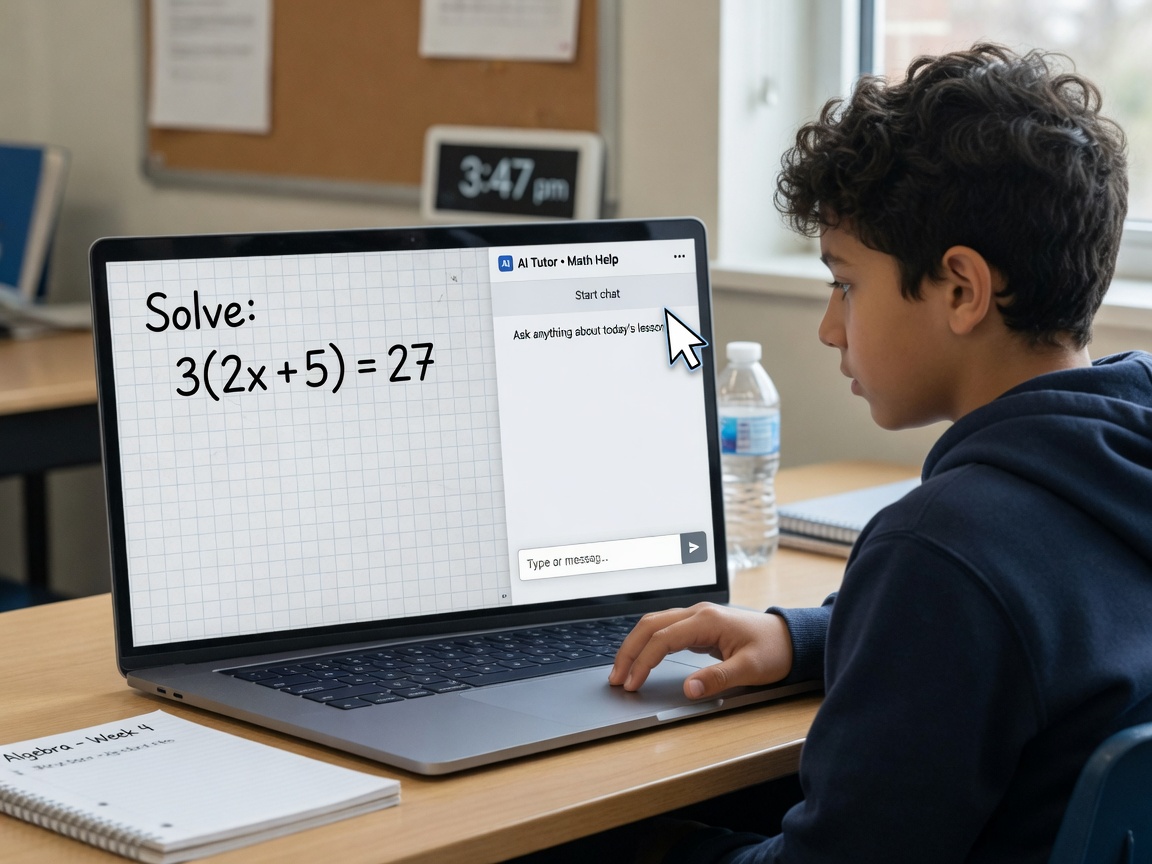
AI Tutors Work Only If Students Use Them: Trial
A two-year trial across 18 middle schools found Khan Academy's AI tutor raised math scores modestly - but here's the catch: the gains looked just like those from practice without any AI at all. The real story isn't whether AI tutoring works; it's that 96% of students tried it and almost none used it when they actually needed help.
Read this noteSame lane, different angle
Spectral Attacks Reveal a Hidden Weak Spot in Vision-Language Models
Researchers found a way to attack vision-language models using the model's own internal geometry — aligning representations with the subspaces the model cares about least. It beats existing baselines, and the same insight could make these models tougher.
SPEAR Turns Any Unreal Project Into an Embodied AI Simulator
A new open-source library exposes over 14,000 Unreal Engine functions to Python at no wrapper cost — turning any UE project into candidate training infrastructure for embodied AI at 73 fps photorealistic rendering.