The Physical Wall: Why Materials Science is the Next AI Bottleneck
AI development is colliding with the laws of physics. For years, the industry has leaned on architectural tricks and training optimizations to squeeze more performance out of existing hardware. But we’re hitting a ceilin
Automation needs a narrow first win
The best first AI workflow is usually a repeated task with a clear input, clear output, and a human approval step.
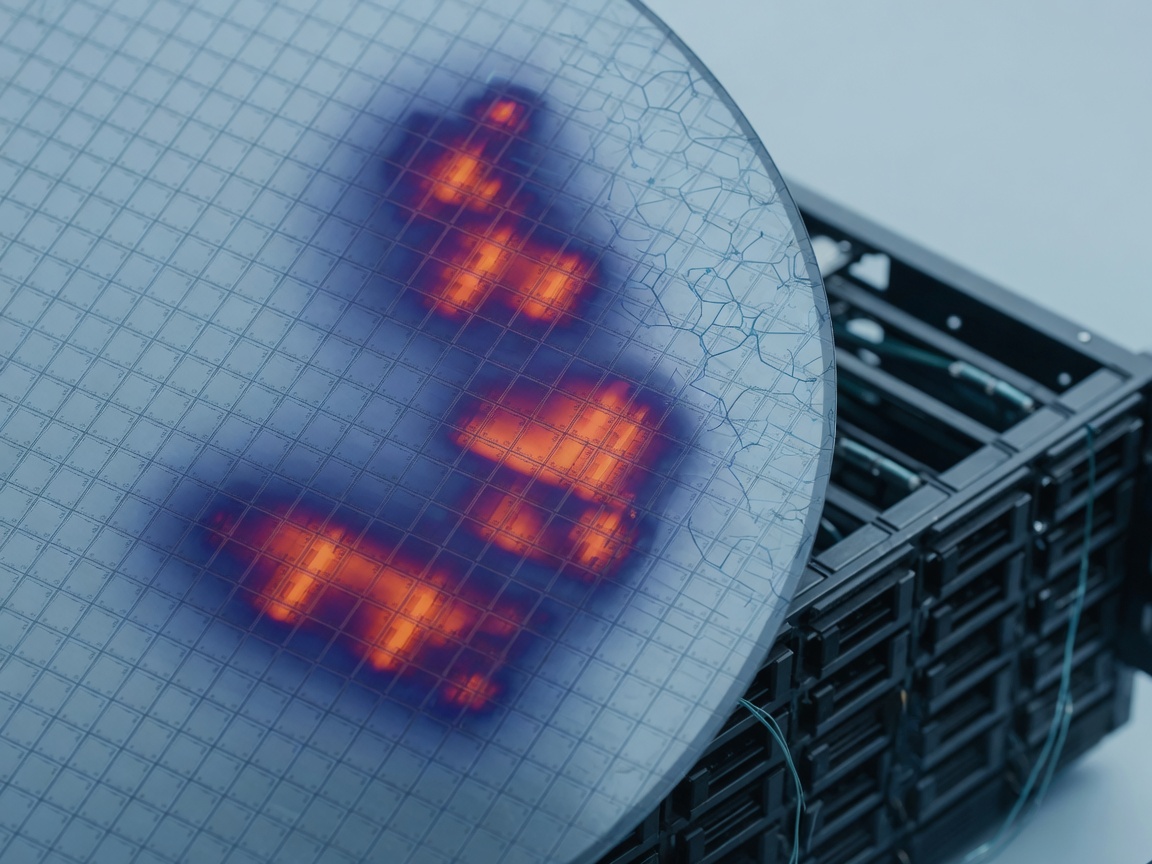
AI development is colliding with the laws of physics. For years, the industry has leaned on architectural tricks and training optimizations to squeeze more performance out of existing hardware. But we’re hitting a ceiling where software can no longer compensate for physical constraints. The next leap in compute isn't just about more parameters; it’s about better atoms. We are entering an era where the primary gatekeepers of progress are the fundamental properties of our materials.
The Semiconductor Purity Crisis
The push for higher computing density in data centers is creating a severe crisis in thermal management and power architecture. To maintain performance, semiconductor manufacturing must shift toward materials that can withstand extreme chemical and plasma environments without compromising purity. This isn't a minor engineering hurdle; it's a prerequisite for reducing manufacturing defects and controlling costs at scale. When you're operating at the edge of silicon's capabilities, the reliability of the underlying material becomes the primary gatekeeper. If the material fails under high-voltage stress, even the most sophisticated algorithm is useless. We need materials that don't just 'work' but can survive the increasingly hostile environments of next-gen fabrication—essentially, we need to engineer our way out of a physical bottleneck.
Worth a look
Phugialy Picks

The Agentic AI Bible: The Complete and Up-to-Date Guide to Design, Develop, and Scale Goal-Driven, LLM-Powered Agents that Think, Execute...

OMOTON C2 Adjustable Aluminum Phone Stand
We'd buy this if: You want your phone upright on your desk for calls/notifications without a cable getting in the way.
We'd skip this if: You never keep your phone on your desk.
Screen Mom Screen Cleaner Spray (16oz)
We'd buy this if: You've been wiping your monitor with your shirt sleeve.
We'd skip this if: You already have a cleaning routine sorted.
Some Phugialy Picks use affiliate links. If you buy through one, Phugialy may earn a commission. It doesn't change what we recommend. Full disclosure →
Borrowing from Automotive for Thermal Management
We are seeing a necessary convergence in cooling technology, specifically the adaptation of automotive coolant systems for AI server infrastructure. Because AI workloads generate such intense heat, the industry is pivoting toward sophisticated liquid-cooling designs to prevent hardware throttling. To accelerate this, researchers are leveraging AI tools to identify promising molecular candidates for heat transfer fluids much earlier in the R&D cycle. It’s a recursive loop: using AI to solve the physical cooling problems created by the current generation of AI hardware. This synergy between AI-driven discovery and physical engineering is no longer an experiment; it’s becoming the standard R&D pipeline for high-performance computing.
The Gap Between Lab Success and Mass Production
The real story here isn't just the discovery of new materials; it's the friction of moving them from a lab bench to a high-volume production line. While AI-accelerated discovery is excellent for identifying molecular candidates, the transition to fluorosurfactant-free manufacturing and high-purity components involves massive industrial hurdles. What the headlines often miss is the 'production gap'—the point where a promising new material meets the reality of manufacturing at scale while adhering to strict sustainability requirements. If we can't bridge the gap between a laboratory success and a reliable, mass-produced component, the 'limits of what is possible' will be defined by our manufacturing capabilities rather than our scientific imagination. The next winners in AI won't just be the ones with the best models, but the ones who can actually manufacture the next generation of hardware reliably.
Got a question about how this applies to you? →
Keep reading
Follow the thread

Why Advanced Materials Are AI Infrastructure's Next Bottleneck
The constraint on AI's next phase isn't compute or capital - it's whether the physical materials underneath data centers can keep up. That's the argument Syensqo CTO Mike Finelli makes in a recent MIT Technology Review p
Read this noteSame lane, different angle
SciReasoner: One Model Reasons Across Proteins, Molecules, Crystals
Proteins, molecules, and crystals share almost nothing on the surface - different representations, different tools, different vocabularies entirely. What if one model could reason natively across all three? That's the pr
Why Young Adults Don't Trust AI Executives
A majority of young US adults say they don't trust the people building AI - and the numbers behind that claim are starker than the usual 'public skepticism' framing suggests. CNBC's Generation Lab surveyed over 1,000 US