Middle-Mile Autonomy Gets Real: Inside Gatik's $200M Bet
$200 million is the headline; $600 million in contracted revenue against just $30 million recognized last year is the real story at Gatik. The company's bet on middle-mile autonomy only pays off if that pipeline converts into driverless trucks on schedule.
Automation needs a narrow first win
The best first AI workflow is usually a repeated task with a clear input, clear output, and a human approval step.
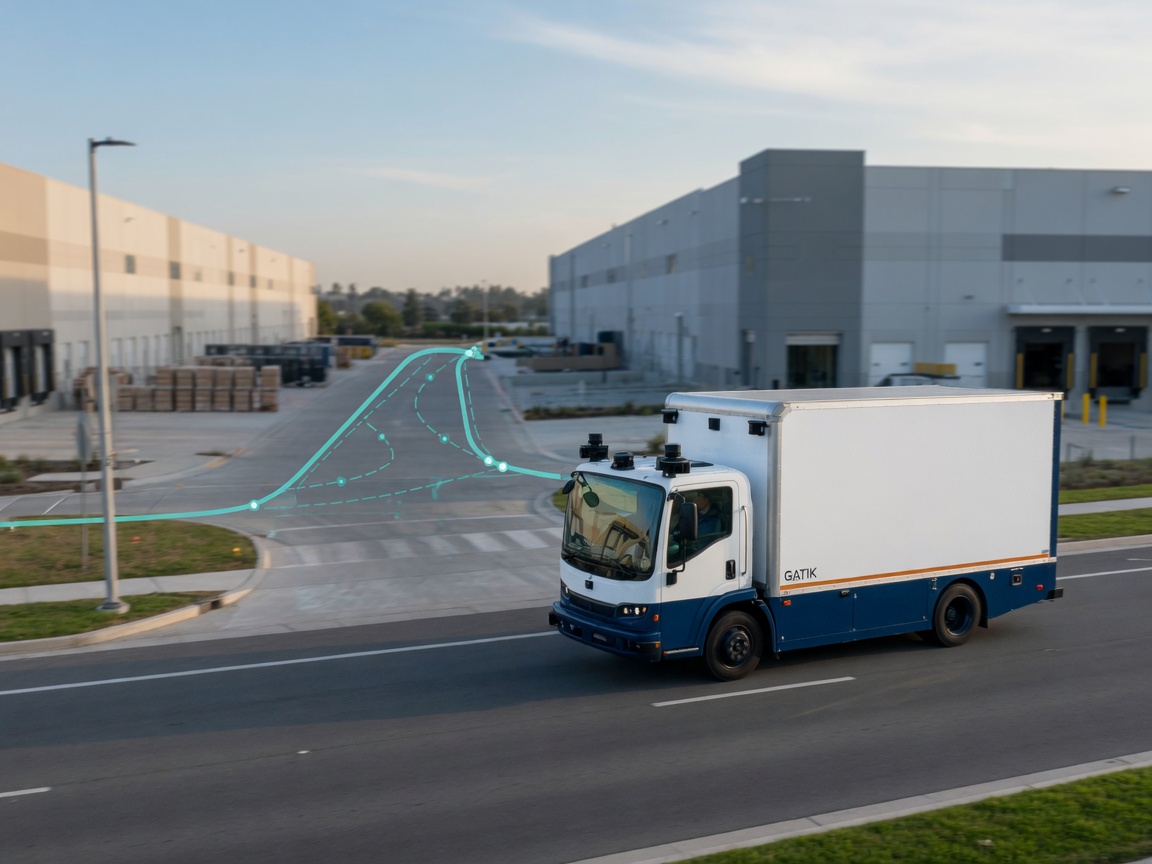
Gatik just raised $200 million in Series D funding to expand its driverless freight operations across North America, targeting more than 100 autonomous trucks by the end of 2026. The headline number is the round; the more telling numbers are buried underneath it - more than $600 million in contracted revenue and 85,000 completed fully driverless orders. That combination is what makes this round worth reading closely rather than filing under "another autonomous trucking raise."
What The Numbers Actually Say About Middle-Mile Logistics
Gatik operates in the middle-mile segment - moving freight between distribution centers rather than long-haul routes - and it's the part of autonomous trucking where the commercial math works first. Shorter, repeatable fixed routes mean less edge-case risk and customers who can actually calculate the savings. The company reports a 99% on-time delivery rate across those 85,000 driverless orders, and $30 million in Gatik revenue in 2024.
That last figure deserves attention. A company with $600 million in contracted revenue doing $30 million of recognized revenue is early in converting its pipeline - which cuts both ways. It validates demand (contracts exist), but it means the real test is execution: turning signed agreements into deployed trucks at scale. The initial deployment of 50 autonomous trucks, scaling past 100 by end of 2026, is exactly that conversion attempt.
Phugialy Picks

AI Engineering: Building Applications with Foundation Models
A practical guide to building real-world applications with foundation models and LLMs.

GMKtec K15 AI Mini PC Oculink Intel Ultra 5 125U 32GB DDR5 512GB SSD | Desktop Computer AI Boost, 3X M.2 2280 Storage Expansion, Dual NIC...

GEEKOM IT15 AI Mini PC, Intel Ultra 9 285H(99 Tops), 32GB DDR5, 1TB SSD | The Most Powerful Workstation,Arc 140T GPU,WiFi 7,8K Business D...
Some Phugialy Picks use affiliate links. If you buy through one, Phugialy may earn a commission. It doesn't change what we recommend. Full disclosure →
The Simulation Stack Is The Quiet Part Of This Raise
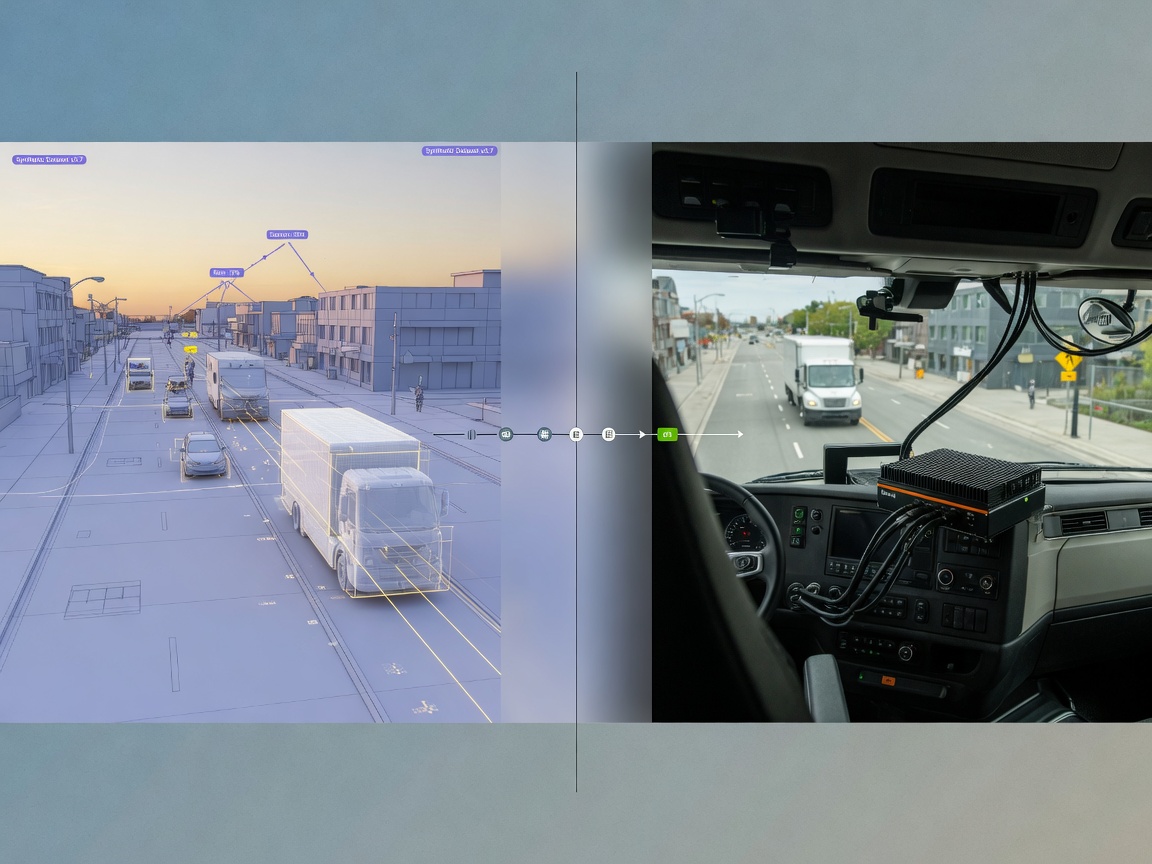
Alongside the funding, Gatik introduced Arena, a simulation platform that generates structured synthetic data to test autonomous driving behavior across different conditions, built on Nvidia Cosmos world foundation models. The company is also integrating Nvidia DRIVE AGX hardware for real-time onboard processing in its Class 6 and 7 trucks.
Here's why that matters commercially: every driverless mile a company doesn't have to physically drive before deployment compresses its cost of expansion into new markets. Simulation density is effectively a scaling lever. Gatik pairing its proprietary Gatik Driver AI with synthetic-data testing suggests it's trying to grow route coverage faster than physical fleet growth alone would allow - which is the only way a target of 100+ trucks by 2026 pencils out without burning capital on redundant road testing.
The Isuzu partnership points at the other half of the scaling problem: hardware. The two companies are developing Level 4 autonomous commercial vehicles with a redundant chassis designed for mass production by 2027. Autonomous software with no purpose-built chassis is stuck retrofitting; a production-ready redundant platform is what turns pilots into fleets.
Where This Actually Gets Decided
The real story here isn't the raise - it's that Gatik is sequencing its bets like a company planning to be an operator, not a technology licensor: own the AI stack (Gatik Driver), own the simulation capability (Arena), lock in manufacturing (Isuzu), and secure compute (Nvidia). That vertical posture signals confidence that middle-mile autonomy becomes an operations business where unit economics win, not a platform land-grab.
What has to be true in a year for this to matter: contracted revenue converting into actual deployed driverless trucks on schedule. If Gatik moves from $30 million recognized toward meaningful conversion of that $600 million pipeline while scaling past 100 trucks, middle-mile autonomy graduates from promising niche to proven category - and every competitor in long-haul autonomous freight inherits harder questions about why their segment still doesn't work commercially. If conversion stalls, the contracts were demand signaling rather than demand reality, and this becomes another cautionary data point in autonomy's long history of both.
Got a question about how this applies to you? →
Keep reading
Follow the thread
AI Route Optimisation Is Already Paying For Itself
Your shipping platform can now tell you not just where your cargo is, but which route to take, which carrier to pick, and which option carries the least risk. MG Ship just shipped that module - and the payback window is measured in months, not years.
Read this noteSame lane, different angle
VERA-MH Benchmark: Validating AI Chatbot Safety Testing
An LLM judge matched clinician consensus at 0.81 on mental health chatbot safety ratings — but only for one narrow domain. What VERA-MH validates is real; what people will assume it covers isn't.
37 An Hour To Train Your Replacement: Inside AI Training Jobs
A Ph.D. graduate was offered $37 an hour — eighteen times South Africa's minimum wage — to teach an AI system how he thinks. He walked away, but most won't.