AI Tutoring Needs Stronger Proof Than Faster Homework
Alpha School’s AI tutoring platform promises students can “learn twice as much as their peers in two hours of academics a day.” Internal data reported by The New York Times offers a more qualified picture: 42% of Alpha s
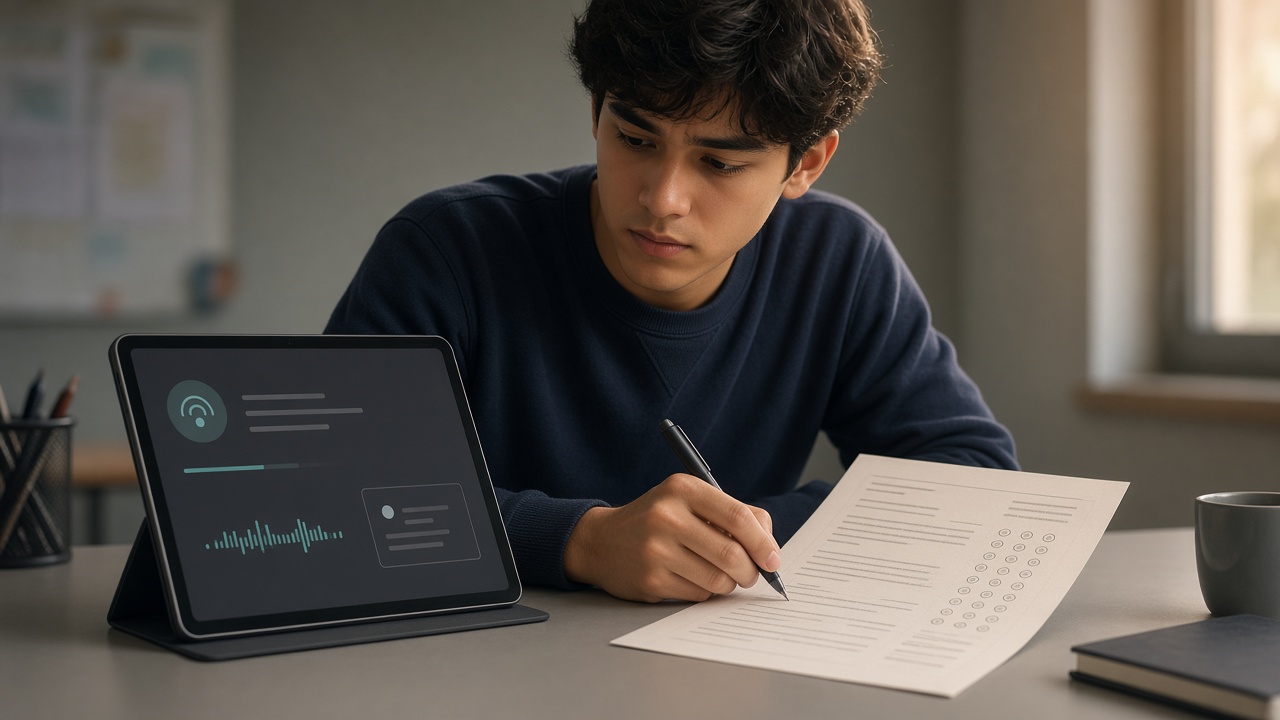
Automation needs a narrow first win
The best first AI workflow is usually a repeated task with a clear input, clear output, and a human approval step.
Alpha School’s AI tutoring platform promises students can “learn twice as much as their peers in two hours of academics a day.” Internal data reported by The New York Times offers a more qualified picture: 42% of Alpha students met that growth goal in both math and reading. That is a meaningful gap between the promise and the result—and it matters more as the platform reaches public schools.
Alpha’s AI tutoring promise has a measurable shortfall
Alpha markets TimeBack as a personalized tutor designed to accelerate learning. Yet the reported internal figure says fewer than half of students met the network’s target in both subjects. It does not tell us how the remaining students performed, how the goal was measured, or whether students improved by a different useful amount. It does tell us that the headline target was not a typical outcome across the students counted.
More than 2,600 public school students in Texas and South Carolina now use Alpha’s platform. That expansion makes the distinction between a product promise and a demonstrated outcome practical, not merely academic. Schools and families need to know what students retain and can do independently—not only how quickly a platform says they are progressing.
My read is that 42% should not be treated as proof that TimeBack fails, either. The source does not provide enough detail to make that judgment. But it is a reason to ask for the denominator, the measurement method, and results across both subjects before treating “twice as much” as a dependable expectation.
Worth a look
Phugialy Picks

AI Engineering: Building Applications with Foundation Models
A practical guide to building real-world applications with foundation models and LLMs.

GMKtec K15 AI Mini PC Oculink Intel Ultra 5 125U 32GB DDR5 512GB SSD | Desktop Computer AI Boost, 3X M.2 2280 Storage Expansion, Dual NIC...

2084 and the AI Revolution, Updated and Expanded Edition: How Artificial Intelligence Informs Our Future
Some Phugialy Picks use affiliate links. If you buy through one, Phugialy may earn a commission. It doesn't change what we recommend. Full disclosure →
Homework gains do not guarantee exam learning
A separate study of 26,811 secondary students in central China found that homework scores rose 18% after students adopted generative AI tools, while closed-book exam scores fell 20%. The OECD’s latest PISA results, as cited in the article, found daily AI users scored lower in science than nonusers, while moderate users performed about the same.
These findings are not direct evaluations of TimeBack, and they should not be presented as though they are. They do raise a relevant question for any AI tutor: is the system helping a student build knowledge, or helping them complete work with assistance? A stronger homework result can coexist with weaker unaided performance. That difference is easy to miss if a school measures activity or assignment completion but does not check what students can recall and apply alone.
The evidence also does not establish that AI use caused every lower exam score. Still, the contrast is a useful warning against treating assisted work as a clean proxy for learning. In practice, that is the evaluation gap worth closing.
Measure what students can do without the tutor
The next useful evidence would compare students’ progress on a consistent basis, including closed-book performance in both math and reading, and make clear how results vary across students. That would help distinguish a tool that speeds up supported practice from one that also builds durable understanding.
For schools considering AI tutoring, the sensible stance is conditional: ask for independent learning outcomes and transparent measurement before relying on acceleration claims to guide a rollout. The existing figures do not settle whether TimeBack works; they show why the claim needs to be tested beyond the platform’s own learning-time promise. If students are learning twice as much, they should be able to show it when the tutor is no longer in the room.
Holiday picks
Thanksgiving: early shopping
Start early: products for hosting, travel and home, plus the gear you have been watching.

Audio
Big purchaseSony WH-1000XM5 Premium Noise Cancelling Wireless Headphones
View on Amazon (opens in a new tab): Sony WH-1000XM5 Premium Noise Cancelling Wireless HeadphonesPrices change daily. Check today's price on Amazon.
 New this week
Home & Kitchen
Keurig K-Elite Single Serve K-Cup Pod Coffee Maker, Brushed Silver
View on Amazon (opens in a new tab): Keurig K-Elite Single Serve K-Cup Pod Coffee Maker, Brushed SilverPrices change daily. Check today's price on Amazon.

Home & Kitchen
De'Longhi Magnifica Duo Automatic Espresso Machine, Milk Frother, Silver
View on Amazon (opens in a new tab): De'Longhi Magnifica Duo Automatic Espresso Machine, Milk Frother, SilverPrices change daily. Check today's price on Amazon.
We earn from qualifying purchases made through these links, at no extra cost to you, as an Amazon Associate and through other affiliate programs. Disclosure. See all Thanksgiving picks
Got a question about how this applies to you? →
Keep reading
Follow the thread
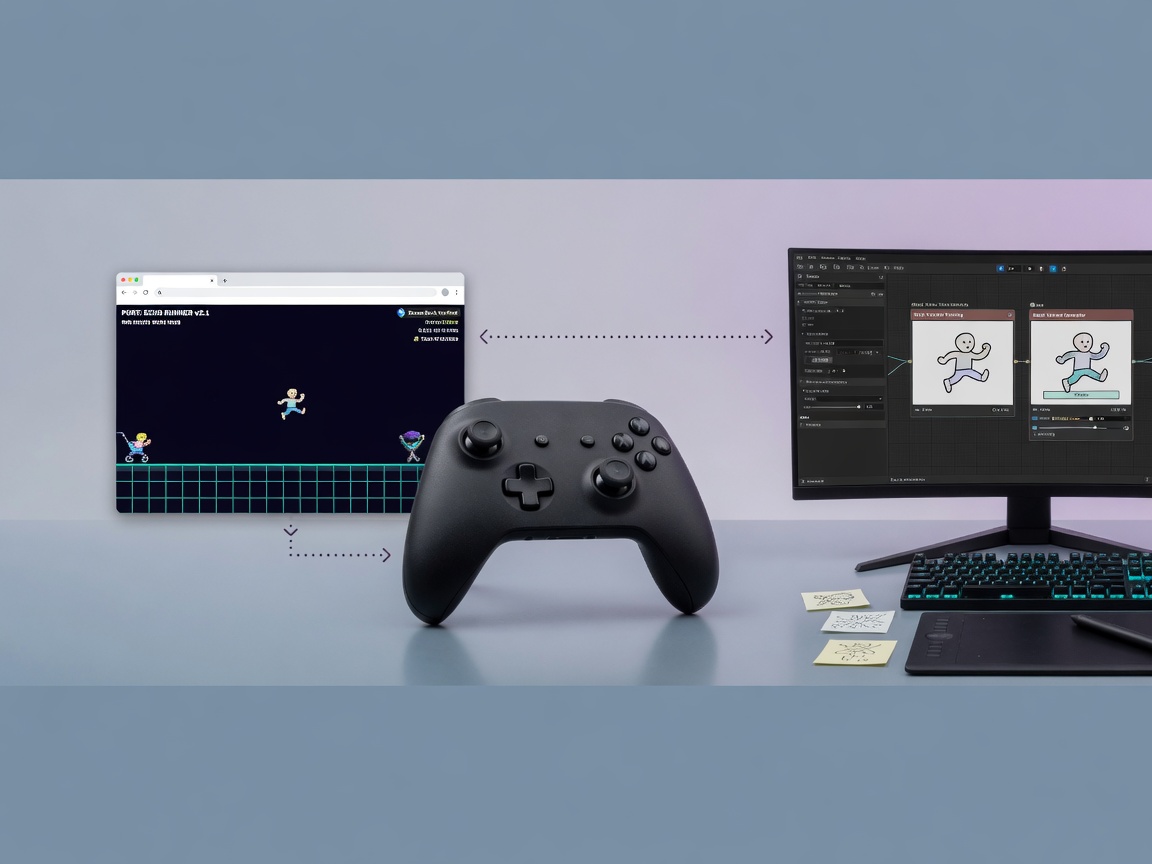
AI Copyright Disputes Expose Game Industry Tensions
Epic Games and Microsoft are challenging AI-powered browser ports of their games while using AI themselves. That overlap raises a real consistency question—but it does not prove that every use of AI creates the same copyright issue.
Read this noteSame lane, different angle
AI Tutors Work Only If Students Use Them: Trial
A two-year trial across 18 middle schools found Khan Academy's AI tutor raised math scores modestly - but here's the catch: the gains looked just like those from practice without any AI at all. The real story isn't whether AI tutoring works; it's that 96% of students tried it and almost none used it when they actually needed help.
Interactive AI Systems for Structural Design Get Friction Right
Imagine sketching a bridge concept out loud, pointing at a rough drawing, and having an AI that argues back, iterates, and reshapes the structure with you instead of handing you a finished design you never asked for. Tha