Why AI Materials Research Depends on Better R&D Data
Lubrizol’s AI effort is aimed at the decisions that happen before the lab experiment. The hard part is not producing more modeled possibilities; it is making them useful under real production, regulatory, and financial constraints.

Automation needs a narrow first win
The best first AI workflow is usually a repeated task with a clear input, clear output, and a human approval step.
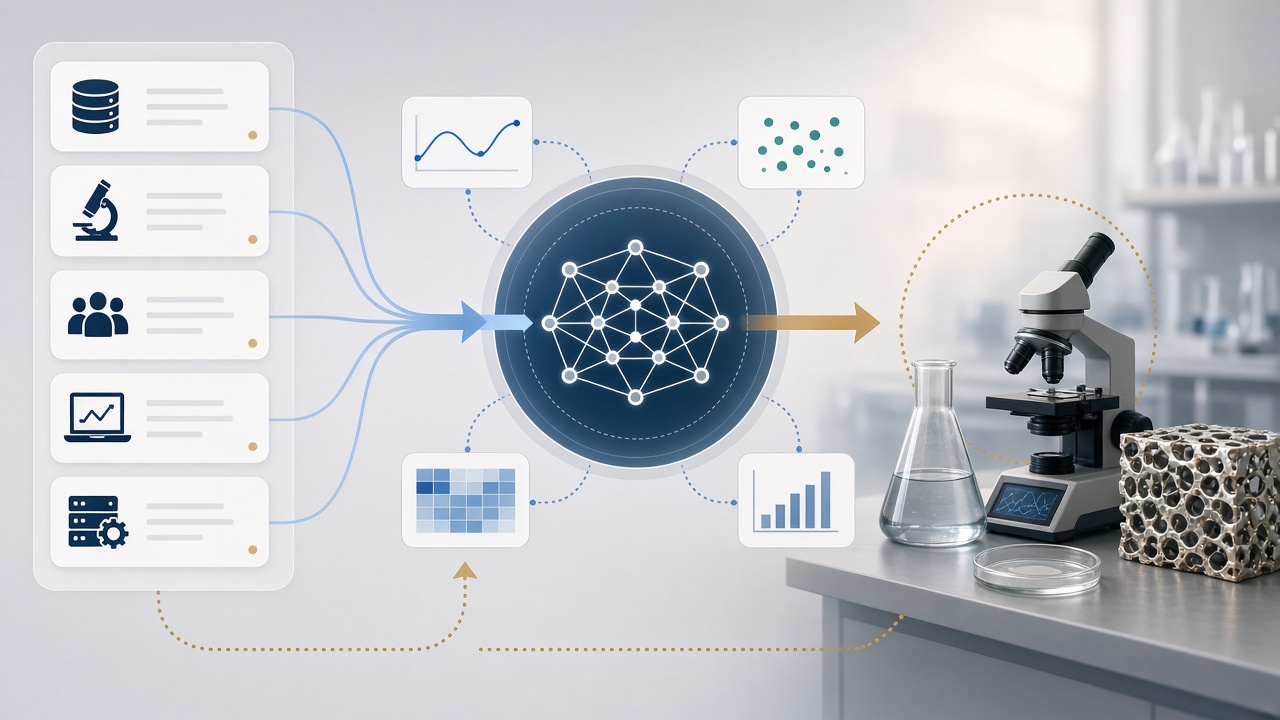
Lubrizol’s AI materials research effort is a bet on better decisions before a physical experiment is run. The company is combining technical data, scientific expertise, data science, and cloud infrastructure so researchers can test hypotheses and model possibilities earlier in the R&D process.
AI materials research starts with connected R&D data
Lubrizol brings accumulated technical data together with the knowledge of its chemists and engineers. Data scientists can then look for patterns, test hypotheses, and model possible outcomes before teams commit to physical experiments. The point is not to let a model make scientific judgments; as the source puts it, the tools are meant to give scientists better support for theirs.
That distinction matters. A model can only help if researchers can connect its outputs to the technical evidence and expertise they already use. Lubrizol’s stated approach is not a single AI system operating in isolation, but a digital foundation that connects data, people, and processes. The source argues that those connections will generate substantial amounts of data; the practical value depends on whether teams can make that data useful in day-to-day research.
Cloud infrastructure is part of the foundation. It gives researchers access to computing resources and modern tools without requiring Lubrizol to build and maintain its own data centers. That can reduce the infrastructure burden of exploring computationally demanding questions, though the source does not establish specific savings or faster development outcomes.
Worth a look
Phugialy Picks

AI Engineering: Building Applications with Foundation Models
A practical guide to building real-world applications with foundation models and LLMs.

GMKtec K15 AI Mini PC Oculink Intel Ultra 5 125U 32GB DDR5 512GB SSD | Desktop Computer AI Boost, 3X M.2 2280 Storage Expansion, Dual NIC...

2084 and the AI Revolution, Updated and Expanded Edition: How Artificial Intelligence Informs Our Future
Some Phugialy Picks use affiliate links. If you buy through one, Phugialy may earn a commission. It doesn't change what we recommend. Full disclosure →
Small pilots put scientists in the loop
Lubrizol is bringing scientists, data scientists, and IT teams together in “fusion teams,” beginning with small pilots intended to build trust. That operational choice is important: researchers need a reason to rely on a model’s suggestions, and a pilot can test whether the tools fit an actual workflow before the company attempts broader use.
The competitive implication, as I read it, is that the advantage may come less from access to AI alone than from how well Lubrizol connects its existing technical knowledge to usable modeling tools. That is an interpretation, not a reported result. If the tools do not fit how R&D decisions are made, cloud access and data science capability will not by themselves change the pace or quality of research.
Sustainability has to survive real constraints
Lubrizol sees AI and digital modeling as ways to explore sustainable material formulations and assess product life-cycle trade-offs. But a formulation is not useful simply because it looks better on one sustainability measure. Researchers still need to balance sustainability with performance, production requirements, regulatory constraints, and financial considerations.
That is the test that makes this more than a technology story. The models have to help researchers reason across those competing requirements, not just generate more possibilities. For Lubrizol, the useful signal to watch is whether pilots become tools that researchers can apply to real formulation decisions while keeping those constraints visible. Until that is demonstrated, the effort is a credible R&D strategy—not proof of improved materials or commercial results.

Holiday picks
Thanksgiving: early shopping
Start early: products for hosting, travel and home, plus the gear you have been watching.

Audio
Big purchaseSony WH-1000XM5 Premium Noise Cancelling Wireless Headphones
View on Amazon (opens in a new tab): Sony WH-1000XM5 Premium Noise Cancelling Wireless HeadphonesPrices change daily. Check today's price on Amazon.
 New this week
Home & Kitchen
Keurig K-Elite Single Serve K-Cup Pod Coffee Maker, Brushed Silver
View on Amazon (opens in a new tab): Keurig K-Elite Single Serve K-Cup Pod Coffee Maker, Brushed SilverPrices change daily. Check today's price on Amazon.

Home & Kitchen
eufy C28 Robot Vacuum Cleaner and Mop for pet hair, 15,000 Pa
View on Amazon (opens in a new tab): eufy C28 Robot Vacuum Cleaner and Mop for pet hair, 15,000 PaPrices change daily. Check today's price on Amazon.
We earn from qualifying purchases made through these links, at no extra cost to you, as an Amazon Associate and through other affiliate programs. Disclosure. See all Thanksgiving picks
Got a question about how this applies to you? →
Keep reading
Follow the thread

SciReasoner: One Model Reasons Across Proteins, Molecules, Crystals
Proteins, molecules, and crystals share almost nothing on the surface - different representations, different tools, different vocabularies entirely. What if one model could reason natively across all three? That's the pr
Read this noteSame lane, different angle
YouTube Copyright Claims Need a Clear Human Appeal Path
Media Nov Records says it runs 500 YouTube channels and sells automated copyright tools. In one reported case, a musician’s cover of a public-domain folk song was removed, and her counterclaims did not resolve the dispute.
Offline AI for Small Businesses: A Local Advantage
Fastagger is building AI around the constraints many products treat as edge cases: low-cost phones and unreliable internet. Auni’s integration into M-Pesa gives it a route to merchants, but sustained use—not sign-ups—will determine whether that distribution turns into a business.