Local AI Stem Separation With Demucs: StemDeck Reviewed
Six-stem separation with no uploads, no account, no quota - running entirely on your own machine with Meta's Demucs under the hood. The built-in BPM and key detection might be the part you end up using most.
Automation needs a narrow first win
The best first AI workflow is usually a repeated task with a clear input, clear output, and a human approval step.
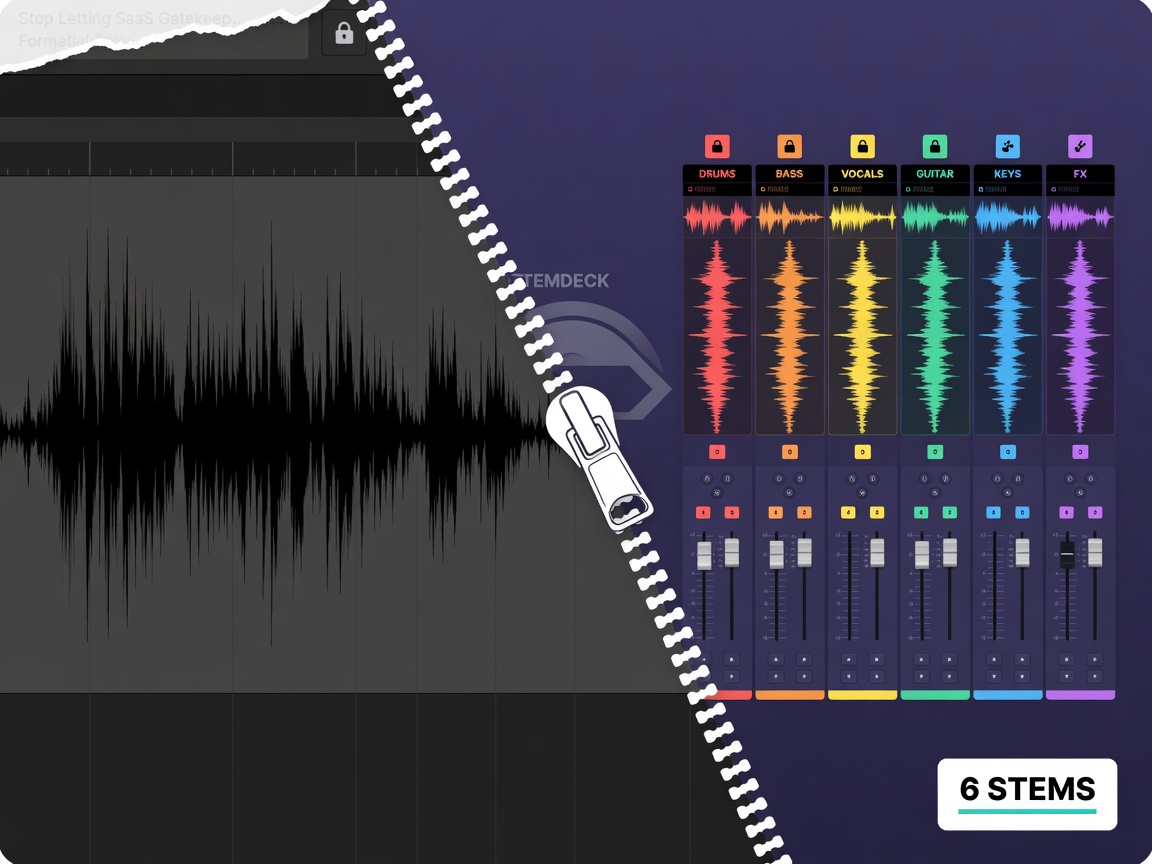
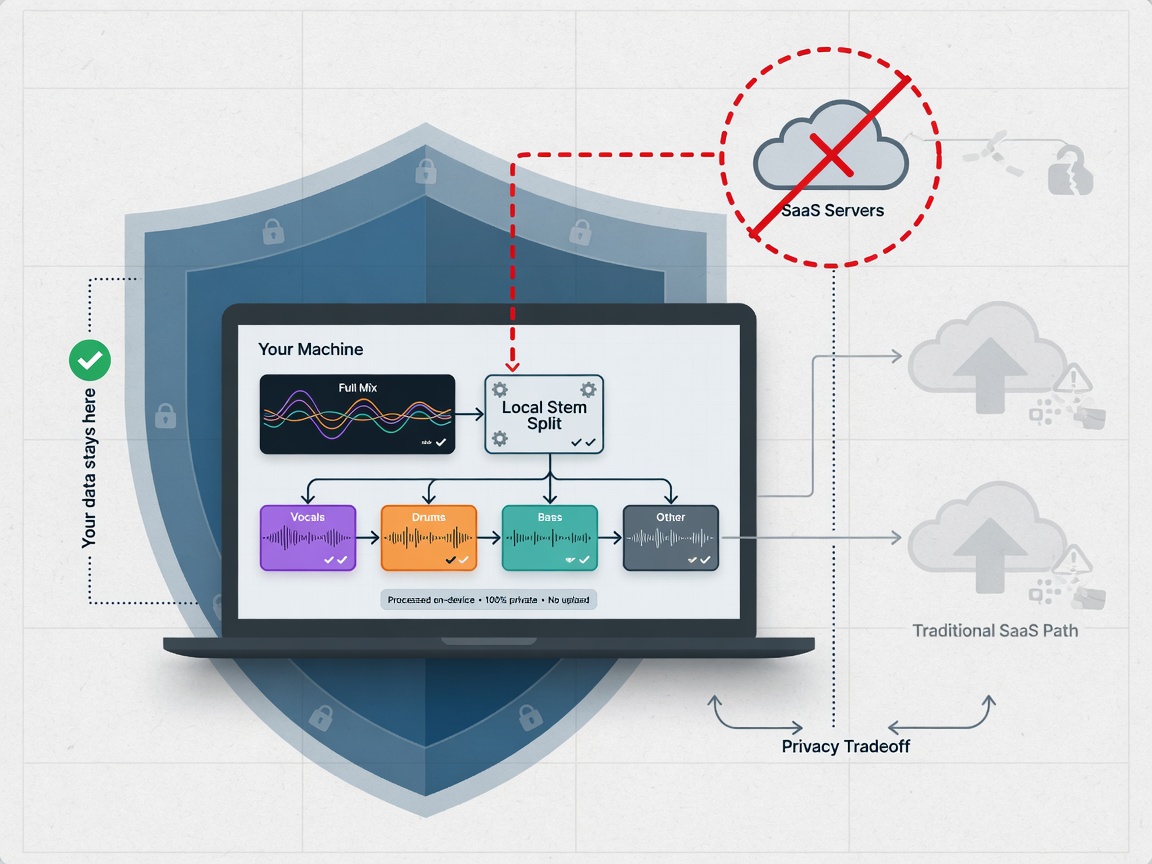
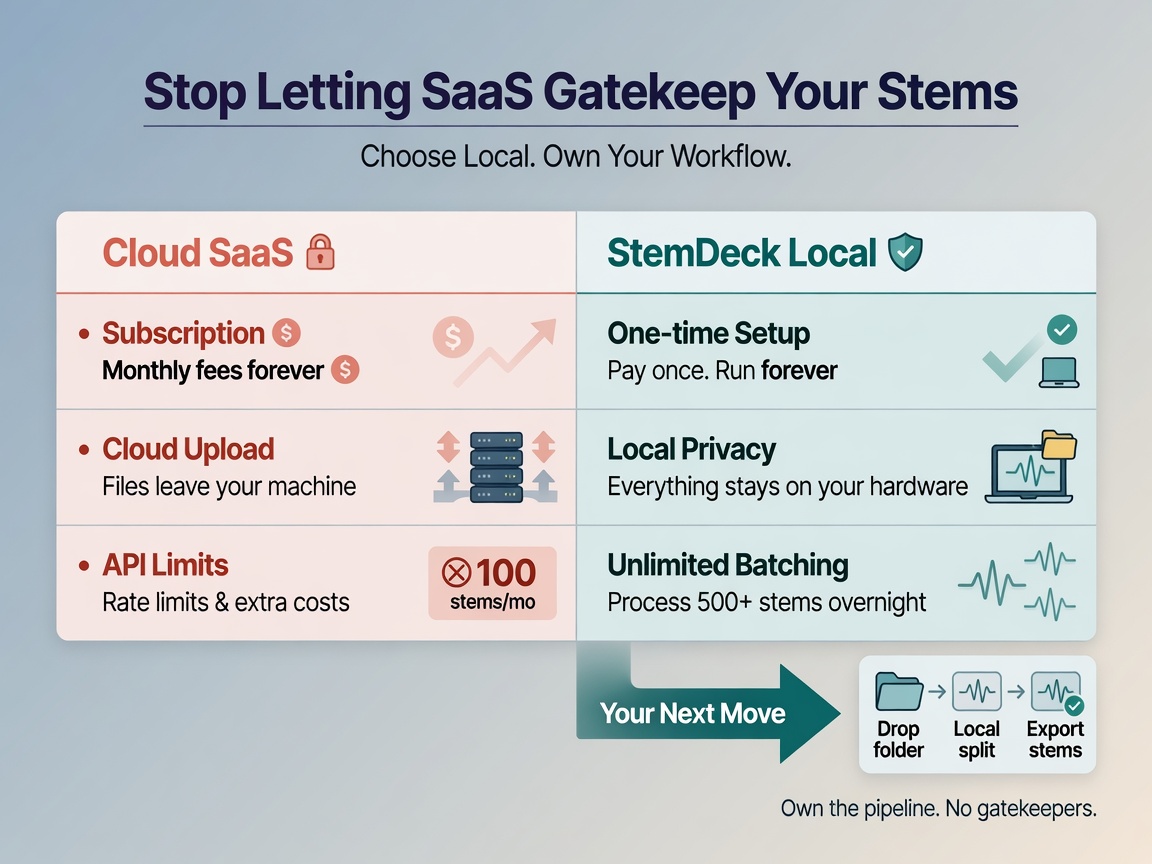
StemDeck splits any track into six stems - vocals, drums, bass, guitar, piano, and other - entirely on your own machine, using Meta's Demucs model. No account, no quota, no uploads, no subscription. It's a free, open-source alternative to cloud stem-splitters like Moises and LALAL.AI, and the fact that it runs locally is the whole point.
What Local Stem Separation Actually Gets You
Under the hood it's Demucs htdemucs_6s doing the separation work, with a Python 3.12 runtime of about 500 MB and a model file around 170 MB. That's a real install, not a browser tab - but once it's there, nothing leaves your machine. For anyone working with unreleased material, client stems under NDA, or just tracks they'd rather not hand to a third-party service, that changes the calculus completely.
Import options cover the practical range: MP3, WAV, FLAC, OGG/Opus, MP4, M4A from local files, plus YouTube URLs for grabbing something quickly. Six stems is also a meaningful step up from the four-stem output most Demucs setups default to - getting guitar and piano split out separately matters if you're actually trying to rebuild or remix a mix rather than just pull an acapella.
Phugialy Picks

GMKtec K15 AI Mini PC Oculink Intel Ultra 5 125U 32GB DDR5 512GB SSD | Desktop Computer AI Boost, 3X M.2 2280 Storage Expansion, Dual NIC...

GEEKOM IT15 AI Mini PC, Intel Ultra 9 285H(99 Tops), 32GB DDR5, 1TB SSD | The Most Powerful Workstation,Arc 140T GPU,WiFi 7,8K Business D...

GMKtec EVO-T2S Mini PC AI Ultra X7 Processor 358H 64GB LPDDR5X 8533 MT/S | Gaming Mini Computer Arc B390 1TB PCIe 5.0 SSD Oculink, WiFi 7...
Some Phugialy Picks use affiliate links. If you buy through one, Phugialy may earn a commission. It doesn't change what we recommend. Full disclosure →
The Mixer Is Where This Stops Being a Demo
Separation alone is a party trick. What makes StemDeck usable is what comes after: a DAW-style waveform editor with volume faders, mute and solo per stem, and live VU meters. That's enough to do real prep work - audition an edit before it ever touches your actual DAW project.
The analysis tools are the underrated part. BPM detection, key and scale detection, and LUFS measurement to BS.1770 are built in alongside the separation. If you're a DJ building sets or a producer sampling material, getting tempo and key on every import without opening a second tool is the kind of small workflow win that adds up fast.
Where It'll Break at Real-World Scale
The honest caveats: everything runs locally on your own machine - which means on your own hardware. Separation quality on dense mixes is where Demucs-class models still struggle; expect bleed between stems when instruments share frequency space (guitar and piano into "other" territory especially). And processing speed will be whatever your CPU or GPU allows - there's no cloud burst option when you've got twenty tracks to batch.
What this actually points to is a shift worth paying attention to: capable audio ML models have gotten small enough (~170 MB here) that shipping them inside a free desktop app is viable without any server infrastructure at all. The interesting question isn't whether the demo works - Demucs has been around - it's whether tools like this make paid cloud stem-splitter subscriptions hard to justify for anything beyond heavy batch workloads. For solo producers and DJs doing occasional splits with sensitive material? This looks like the missing piece.
Got a question about how this applies to you? →
Keep reading
Follow the thread
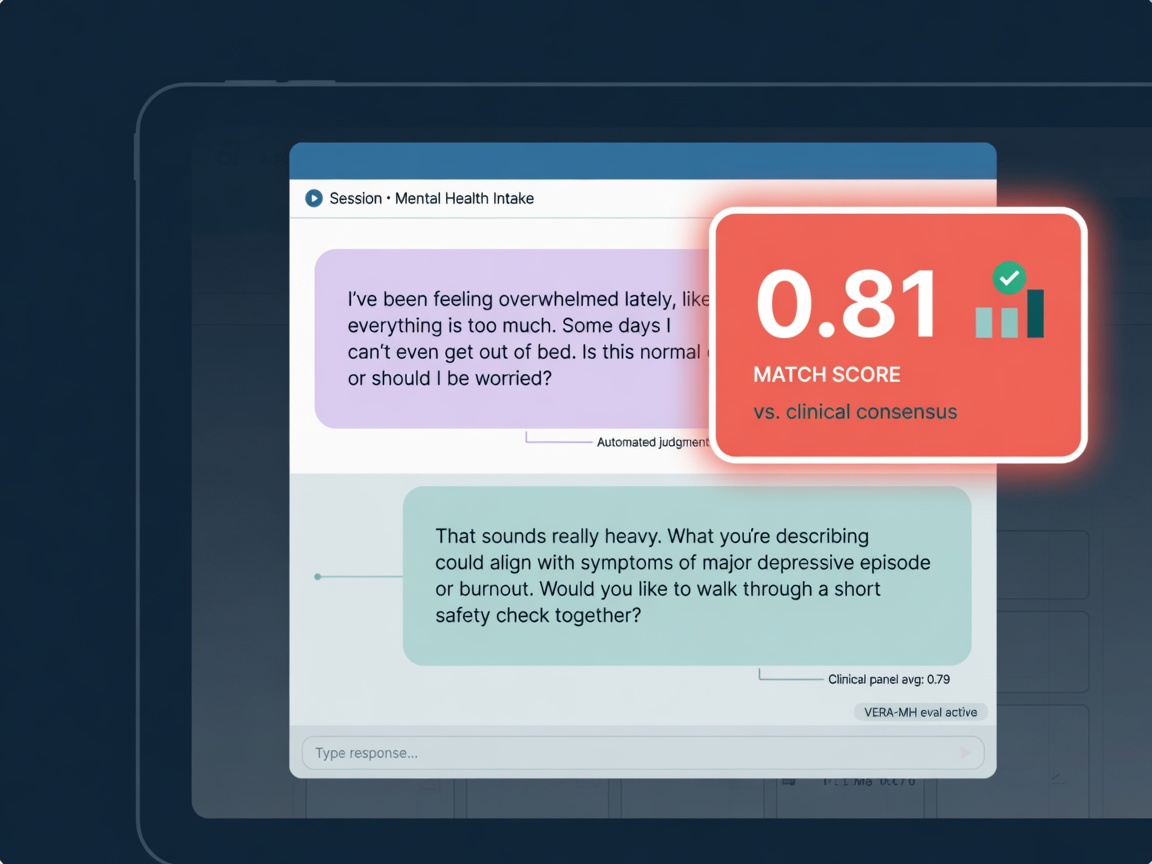
VERA-MH Benchmark: Validating AI Chatbot Safety Testing
An LLM judge matched clinician consensus at 0.81 on mental health chatbot safety ratings — but only for one narrow domain. What VERA-MH validates is real; what people will assume it covers isn't.
Read this noteSame lane, different angle
37 An Hour To Train Your Replacement: Inside AI Training Jobs
A Ph.D. graduate was offered $37 an hour — eighteen times South Africa's minimum wage — to teach an AI system how he thinks. He walked away, but most won't.
AI Route Optimisation Is Already Paying For Itself
Your shipping platform can now tell you not just where your cargo is, but which route to take, which carrier to pick, and which option carries the least risk. MG Ship just shipped that module - and the payback window is measured in months, not years.