Implementing Hybrid Semantic + Lexical Search: Turning the Idea Into a Useful Workflow
This draft follows the Practical AI & Automation Notes format: source context, Phu's perspective, a workflow example, risks, and a next step.
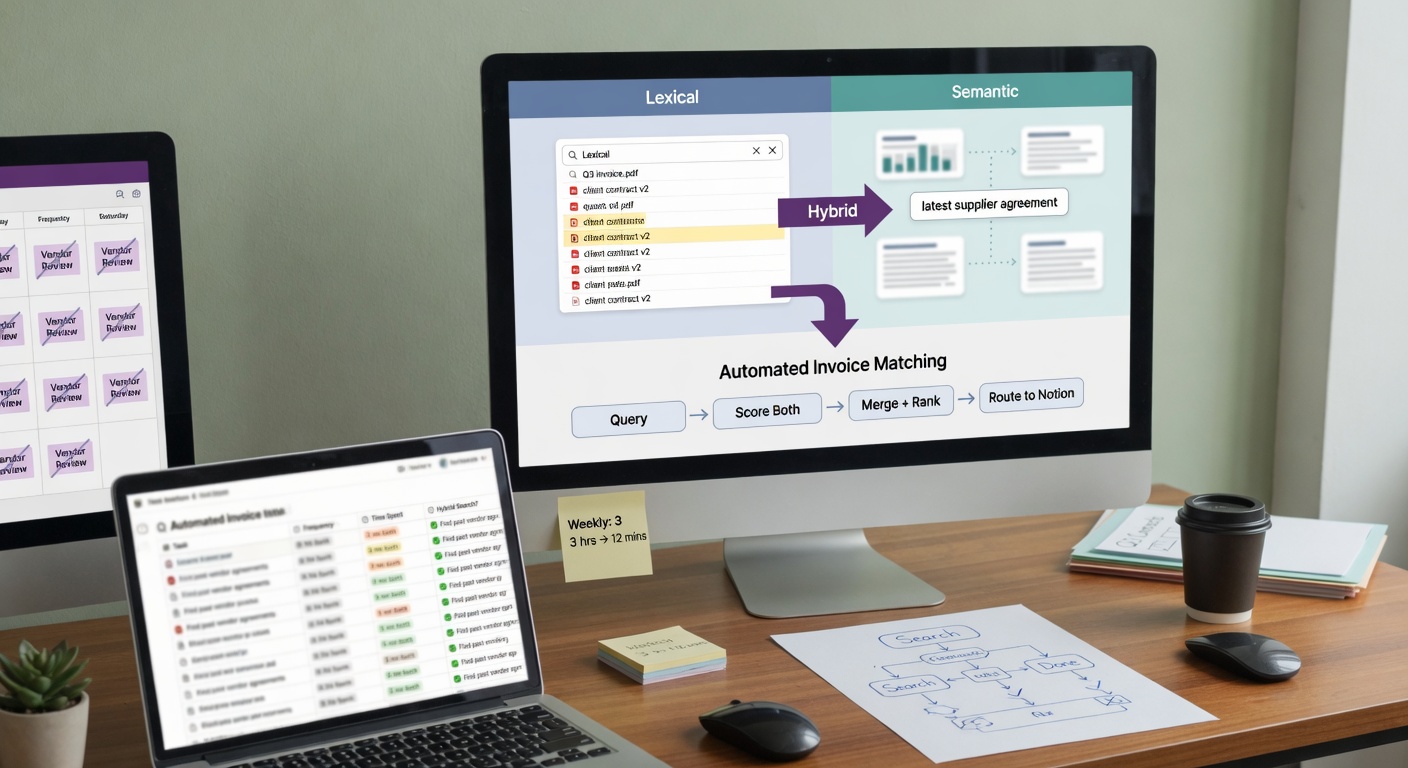
Automation needs a narrow first win
The best first AI workflow is usually a repeated task with a clear input, clear output, and a human approval step.
Implementing Hybrid Semantic + Lexical Search: Turning the Idea Into a Useful Workflow
The problem
The useful question is not whether this is another AI trend. The useful question is whether it changes a real workflow for developers, operators, or local businesses.
Worth a look
Phugialy Picks

AULA F99 Wireless Mechanical Keyboard,Tri-Mode BT5.0/2.4GHz/USB-C Hot Swappable Custom Keyboard,Pre-lubed Linear Switches,RGB Backlit Com...

INIU 10000mAh 45W Fast Charging Portable Power Bank
We'd buy this if: You've been caught with a dead phone/laptop away from an outlet more than once.
We'd skip this if: You're always near a charger anyway.
OMOTON C2 Adjustable Aluminum Phone Stand
We'd buy this if: You want your phone upright on your desk for calls/notifications without a cable getting in the way.
We'd skip this if: You never keep your phone on your desk.
Some Phugialy Picks use affiliate links. If you buy through one, Phugialy may earn a commission. It doesn't change what we recommend. Full disclosure →
What I noticed
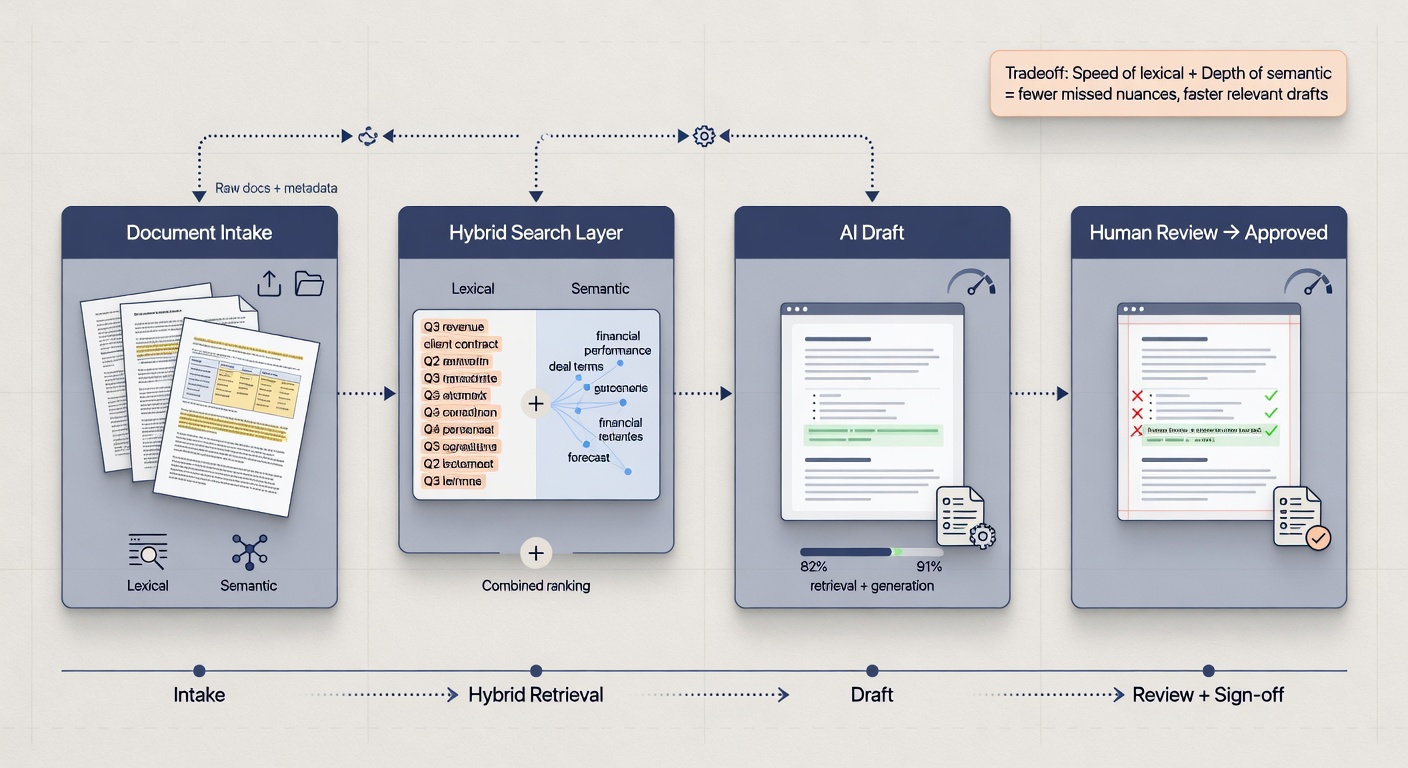
Kent C. Dodds pointed to this idea: Semantic search alone wasn't good enough. Here's how I improved search on kentcdodds.com through three rounds of iteration with Cursor and GPT-5.4, each time learning something that the previous design missed..
That is the reference point, but it should not become the whole article. The source is an input. The important part is what I would do with it as a software and automation engineer.
Where AI fits
The useful part is not the hype. It is the workflow. If this idea can reduce repeated manual work, tighten feedback loops, or help a team review technical decisions faster, then it is worth testing.
For me, this fits the Applied AI lane because it connects a current tool or trend to practical implementation.
My working approach
Here is how I would apply this:
- Start with one narrow use case.
- Define the input, output, and review step.
- Keep a human checkpoint before anything reaches production.
- Measure whether the workflow saves time or improves quality.
- Document what failed, not just what worked.
Practical example
For a small team, I would start with one repeated workflow: collect the input, normalize it, draft the output, route it for review, and log the result. If the workflow saves a few hours every week, it is already useful before anyone calls it a strategy.
What I would avoid
I would avoid turning this into generic AI content. If an article only says that AI is changing everything, it does not help anyone make a better decision.
I would also avoid fully automated publishing without review for anything that represents my portfolio voice. Automation can draft, organize, and surface ideas. The final judgment still needs to be mine.
Try this next
Pick one article, tool release, or local business workflow and answer three questions:
- What did I learn?
- What do I think?
- How would I apply it?
That is the standard I want this portfolio series to follow: no empty summaries, no hype, and no article without a practical next step.
Got a question about how this applies to you? →
Keep reading
Follow the thread

AI Automation Should Start With One Boring Workflow
A practical article about choosing one repeatable workflow, drafting with AI, and keeping human approval before anything goes out.
Read this noteSame lane, different angle
Simplifying Containers with Cloudflare Sandboxes: Turning the Idea Into a Useful Workflow
This draft follows the Practical AI & Automation Notes format: source context, Phu's perspective, a workflow example, risks, and a next step.
Introducing RSC Explorer: Turning the Idea Into a Useful Workflow
This draft follows the Practical AI & Automation Notes format: source context, Phu's perspective, a workflow example, risks, and a next step.