From Search Results to Query Fan-out: The Reality of Google’s AI Expansion
The draft was already strong but needed a punchier 'Builder' persona in the hook and a more distinct analytical angle regarding the shift from SEO to data architecture. I sharpened the tension in the LinkedIn hook and expanded the final section to emphasize the engineering stakes.
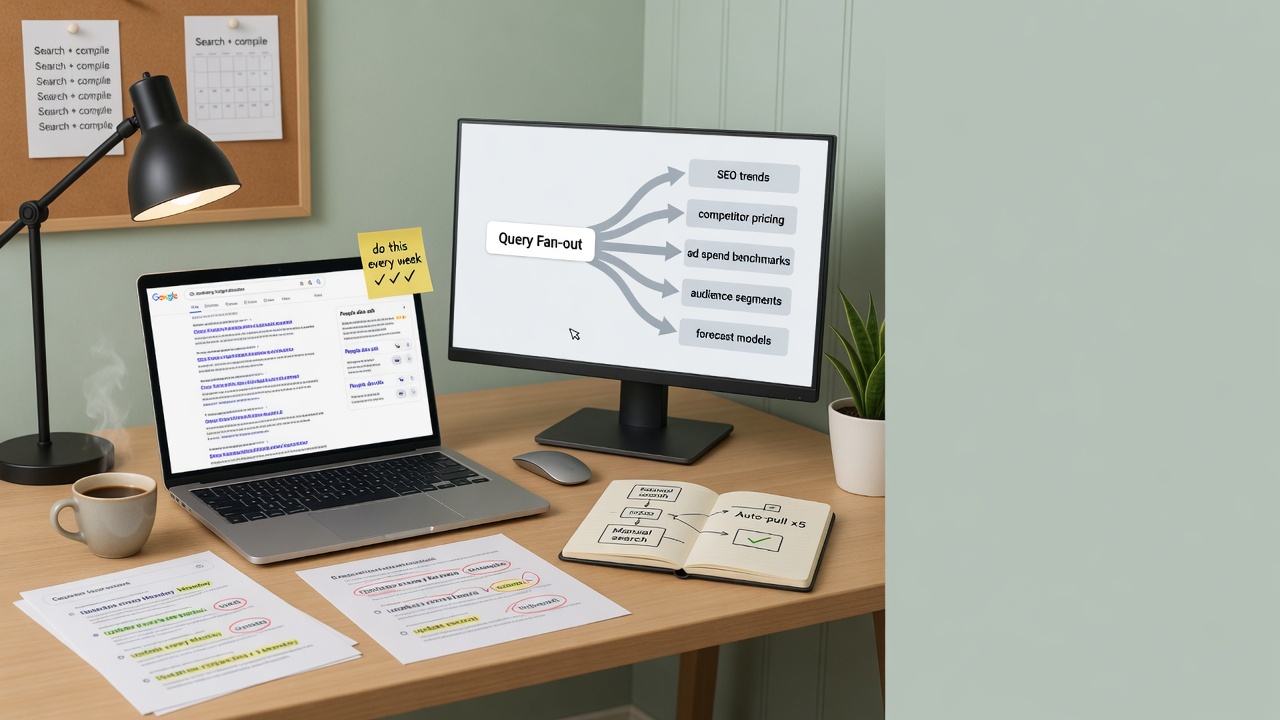
Automation needs a narrow first win
The best first AI workflow is usually a repeated task with a clear input, clear output, and a human approval step.
Google has moved AI Overviews from a niche experiment to a core search pillar, appearing in 43% of US searches as of 2026. That’s a massive leap from 15% just a year ago. But for those of us building on the web, the headline isn't just the "AI-fication" of the SERP; it’s the underlying shift in how queries are processed. We are moving away from "finding a page" toward "synthesizing a concept," and that requires a fundamental change in how we structure our data.
The Mechanics of Query Fan-out
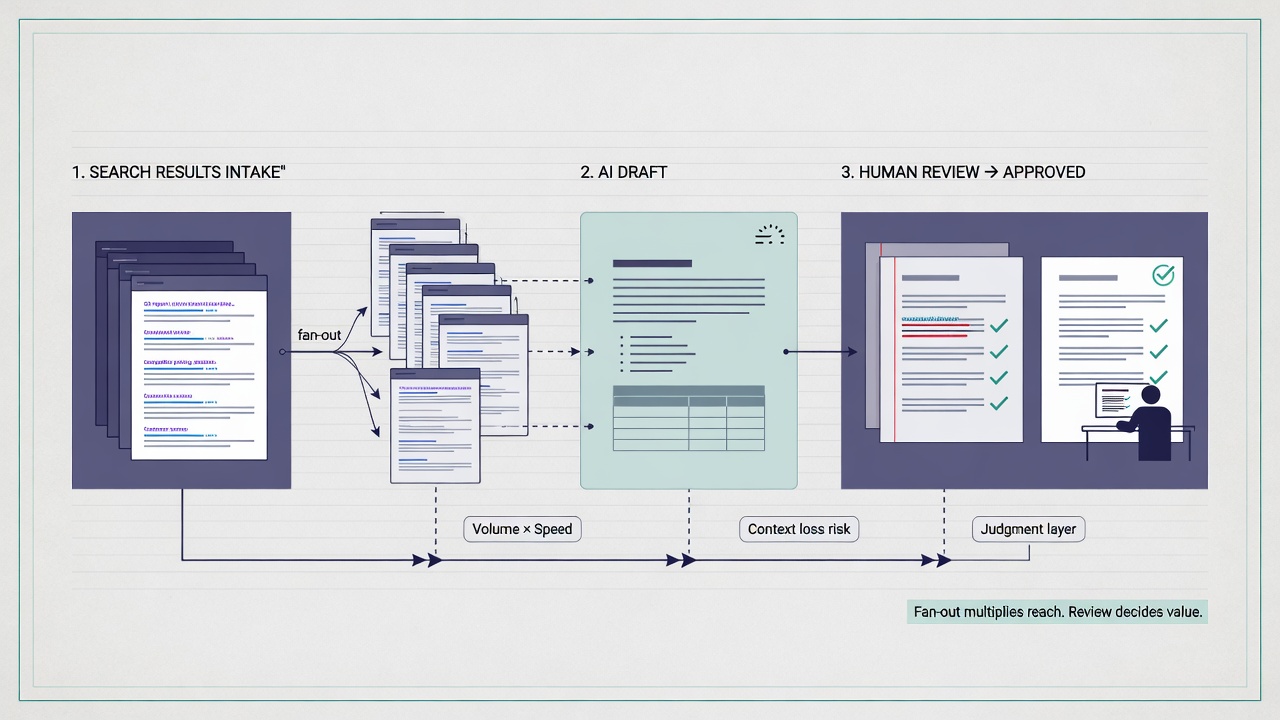
To handle complex, multi-part prompts, Google is leaning into "query fan-out." Instead of trying to find one perfect match for a messy human question, the system breaks the query into subtopics and runs multiple searches simultaneously. It then synthesizes those pieces into a single answer. This is a massive signal for anyone building content systems: "keyword matching" is officially being replaced by "concept decomposition." The system isn't looking for a single picture on the box anymore; it's looking for all the individual pieces of the puzzle across your entire domain.
Worth a look
Phugialy Picks

AI Engineering: Building Applications with Foundation Models
A practical guide to building real-world applications with foundation models and LLMs.

GMKtec K15 AI Mini PC Oculink Intel Ultra 5 125U 32GB DDR5 512GB SSD | Desktop Computer AI Boost, 3X M.2 2280 Storage Expansion, Dual NIC...

GEEKOM IT15 AI Mini PC, Intel Ultra 9 285H(99 Tops), 32GB DDR5, 1TB SSD | The Most Powerful Workstation,Arc 140T GPU,WiFi 7,8K Business D...
Some Phugialy Picks use affiliate links. If you buy through one, Phugialy may earn a commission. It doesn't change what we recommend. Full disclosure →
The Deep-Link Referral Gap
The data on how LLMs cite content reveals a specific, high-stakes pattern. While ChatGPT’s share of responses with web citations jumped fivefold last year (from 1.3% to 6.8%), about 65% of those cited URLs are buried two or three folders below the main domain. Meanwhile, 58.8% of AI referral traffic still hits homepages.
This creates a massive "referral gap." The AI is successfully navigating deep into your site architecture to find the "meat," but the traffic isn't always following it back to the surface. If your deep-content pages are siloed without a clear, logical path for a crawler to follow, you’re losing the chance to be part of that "fan-out" process. You need to build paths, not just pages.
Engineering for a Gated Data Era
The real story here is the looming economic shift in data access. With generative AI site visits up 70% and tools like Cloudflare’s "Pay per Crawl" emerging, we are entering a gated era of data. For publishers and engineers, the challenge is no longer just "getting found"—it’s about creating a structure that is discoverable enough for an AI to decompose into subtopics, yet valuable enough to potentially justify a paywall.
The gap between a flashy AI demo and a production environment where you maintain traffic while managing "crawl costs" is where the next year of engineering will happen. It’s time to stop optimizing for humans alone and start architecting for the machines that are now reading your work.
Got a question about how this applies to you? →
Keep reading
Follow the thread

AI Tutors Work Only If Students Use Them: Trial
A two-year trial across 18 middle schools found Khan Academy's AI tutor raised math scores modestly - but here's the catch: the gains looked just like those from practice without any AI at all. The real story isn't whether AI tutoring works; it's that 96% of students tried it and almost none used it when they actually needed help.
Read this noteSame lane, different angle
Spectral Attacks Reveal a Hidden Weak Spot in Vision-Language Models
Researchers found a way to attack vision-language models using the model's own internal geometry — aligning representations with the subspaces the model cares about least. It beats existing baselines, and the same insight could make these models tougher.
SPEAR Turns Any Unreal Project Into an Embodied AI Simulator
A new open-source library exposes over 14,000 Unreal Engine functions to Python at no wrapper cost — turning any UE project into candidate training infrastructure for embodied AI at 73 fps photorealistic rendering.