From Novelty to Nature: Engineering the 'Presence' of a Talking Fish
You can turn a classic Big Mouth Billy Bass into a functional real-time voice assistant without needing any experience in robotics or soldering. This project, known as BillAI Bass, bridges the gap between a physical nove
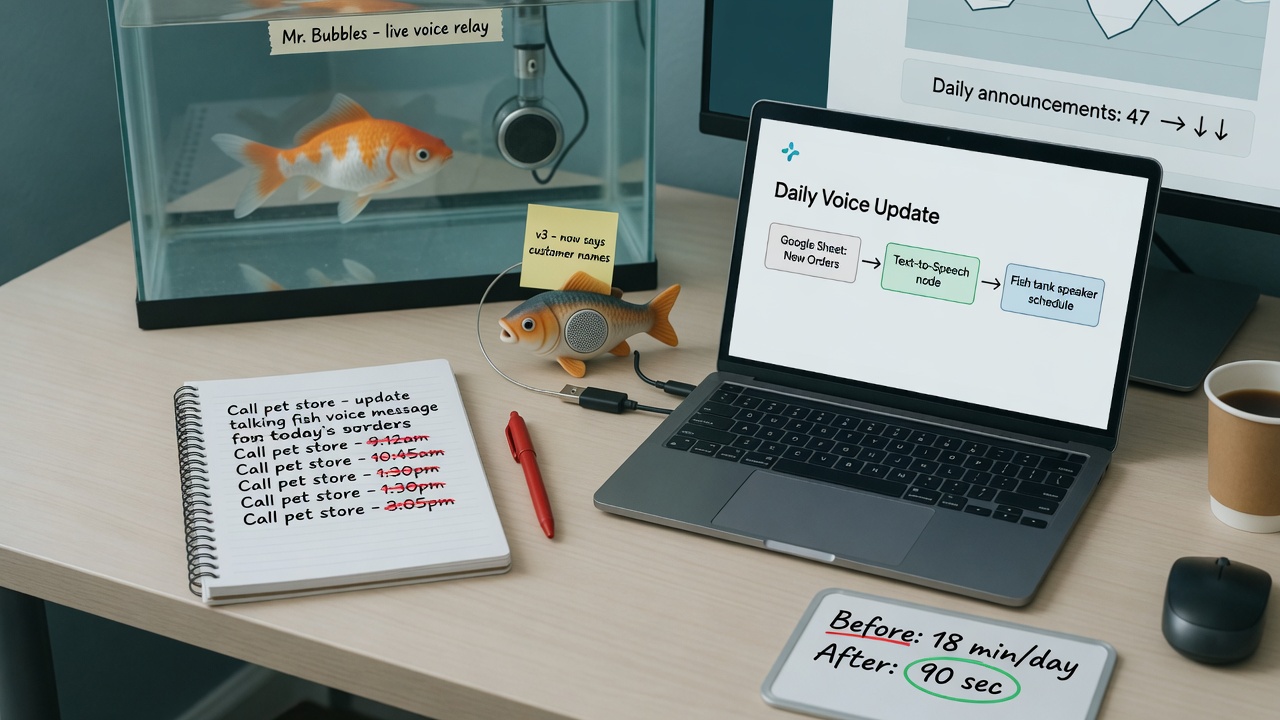
Automation needs a narrow first win
The best first AI workflow is usually a repeated task with a clear input, clear output, and a human approval step.
You can turn a classic Big Mouth Billy Bass into a functional real-time voice assistant without needing any experience in robotics or soldering. This project, known as BillAI Bass, bridges the gap between a physical novelty and modern AI capabilities by using a Raspberry Pi 5 to host a sophisticated voice interaction system. It allows you to talk to the fish and have it talk back with synchronized physical movements like head swiveling, tail flapping, and mouth lip-syncing. It’s a fantastic entry point for anyone curious about how AI can inhabit the physical world.
The Hardware Stack: Raspberry Pi 5 and Amazon Nova 2 Sonic
To build this, the hardware setup is surprisingly accessible. The core of the system is a Raspberry Pi 5, and while the project involves motion, it is specifically designed so that no prior robotics or soldering experience is required. The software side relies on Amazon Nova 2 Sonic on Amazon Bedrock, which provides the real-time voice processing. To ensure compatibility with Nova Sonic, the system requires Python 3.12 or higher.
From a practical standpoint, the cost of entry is relatively low. Based on January 2026 pricing, the total hardware and setup costs are roughly $240. Once it is running, the cost of the AI interaction is remarkably efficient, costing about a penny for every few minutes of conversation. Additionally, the guide includes a security-focused approach, instructing users to create a least-privilege IAM user for the AI agent. This ensures the AI has only the specific permissions it needs to function, which is a crucial best practice when connecting AI agents to external systems.
Worth a look
Phugialy Picks

Insta360 Link 2 - PTZ 4K Webcam for PC/Mac, 1/2" Sensor, AI Tracking, HDR, AI Noise-Canceling Mic, Gesture Control for Streaming, Video C...

EMEET NOVA 4K Webcam for PC, Ultra 4K HD, PDAF Autofocus, Dual Omni Mics | 73° FOV, Auto Light Correction, USB-A, Privacy Cover, Ideal fo...

Logitech Brio Ultra 4K HD Webcam for Streaming and Meetings - Black | Ultra HD with glass lens, auto light correction, wide view, works w...
Some Phugialy Picks use affiliate links. If you buy through one, Phugialy may earn a commission. It doesn't change what we recommend. Full disclosure →
Why Bidirectional Streaming is the Secret Sauce
The most significant technical hurdle in this project isn't just making the fish "speak" using a text-to-speech engine; it is the timing of the physical responses. This is achieved through Strands Agents Bidirectional Streaming (BidiAgent). To understand why this matters, it helps to think about how most AI interactions work: you send a request, the AI processes it, and then it sends a response back. This is a "ping-pong" cycle.
Bidirectional streaming, however, allows for a continuous, two-way flow of data. In this setup, the audio and the physical movements (like the tail flapping for emphasis) are not just waiting for a completed sentence to play back. They are reacting in real-time as the data streams in. This allows the fish to feel like it is "performing" the speech as it happens, rather than just playing a pre-recorded clip after a long pause.
The Difference Between Fast Responses and Physical Presence
Most explanations of AI-powered hardware stop at the speed of the response, but the real story here is the synchronization of physical embodiment. It is easy to conflate a "fast" AI with a "present" AI—here is the actual difference. A fast AI gives you an answer quickly, but a present AI acts in a way that aligns with the timing of that answer.
When the fish's tail flaps for emphasis or its head swivels while it's mid-sentence, it moves beyond being a mere playback device; it begins to simulate a state of "being" that feels natural to a human observer. This is the leap from a toy that talks to a machine that performs. By prioritizing the stream of data over the completion of a task, the project achieves a level of physical synchrony that makes the interaction feel alive rather than mechanical.
Got a question about how this applies to you? →
Keep reading
Follow the thread
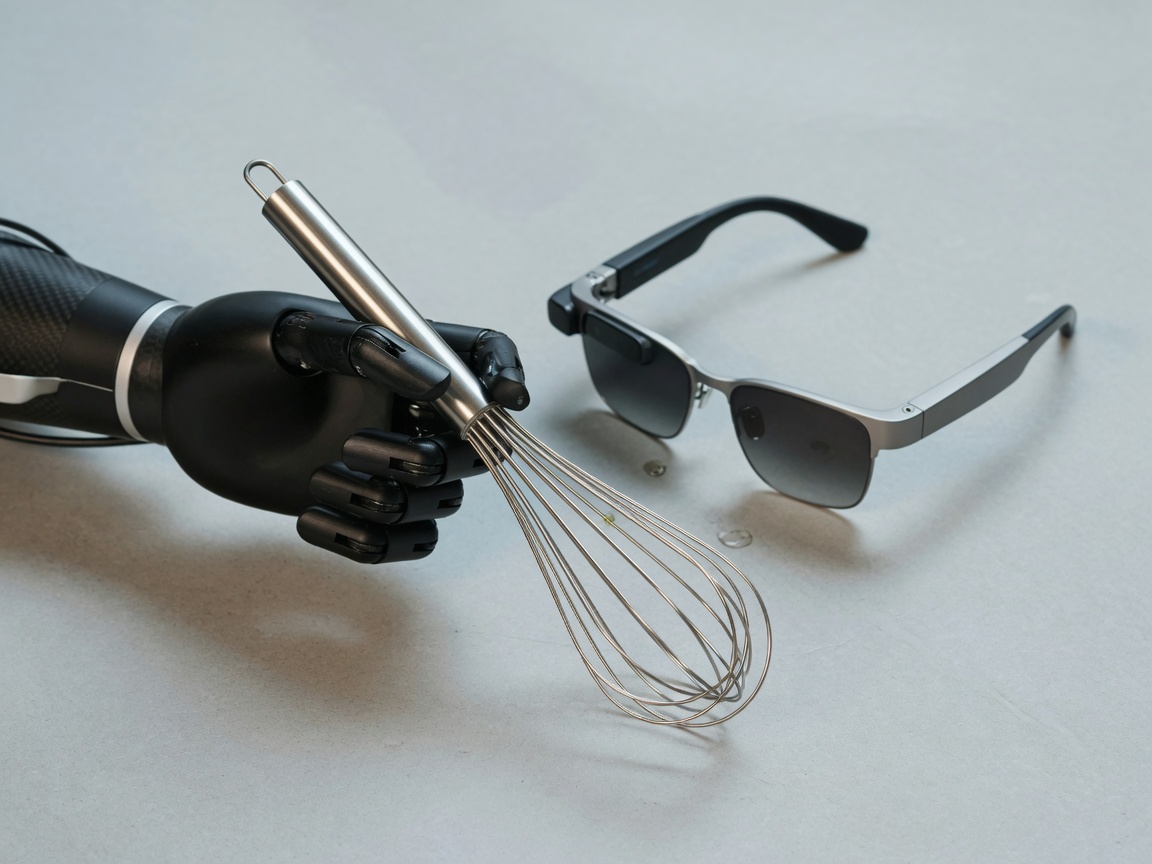
The Physicality Pivot: Why AI’s Next Frontier is Hardware, Not Just Hype
AI is moving from your screen into your physical space. From 1X's robotic hands to Meta's smart glasses, the next competitive frontier isn't just better chat—it's physical agency.
Read this noteSame lane, different angle
AI Tutors Work Only If Students Use Them: Trial
A two-year trial across 18 middle schools found Khan Academy's AI tutor raised math scores modestly - but here's the catch: the gains looked just like those from practice without any AI at all. The real story isn't whether AI tutoring works; it's that 96% of students tried it and almost none used it when they actually needed help.
Spectral Attacks Reveal a Hidden Weak Spot in Vision-Language Models
Researchers found a way to attack vision-language models using the model's own internal geometry — aligning representations with the subspaces the model cares about least. It beats existing baselines, and the same insight could make these models tougher.