Don't Let AI Write Your Second Brain Notes
An Obsidian vault with 25,979 files totaling 3.5 GB is a good stress test for AI in personal knowledge management, and the author of this piece ran it long enough to hit the failure mode most demos skip: after letting AI
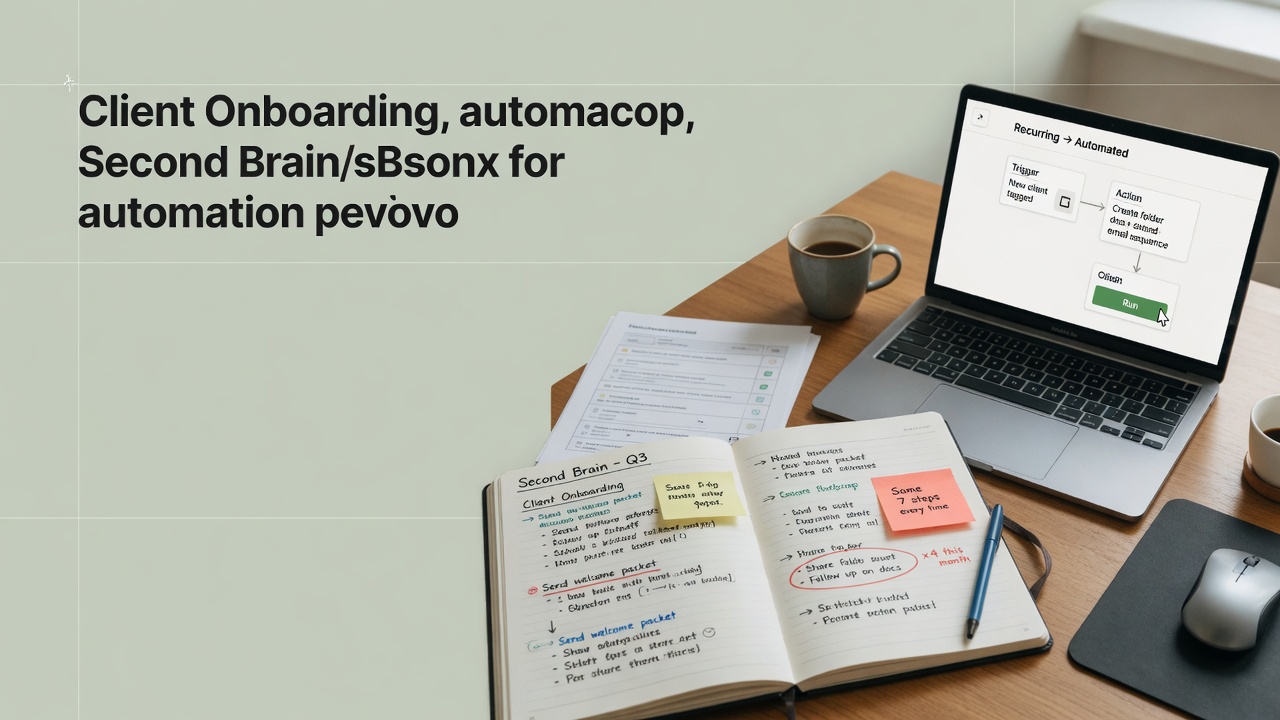
Automation needs a narrow first win
The best first AI workflow is usually a repeated task with a clear input, clear output, and a human approval step.
An Obsidian vault with 25,979 files totaling 3.5 GB is a good stress test for AI in personal knowledge management, and the author of this piece ran it long enough to hit the failure mode most demos skip: after letting AI generate notes and summaries, they could no longer tell which thoughts were theirs. That's not a workflow bug you can patch - it's the whole value of the vault quietly degrading.
AI-Generated Summaries Are Noise, Your Notes Are Signal
The sharpest line in the piece: "A summary of a PDF is noise. An insight I had from reading the PDF is signal." A summary anyone (or any model) could produce adds nothing to your vault; the marginal note you wrote after fighting with an idea is the asset. When AI-generated content mixes into that pool, your own much more valuable thoughts get diluted by what the author calls 'AI Slop' - and worse, you lose the ability to distinguish them.
There's also a generation cost people don't notice until later: "It's so hard to finish an idea that is not yours and is just suggested by AI." Auto-tagging and auto-organizing have the same problem from a different angle - when the model builds your knowledge graph's connections, you stop holding them in your head, and the graph stops functioning as an extension of your thinking.
Phugialy Picks

AI Engineering: Building Applications with Foundation Models
A practical guide to building real-world applications with foundation models and LLMs.

ASUS TUF Gaming GeForce RTX 5070 12GB GDDR7 OC Edition Graphics Card

2024 Mac mini Desktop Computer with M4 chip, 10-core CPU and 10-core GPU
Some Phugialy Picks use affiliate links. If you buy through one, Phugialy may earn a commission. It doesn't change what we recommend. Full disclosure →
Where AI Actually Earns Its Place in a Second Brain
The recommendation isn't abstinence, it's role separation. Use AI for retrieval, not generation: advanced research across your notes, finding related material, vector and similarity searches. Those are tasks where the model surfaces things you already own but can't recall - it points at your thinking instead of replacing it.
Architecturally, the practical move is keeping AI-heavy work out of your notes entirely: run embeddings and similarity queries against a separate database like DuckDB so the vault itself stays human-curated. That's a pattern I'd extend further - anything write-heavy that touches your notes should be treated with suspicion by default.
The Part Worth Trying Yourself: Notes as Future Training Data
The argument that stuck with me most is forward-looking: "Your notes will be prompts or libraries for AI tomorrow, but not if you generate them." If you believe personal corpora will feed future fine-tuning or retrieval systems, then human-curated notes are high-quality training data precisely because they weren't machine-generated. Generating them with AI poisons that asset at the source.
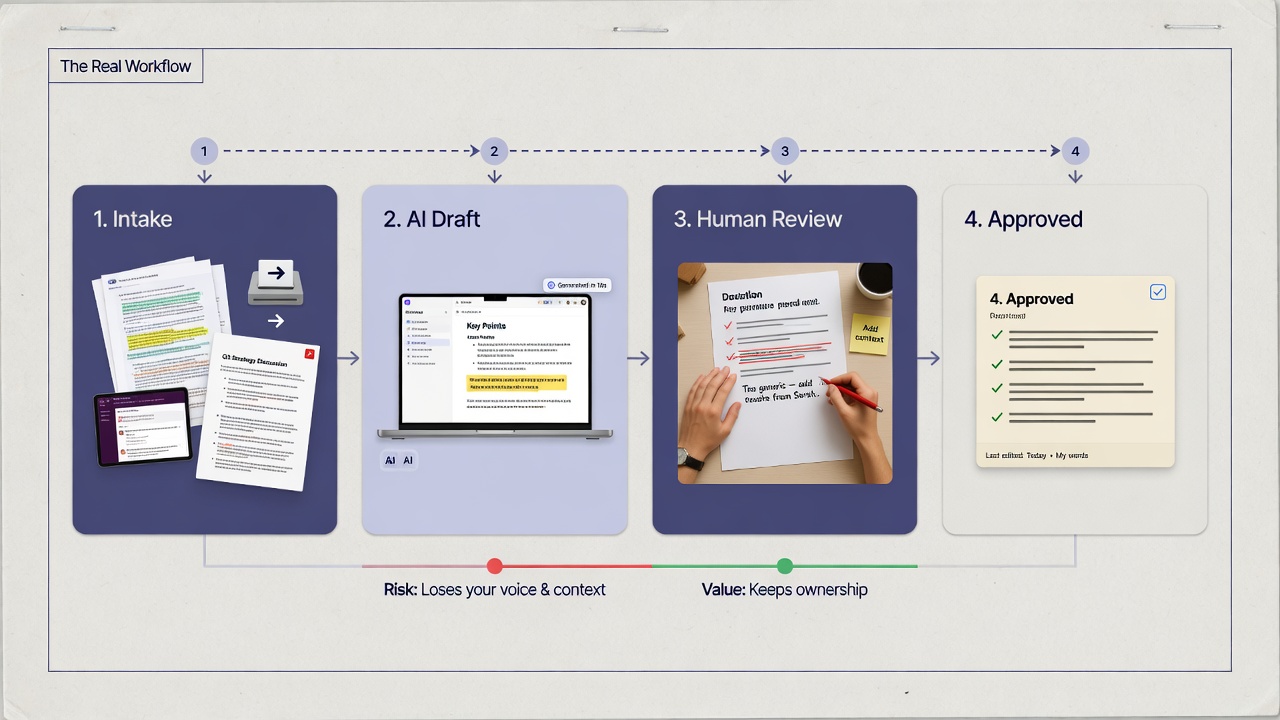
My read on what this actually points to: this isn't an anti-AI position, it's a data hygiene position dressed as one. The same trade-off shows up everywhere in production - letting a model write into your source of truth feels efficient for a week and costs you provenance forever. The interesting question isn't whether an AI summary works in a demo (it does), it's what happens two years later when you can't tell which half of your vault you actually thought. Keep the model on read-only paths against clean data, keep humans on every write path to your own thinking.
Got a question about how this applies to you? →
Keep reading
Follow the thread
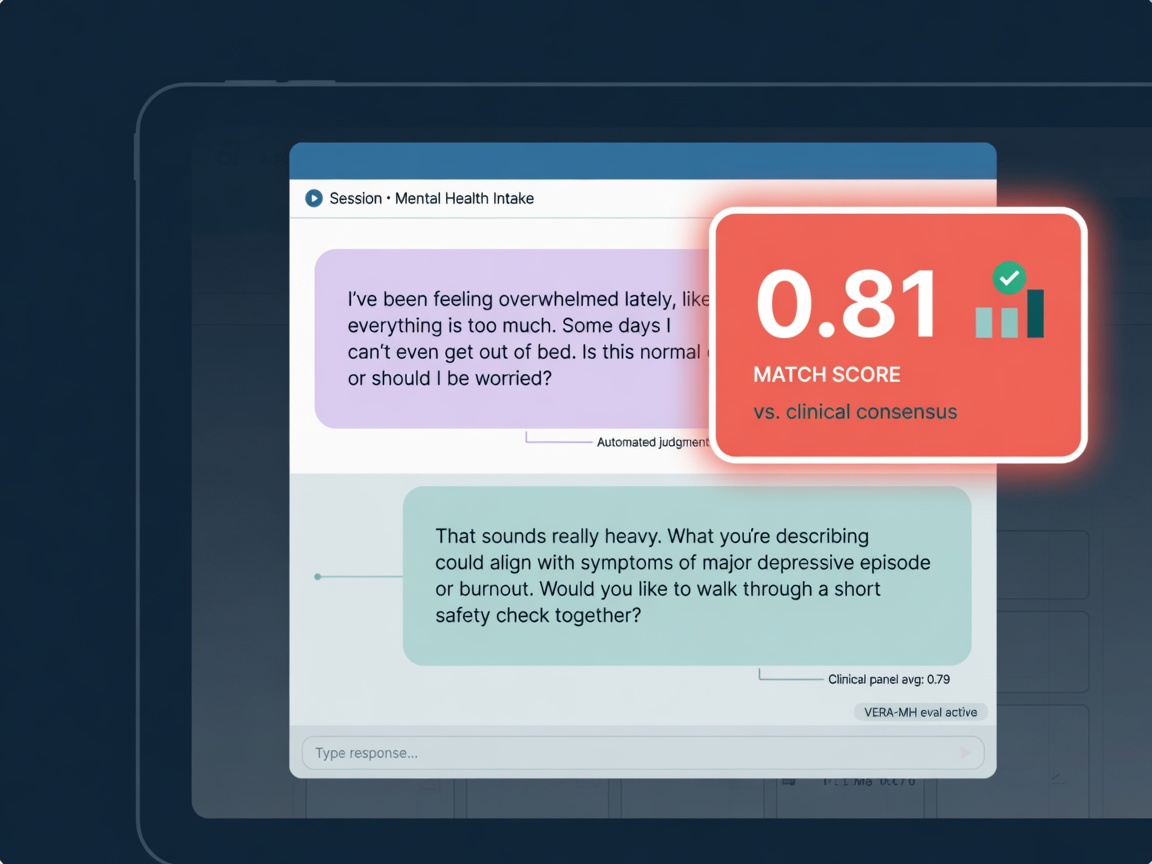
VERA-MH Benchmark: Validating AI Chatbot Safety Testing
An LLM judge matched clinician consensus at 0.81 on mental health chatbot safety ratings — but only for one narrow domain. What VERA-MH validates is real; what people will assume it covers isn't.
Read this noteSame lane, different angle
37 An Hour To Train Your Replacement: Inside AI Training Jobs
A Ph.D. graduate was offered $37 an hour — eighteen times South Africa's minimum wage — to teach an AI system how he thinks. He walked away, but most won't.
AI Route Optimisation Is Already Paying For Itself
Your shipping platform can now tell you not just where your cargo is, but which route to take, which carrier to pick, and which option carries the least risk. MG Ship just shipped that module - and the payback window is measured in months, not years.