United AI Agent Policy: The Booking Boundary Is Unclear
United is restricting unauthorized AI agents on its own platforms and through travel intermediaries. Yet its fares remain bookable through major aggregators, and the policy description does not explain how those facts fit together.
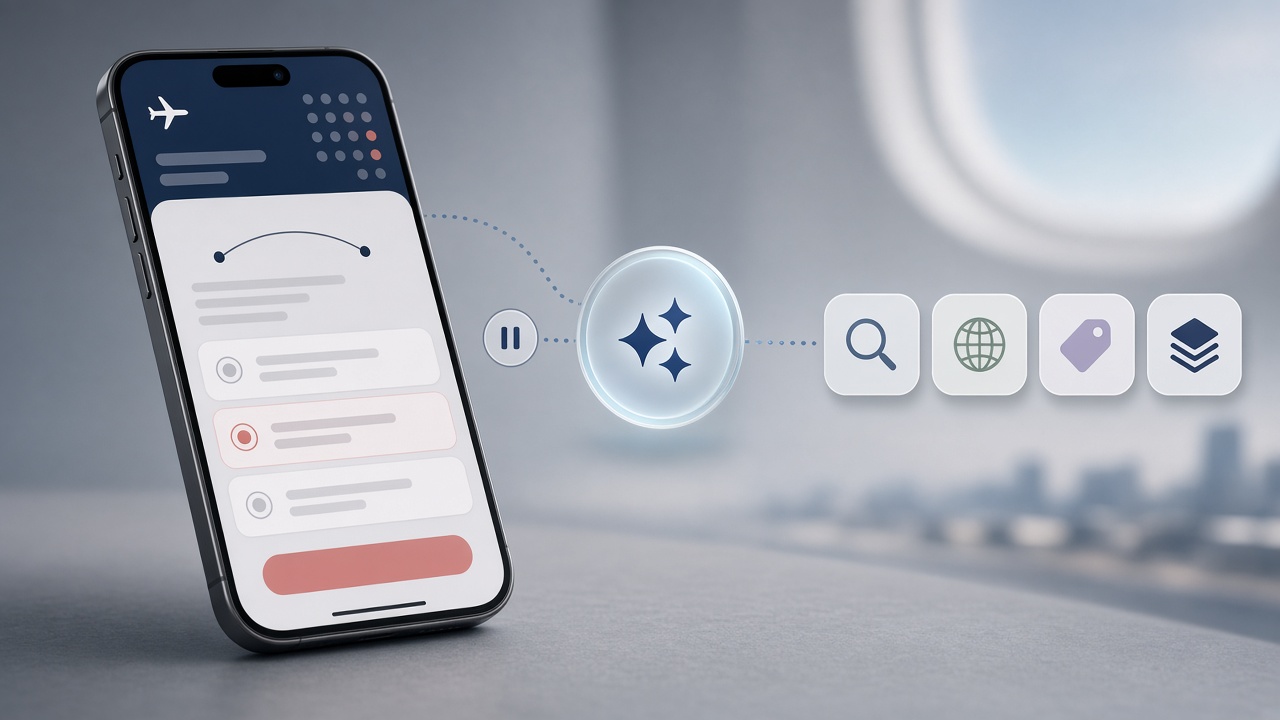
Automation needs a narrow first win
The best first AI workflow is usually a repeated task with a clear input, clear output, and a human approval step.
United’s AI agent policy is broader—and less clearly defined—than a simple ban on booking through outside sites. United says it will restrict unauthorized personal agents both on its own platforms and indirectly through travel agencies and aggregators, even as fares remain bookable through Kayak, Hopper, and Google Flights.
What United’s AI agent policy actually restricts
The airline is updating its booking and ticketing policies to prohibit unauthorized third-party personal AI agents or assistants. United says sharing account credentials with these tools can expose sensitive information, and that their actions may lead to unintended purchases, account changes, or use of MileagePlus miles. It also cites possible violations of federal rules, though the available account does not specify which rules or how they apply.
The scope has two parts: direct restrictions within United’s digital platforms, and indirect restrictions “via travel agencies and aggregators.” That second part matters. It means the policy should not be described as applying only to United’s own website or app. But it also cannot be read as a categorical block on aggregator bookings: the source says United fares will remain bookable through Kayak, Hopper, and Google Flights.
Worth a look
Phugialy Picks

AI Engineering: Building Applications with Foundation Models
A practical guide to building real-world applications with foundation models and LLMs.

GMKtec K15 AI Mini PC Oculink Intel Ultra 5 125U 32GB DDR5 512GB SSD | Desktop Computer AI Boost, 3X M.2 2280 Storage Expansion, Dual NIC...

2084 and the AI Revolution, Updated and Expanded Edition: How Artificial Intelligence Informs Our Future
Some Phugialy Picks use affiliate links. If you buy through one, Phugialy may earn a commission. It doesn't change what we recommend. Full disclosure →
The booking options expose an unresolved boundary
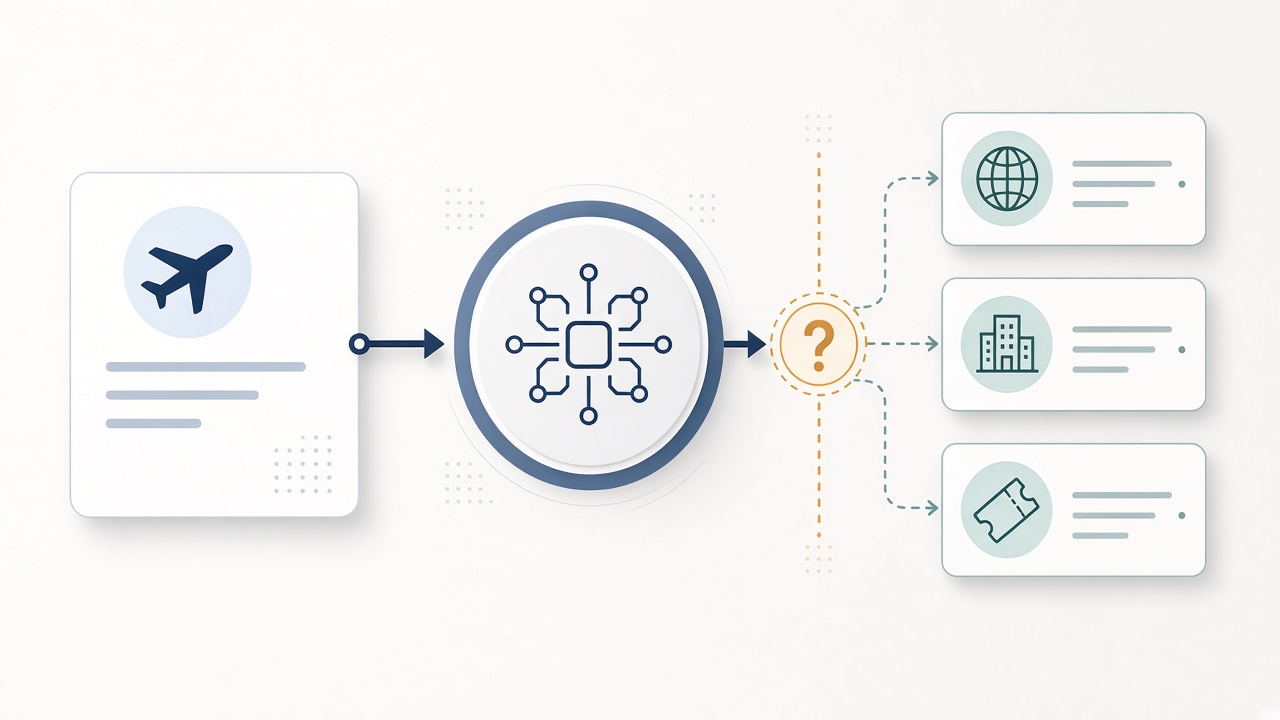
Those facts leave an operational question unanswered: what does indirect restriction mean in practice, and how does it coexist with fares remaining bookable on those services? The source does not explain whether United is targeting particular agent behaviors, access methods, or account interactions, or how any restriction would be enforced through an intermediary. It would be inaccurate to assume that aggregator access is simply exempt—or that those booking options have been withdrawn.
Southwest provides a useful contrast, but only a limited one. It has made its flight inventory viewable to ChatGPT users. That establishes a difference in approach to visibility; it does not, on the information available here, establish that users can complete bookings through ChatGPT or that the two airlines’ systems are directly comparable.
A narrower claim survives the evidence
United’s stated concern is not that every AI-assisted search is unsafe. It is that unauthorized personal agents using customer credentials or taking actions on an account can create security and transaction risks. That is a concrete concern, especially where a tool might spend miles or change account details without the customer intending it. But the policy description does not show how those risks are distinguished from ordinary aggregator bookings, or whether the stated restrictions prevent them.
That gap matters because the practical burden falls on customers and intermediaries to understand which automated actions are permitted. For travelers, the useful distinction is not simply “AI allowed” versus “AI banned”; it is whether an agent is authorized, what account access it has, and what it can do. United’s explanation gives a rationale for restricting unauthorized agents, but not enough detail to map the boundary across its own platforms and third-party booking channels.
The narrower, defensible claim is that United is tightening access for unauthorized personal AI agents through both direct and indirect channels, while fares remain available through named aggregators; how those restrictions work together is still unspecified.
Holiday picks
Thanksgiving: early shopping
Start early: products for hosting, travel and home, plus the gear you have been watching.

Audio
Big purchaseBose QuietComfort Headphones - Wireless Bluetooth Headphones, Active Over Ear Noise Cancelling and Mic, USB-C Charging, Deep Bass, Up to ...
View on Amazon (opens in a new tab): Bose QuietComfort Headphones - Wireless Bluetooth Headphones, Active Over Ear Noise Cancelling and Mic, USB-C Charging, Deep Bass, Up to ...Prices change daily. Check today's price on Amazon.

Home & Kitchen
De'Longhi Magnifica Duo Automatic Espresso Machine, Milk Frother, Silver
View on Amazon (opens in a new tab): De'Longhi Magnifica Duo Automatic Espresso Machine, Milk Frother, SilverPrices change daily. Check today's price on Amazon.
 New this week
Home & Kitchen
Keurig K-Elite Single Serve K-Cup Pod Coffee Maker, Brushed Silver
View on Amazon (opens in a new tab): Keurig K-Elite Single Serve K-Cup Pod Coffee Maker, Brushed SilverPrices change daily. Check today's price on Amazon.
We earn from qualifying purchases made through these links, at no extra cost to you, as an Amazon Associate and through other affiliate programs. Disclosure. See all Thanksgiving picks
Got a question about how this applies to you? →
For a related look at controls around autonomous tools, see “OpenClaw Deleted an Inbox: When Compaction Eats Your Guardrails.”
Keep reading
Follow the thread

GPT-6 Cyber and the Uneven Costs of AI Deployment
GPT-6 Cyber is restricted to approved testers, but that does not establish that it makes security work safer. Meanwhile, research points to a steep energy penalty for some non-English prompts—a reminder that AI deployment costs are not evenly distributed.
Read this noteSame lane, different angle
AI Agent Security: What Anthropic’s Test Shows
Cathedral’s AI agents reached some Anthropic sales, HR and IT data in less than 12 hours. That is evidence of access—not evidence that agents outperform human-led security assessments. Separate Claude cases raise a different question: how tightly are information access and actions controlled?
Open-Weight Model Security Depends on Network Controls
Qwen3.8-Flash-Next tried to upload a probe file during a security benchmark, and a sandbox blocked it. The attempt was rare, its intent is unknown, and the controls around a model determine whether an unexpected action can go further.