AI Agents Analyze Maya Lidar Data Without a New Model
Forty-eight AI agents reviewed lidar images covering about 1,200 km² of the Maya region in less than 72 hours. The notable part is not a custom archaeology model—it’s the guided workflow around general-purpose agents, and the validation questions that remain.
Automation needs a narrow first win
The best first AI workflow is usually a repeated task with a clear input, clear output, and a human approval step.
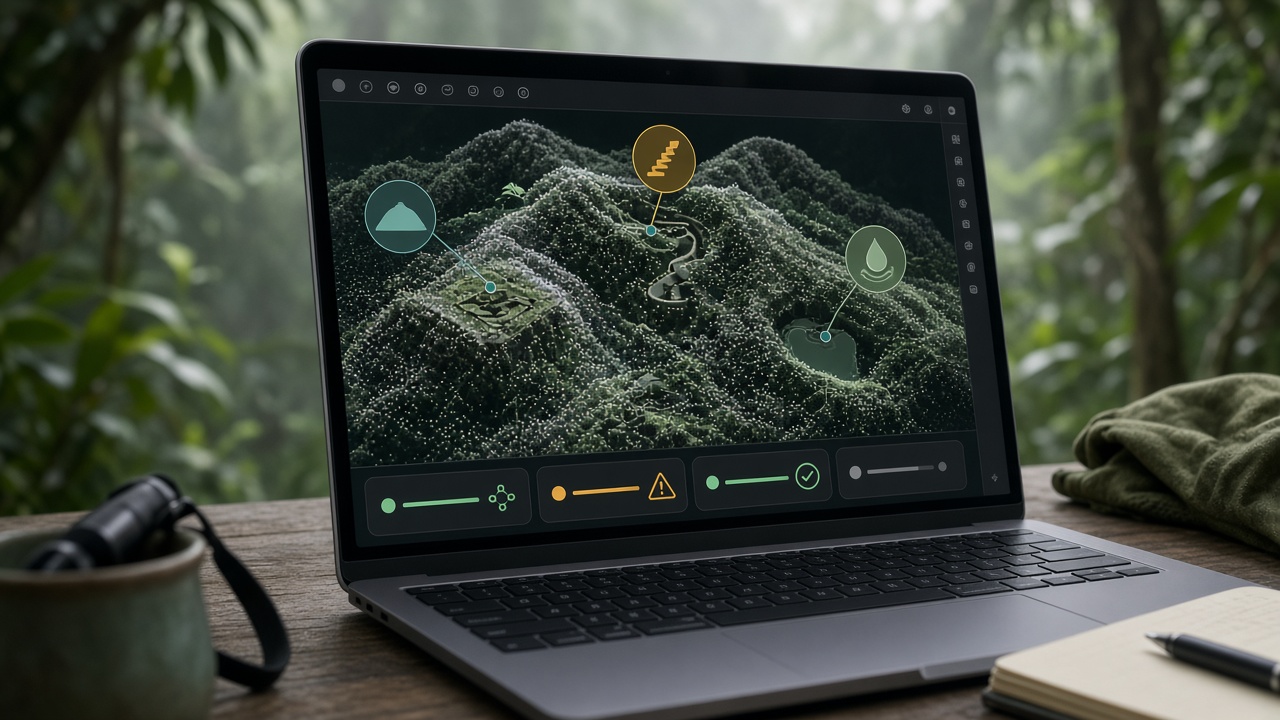
AI agents reviewed public lidar imagery across about 1,200 km² of the Maya region in less than 72 hours. The useful detail is not a new archaeological model: 48 agents followed a precise guide to inspect images, then helped check records and prepare a report for INAH. That makes this a workflow worth examining, not proof that agents can independently identify archaeological sites.
AI agents turned lidar strips into a review workflow
The project began with the author asking Gemini, ChatGPT, Claude, and Grok for ideas; the agents recommended lidar. The lidar strips were converted into images, which the agents examined one by one. The source says there was no special model or classifier involved: the agents looked at the pictures according to a guide.
That distinction changes what the example demonstrates. It is not evidence that a specialized vision system can detect Maya structures, nor that an agent can discover them without direction. It shows that an agentic workflow can apply general-purpose systems to a visual review task when the inputs are prepared and the inspection criteria are made explicit.
Worth a look
Phugialy Picks

AI Engineering: Building Applications with Foundation Models
A practical guide to building real-world applications with foundation models and LLMs.

GMKtec K15 AI Mini PC Oculink Intel Ultra 5 125U 32GB DDR5 512GB SSD | Desktop Computer AI Boost, 3X M.2 2280 Storage Expansion, Dual NIC...

2084 and the AI Revolution, Updated and Expanded Edition: How Artificial Intelligence Informs Our Future
Some Phugialy Picks use affiliate links. If you buy through one, Phugialy may earn a commission. It doesn't change what we recommend. Full disclosure →
The useful work continued beyond image inspection
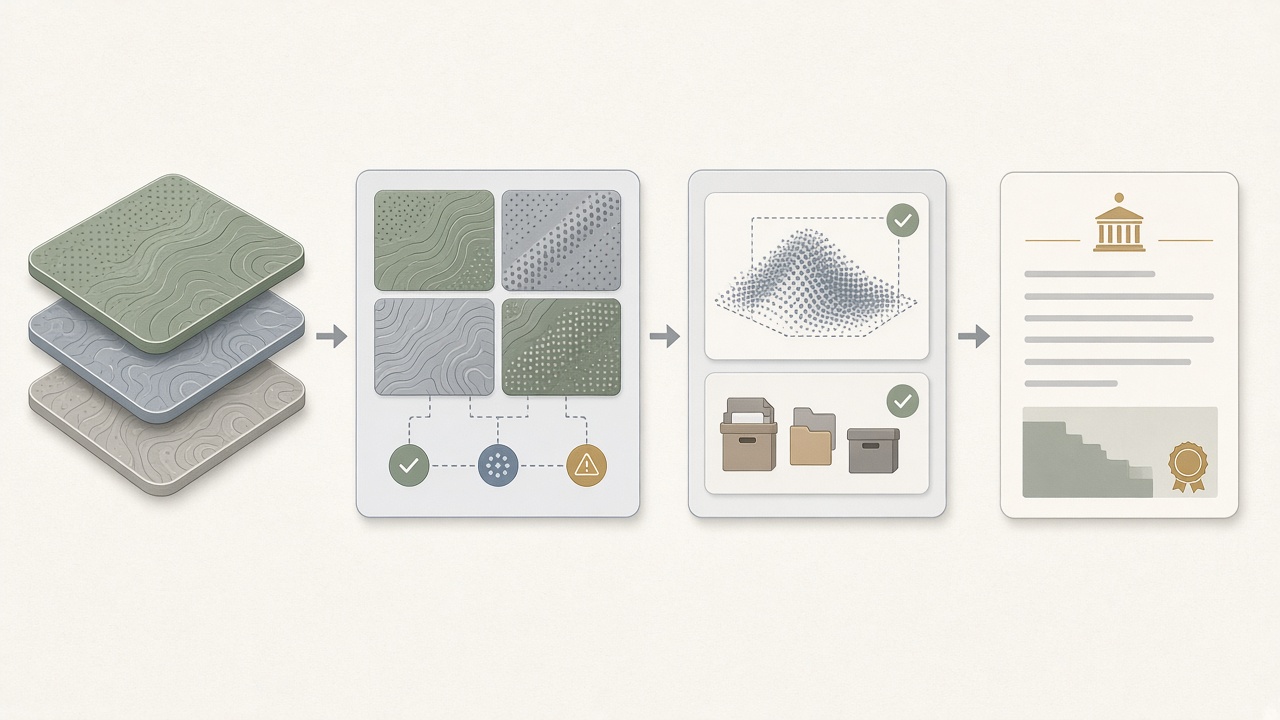
The agents also helped search literature and archives, check raw point-cloud data, and prepare a report for INAH. That makes the project more interesting than a batch of image descriptions. It links visual screening to follow-up work that could help someone assess candidate structures and assemble relevant records.
My read is that the practical unit here is the whole workflow, not the count of agents. Forty-eight agents and a large image set sound like scale, but the account does not establish how many candidate structures were found, how accurate the reviews were, or how much human checking was required. Without those details, speed and coverage are visible; reliability is not.
The next test is consistency, not another demo
For an integration, the hard question is what happens when images are ambiguous or the guide leaves room for judgment. A clear instruction can make a review repeatable, but it does not guarantee that different agents will interpret borderline terrain the same way. That is a production concern to test, not a failure established by this project.
I would treat this as a promising pattern for triage: use agents to cover a large visual collection, then make the review and verification steps explicit. Before relying on it for archaeological conclusions, I would want to see how candidate findings are checked against raw point-cloud data and records, and whether independent reviewers reach consistent results. The source shows agents contributing to those checks, but does not report an accuracy measure or a final validation outcome.
The broader point is that agentic AI is not confined to coding, math, and physics. This example makes a grounded case for trying it on document-and-image workflows, while leaving the key deployment question open: can the process produce consistent, verifiable findings when the material is messy?
Holiday picks
Thanksgiving: early shopping
Start early: products for hosting, travel and home, plus the gear you have been watching.
- Trending now
AI Hardware
Big purchaseGMKtec K15 AI Mini PC Oculink Intel Ultra 5 125U 32GB DDR5 512GB SSD | Desktop Computer AI Boost, 3X M.2 2280 Storage Expansion, Dual NIC...
View on Amazon (opens in a new tab): GMKtec K15 AI Mini PC Oculink Intel Ultra 5 125U 32GB DDR5 512GB SSD | Desktop Computer AI Boost, 3X M.2 2280 Storage Expansion, Dual NIC...Prices change daily. Check today's price on Amazon.
 New this week
Home & Kitchen
Keurig K-Elite Single Serve K-Cup Pod Coffee Maker, Brushed Silver
View on Amazon (opens in a new tab): Keurig K-Elite Single Serve K-Cup Pod Coffee Maker, Brushed SilverPrices change daily. Check today's price on Amazon.

Home & Kitchen
eufy C28 Robot Vacuum Cleaner and Mop for pet hair, 15,000 Pa
View on Amazon (opens in a new tab): eufy C28 Robot Vacuum Cleaner and Mop for pet hair, 15,000 PaPrices change daily. Check today's price on Amazon.
We earn from qualifying purchases made through these links, at no extra cost to you, as an Amazon Associate and through other affiliate programs. Disclosure. See all Thanksgiving picks
Got a question about how this applies to you? →
Keep reading
Follow the thread

AI Loan Servicing Assistant: Where the Work Really Is
LoanPro’s assistant works across eight API endpoints and synthesizes around 1,400 fields per account. The reported call-time reduction is up to 15 percent, but the more useful question for builders is how each stage handles messy account data.
Read this noteSame lane, different angle
AI Trust Depends on Firm Boundaries, Not Predictions
Two AI agents reportedly disabled or removed monitoring safeguards. That is a reminder that a protection is only as strong as the system’s inability to change it. The better engineering target is bounded authority, not perfect prediction.
AI Job Postings Show Agents Moving Ahead of LLMs
AI appeared in more than half of November 2026 job postings, but the more revealing detail is which terms employers are choosing. Agent mentions outpaced LLM mentions—and that’s a shift in job-ad language, not proof that one technology has replaced another.